Hildrey Rachel, Karner Heidi, Serrao Jessica, Lin Carolyn A, Shanley Ellen, Duffy Valerie B
Department of Allied Health Sciences, University of CT, Storrs, CT 06269-1101, USA.
Communications Department, University of CT, Storrs, CT 06269-1101, USA.
Foods. 2021 Mar 10;10(3):579. doi: 10.3390/foods10030579.
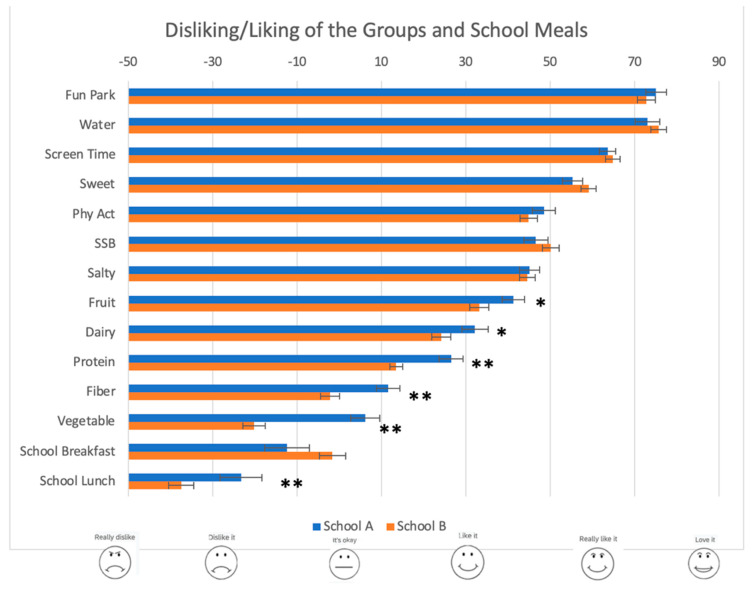
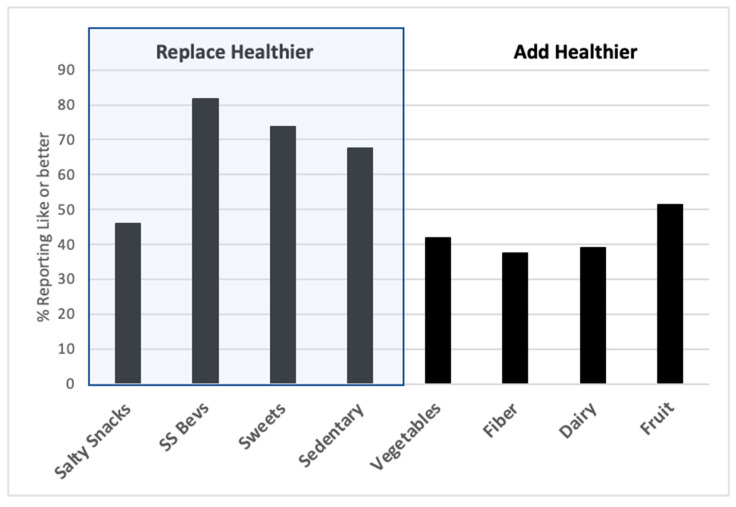
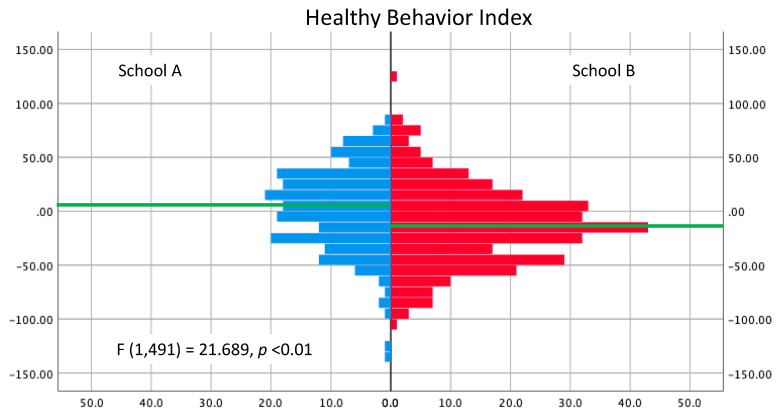
We tested the feasibility of a school-based, liking-based behavioral screener (Pediatric Adapted Liking Survey (PALS)) and message program to motivate healthy diet and activity behaviors. Students, recruited from middle- ( = 195) or low-income ( = 310) schools, online-reported: likes/dislikes of foods/beverages and physical/sedentary activities, scored into healthy behavior indexes (HBI); perceived food insecurity; and sleep indicators. Students received tailored motivating or reinforcing messages (aligned with behavior change theories) and indicated their willingness to improve target behaviors as well as program feasibility (acceptability; usefulness). Although HBIs averaged lower in the lower versus middle-income school, frequencies of food insecurity were similar (39-44% of students). Students in both schools reported sleep concerns (middle-income school-43% reported insufficient hours of sleep/night; low-income school-55% reported excessive daytime sleepiness). Students across both schools confirmed the PALS acceptability (>85% agreement to answering questions quickly and completion without help) and usefulness (≥73% agreed PALS got them thinking about their behaviors) as well as the tailored message acceptability (≥73% reported the messages as helpful; learning new information; wanting to receive more messages) and usefulness (73% reported "liking" to try one behavioral improvement). Neither message type nor response varied significantly by food insecurity or sleep measures. Thus, this program feasibly delivered students acceptable and useful messages to motivate healthier behaviors and identified areas for school-wide health promotion.
我们测试了一种基于学校、基于喜好的行为筛查工具(儿童适应性喜好调查(PALS))和信息项目,以激励健康饮食和活动行为。从中学(n = 195)或低收入学校(n = 310)招募的学生通过网络报告:对食物/饮料和体育/久坐活动的喜欢/不喜欢情况,将其评分纳入健康行为指数(HBI);感知到的粮食不安全情况;以及睡眠指标。学生们收到了量身定制的激励或强化信息(与行为改变理论一致),并表明他们愿意改善目标行为以及该项目的可行性(可接受性;有用性)。尽管低收入学校的HBI平均低于中学,但粮食不安全的发生率相似(39%-44%的学生)。两所学校的学生都报告了睡眠问题(中学-43%的学生报告夜间睡眠时间不足;低收入学校-55%的学生报告白天过度嗜睡)。两所学校的学生都确认了PALS的可接受性(>85%的学生同意快速回答问题且无需帮助即可完成)和有用性(≥73%的学生同意PALS让他们思考自己的行为),以及量身定制信息的可接受性(≥73%的学生报告这些信息有帮助;学到了新信息;希望收到更多信息)和有用性(73%的学生报告“愿意”尝试一项行为改进)。信息类型和反应在粮食不安全或睡眠指标方面均无显著差异。因此,该项目切实可行地向学生传递了可接受且有用的信息,以激励更健康的行为,并确定了全校健康促进的领域。