Dogan Fatma, Forsyth Nicholas R
The Guy Hilton Research Laboratories, School of Pharmacy and Bioengineering, Faculty of Medicine and Health Sciences, Keele University, Stoke on Trent ST4 7QB, UK.
School of Medicine, Tongji University, Shanghai 200092, China.
Cancers (Basel). 2021 Mar 10;13(6):1213. doi: 10.3390/cancers13061213.
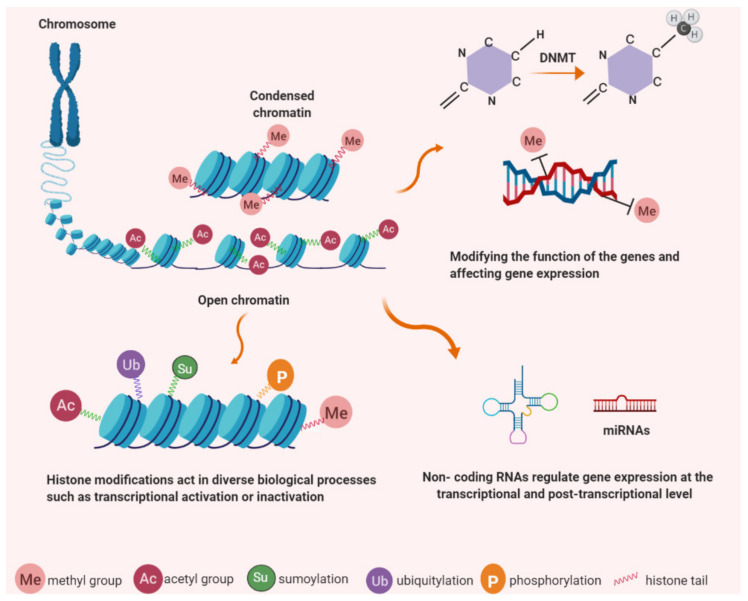
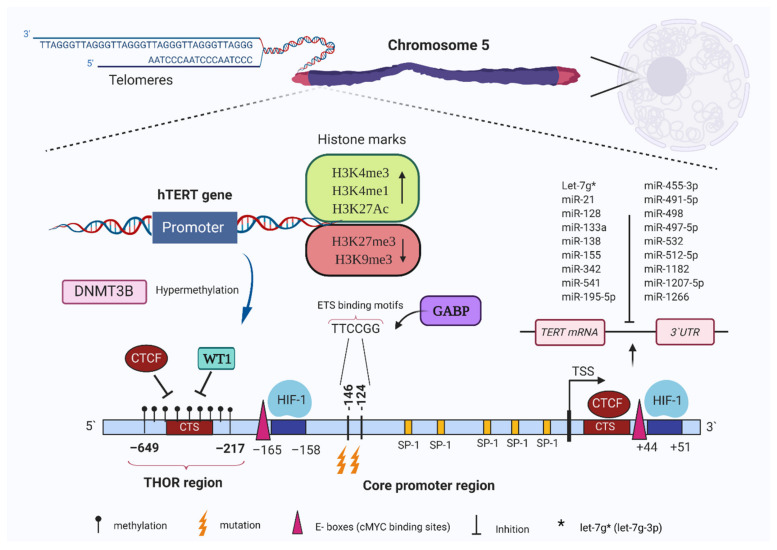
Telomerase was first described by Greider and Blackburn in 1984, a discovery ultimately recognized by the Nobel Prize committee in 2009. The three decades following on from its discovery have been accompanied by an increased understanding of the fundamental mechanisms of telomerase activity, and its role in telomere biology. Telomerase has a clearly defined role in telomere length maintenance and an established influence on DNA replication, differentiation, survival, development, apoptosis, tumorigenesis, and a further role in therapeutic resistance in human stem and cancer cells including those of breast and cervical origin. encodes the catalytic subunit and rate-limiting factor for telomerase enzyme activity. The mechanisms of activation or silencing of remain open to debate across somatic, cancer, and stem cells. Promoter mutations upstream of may promote dysregulated telomerase activation in tumour cells but additional factors including epigenetic, transcriptional and posttranscriptional modifications also have a role to play. Previous systematic analysis indicated methylation and mutation of the promoter in 53% and 31%, respectively, of TERT expressing cancer cell lines supporting the concept of a key role for epigenetic alteration associated with TERT dysregulation and cellular transformation. Epigenetic regulators including DNA methylation, histone modification, and non-coding RNAs are now emerging as drivers in the regulation of telomeres and telomerase activity. Epigenetic regulation may be responsible for reversible silencing of TERT in several biological processes including development and differentiation, and increased expression in cancers. Understanding the epigenetic mechanisms behind telomerase regulation holds important prospects for cancer treatment, diagnosis and prognosis. This review will focus on the role of epigenetics in telomerase regulation.
端粒酶于1984年由格雷德(Greider)和布莱克本(Blackburn)首次描述,这一发现最终在2009年得到了诺贝尔奖委员会的认可。自其发现后的三十年里,人们对端粒酶活性的基本机制及其在端粒生物学中的作用有了更深入的了解。端粒酶在维持端粒长度方面有着明确的作用,并且对DNA复制、分化、存活、发育、凋亡、肿瘤发生以及对包括乳腺和宫颈来源的人类干细胞和癌细胞的治疗抗性中也有既定的影响。TERT编码端粒酶活性的催化亚基和限速因子。在体细胞、癌细胞和干细胞中,TERT激活或沉默的机制仍存在争议。TERT上游的启动子突变可能会促进肿瘤细胞中端粒酶的失调激活,但包括表观遗传、转录和转录后修饰在内的其他因素也起着作用。先前的系统分析表明,在表达TERT的癌细胞系中,分别有53%和31%的TERT启动子发生甲基化和突变,这支持了与TERT失调和细胞转化相关的表观遗传改变起关键作用的概念。包括DNA甲基化、组蛋白修饰和非编码RNA在内的表观遗传调节因子现在正成为端粒和端粒酶活性调节的驱动因素。表观遗传调节可能负责在包括发育和分化在内的几个生物学过程中TERT的可逆沉默,以及在癌症中TERT表达的增加。了解端粒酶调节背后的表观遗传机制对癌症治疗、诊断和预后具有重要意义。本综述将重点关注表观遗传学在端粒酶调节中的作用。