Sánchez-Martínez Vanessa, Buigues Cristina, Navarro-Martínez Rut, García-Villodre Laura, Jeghalef Noura, Serrano-Carrascosa María, Rubio-Briones José, Cauli Omar
Department of Nursing, University of Valencia, 46010 Valencia, Spain.
Frailty and Cognitive Impairment Research Group (FROG), University of Valencia, 46010 Valencia, Spain.
Life (Basel). 2021 Mar 10;11(3):227. doi: 10.3390/life11030227.
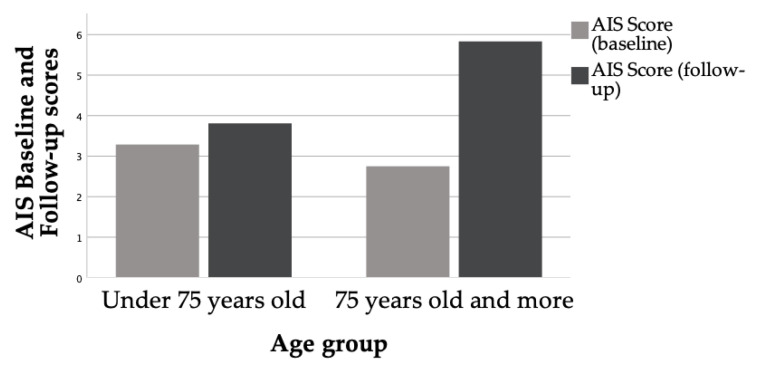
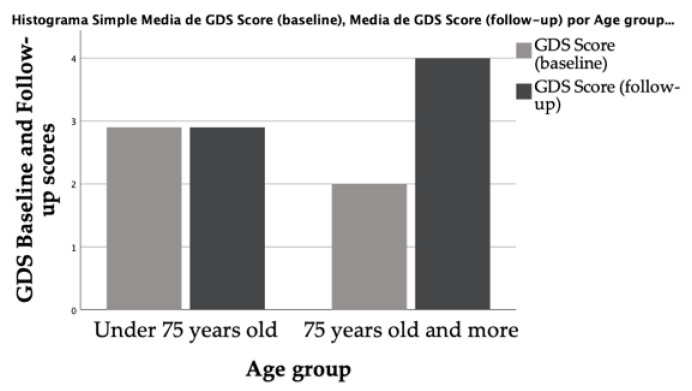
The relationship between cognitive decline and androgen deprivation therapy (ADT) under luteinizing hormone-releasing hormone (LHRH) analogues is unclear, and there is a scarcity of longitudinal studies considering the interaction between cognition, depressive symptoms and sleep quality in men with prostate cancer (PCa) treated with ADT. This study aimed to determine if there were differences in the scores obtained in cognitive assessment, depressive symptoms, and sleep quality after one year of ADT and determine the interrelations between sleep, mood, and cognitive status. A prospective longitudinal observational study was designed, in which a cohort of men (mean age was 70.8 years) newly treated with androgen-deprivation therapy was assessed in the first six months of treatment and 12 months later. Analysis of cognitive function by the Mini-Mental State Examination (MMSE) scores indicated a significant ( < 0.05) increase after one year of treatment and by the Brief Scale for Cognitive Evaluation (BCog) scores indicated no changes in the scores before and after one year of treatment. Analysis of depressive symptoms with the Geriatric Depression Scale and sleep quality with the Athens Insomnia Scale (AIS) scores showed significant ( < 0.05) changes after one year of treatment with ADT, with men describing more depressive symptoms and more sleep disturbances. No statistically significant differences were found in the cognitive performance between men with impaired sleep or depression results and those without them. Our study showed no clinical evidence of the relationship between ADT under luteinizing hormone-releasing hormone (LHRH) analogues and cognitive deterioration in 1-year follow-up, but there are impairments in the sleep quality in men with PCa undergoing ADT and an increase in depressive symptoms which has important implications for clinicians as they would impair quality of life and adherence to treatment.
促黄体生成素释放激素(LHRH)类似物治疗下认知功能下降与雄激素剥夺治疗(ADT)之间的关系尚不清楚,而且在接受ADT治疗的前列腺癌(PCa)男性中,考虑认知、抑郁症状和睡眠质量之间相互作用的纵向研究较少。本研究旨在确定ADT治疗一年后在认知评估、抑郁症状和睡眠质量方面的得分是否存在差异,并确定睡眠、情绪和认知状态之间的相互关系。我们设计了一项前瞻性纵向观察性研究,对一组新接受雄激素剥夺治疗的男性(平均年龄70.8岁)在治疗的前六个月和12个月后进行评估。通过简易精神状态检查表(MMSE)得分分析认知功能表明,治疗一年后得分显著增加(<0.05),而通过简易认知评估量表(BCog)得分表明,治疗一年前后得分没有变化。用老年抑郁量表分析抑郁症状,用雅典失眠量表(AIS)得分分析睡眠质量,结果显示ADT治疗一年后有显著变化(<0.05),男性报告有更多抑郁症状和更多睡眠障碍。睡眠或抑郁结果受损的男性与未受损男性在认知表现上未发现统计学显著差异。我们的研究表明,在1年的随访中,促黄体生成素释放激素(LHRH)类似物治疗下的ADT与认知功能恶化之间没有临床证据表明存在关联,但接受ADT治疗的PCa男性睡眠质量受损,抑郁症状增加,这对临床医生具有重要意义,因为这会损害生活质量和治疗依从性。