Prezado Yolanda, Hirayama Ryochi, Matsufuji Naruhiro, Inaniwa Taku, Martínez-Rovira Immaculada, Seksek Olivier, Bertho Annaïg, Koike Sachiko, Labiod Dalila, Pouzoulet Frederic, Polledo Laura, Warfving Nils, Liens Aléthéa, Bergs Judith, Shimokawa Takashi
Institut Curie, Université PSL, CNRS UMR3347, Inserm U1021, Signalisation Radiobiologie et Cancer, 91400 Orsay, France.
Université Paris-Saclay, CNRS UMR3347, Inserm U1021, Signalisation Radiobiologie et Cancer, 91400 Orsay, France.
Cancers (Basel). 2021 Mar 17;13(6):1356. doi: 10.3390/cancers13061356.
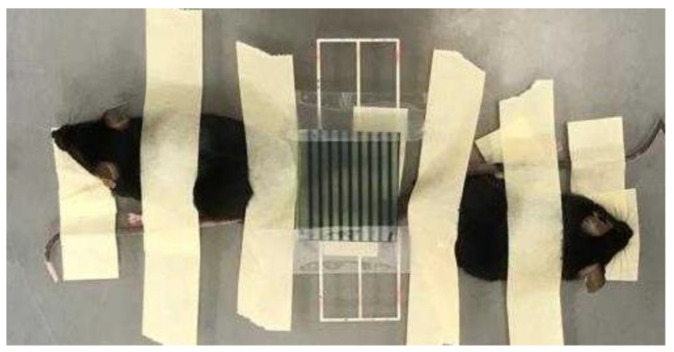
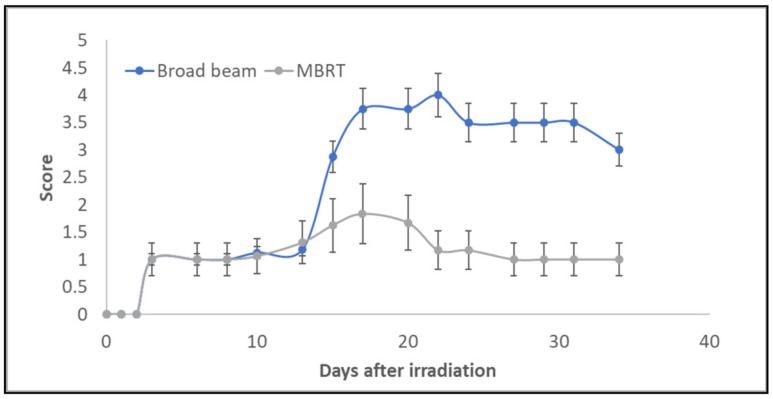
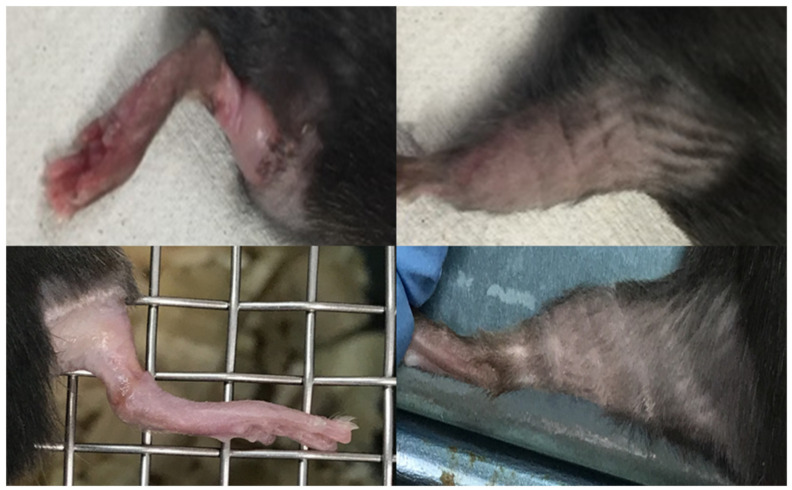
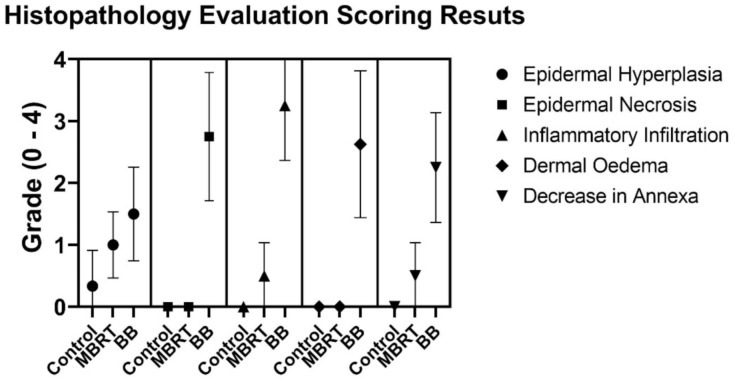
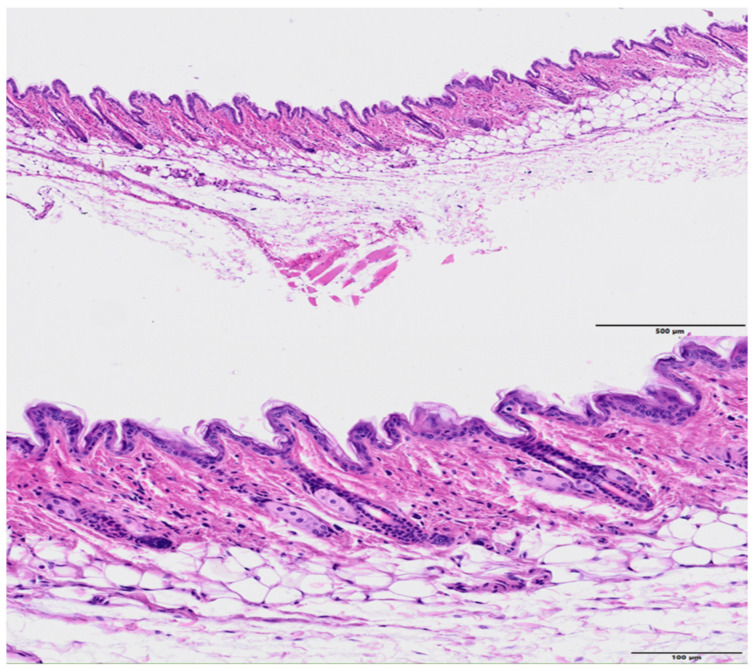
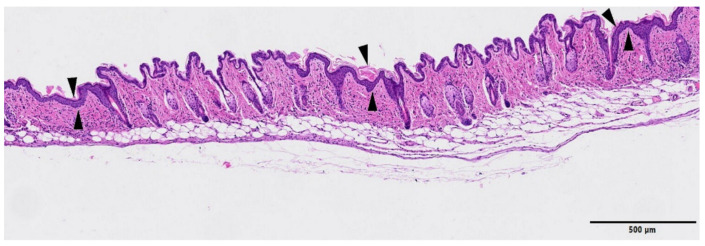
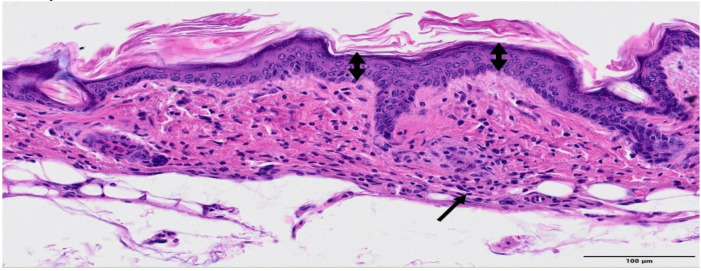
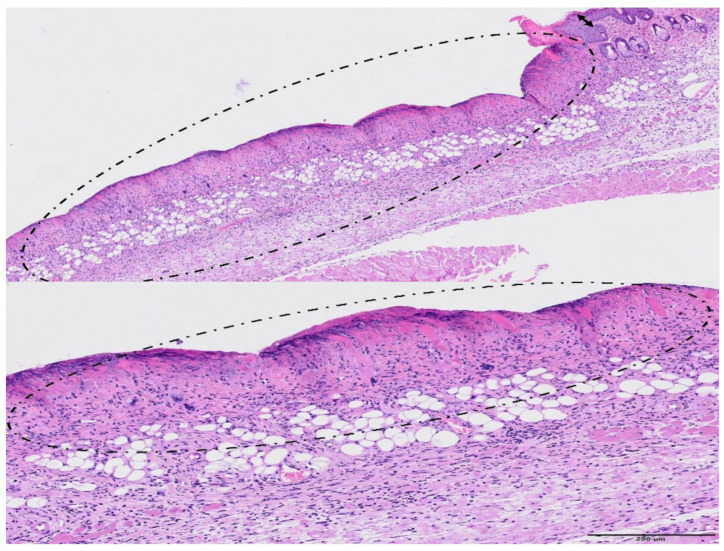
(1) Background: among all types of radiation, very heavy ions, such as Neon (Ne) or Argon (Ar), are the optimum candidates for hypoxic tumor treatments due to their reduced oxygen enhancement effect. However, their pioneering clinical use in the 1970s was halted due to severe side effects. The aim of this work was to provide a first proof that the combination of very heavy ions with minibeam radiation therapy leads to a minimization of toxicities and, thus, opening the door for a renewed use of heavy ions for therapy; (2) Methods: mouse legs were irradiated with either Ne MBRT or Ne broad beams at the same average dose. Skin toxicity was scored for a period of four weeks. Histopathology evaluations were carried out at the end of the study; (3) Results: a significant difference in toxicity was observed between the two irradiated groups. While severe da-mage, including necrosis, was observed in the broad beam group, only light to mild erythema was present in the MBRT group; (4) Conclusion: Ne MBRT is significantly better tolerated than conventional broad beam irradiations.
(1) 背景:在所有类型的辐射中,诸如氖(Ne)或氩(Ar)等超重离子,因其降低的氧增强效应,是低氧肿瘤治疗的最佳候选者。然而,它们在20世纪70年代的首次临床应用因严重副作用而停止。这项工作的目的是首次证明超重离子与微束放射治疗相结合可使毒性最小化,从而为重新使用重离子进行治疗打开大门;(2) 方法:以相同平均剂量用氖微束放射治疗(Ne MBRT)或氖宽束对小鼠腿部进行照射。对皮肤毒性进行为期四周的评分。在研究结束时进行组织病理学评估;(3) 结果:在两个照射组之间观察到毒性存在显著差异。在宽束组中观察到包括坏死在内的严重损伤,而在微束放射治疗组中仅出现轻度至中度红斑;(4) 结论:氖微束放射治疗的耐受性明显优于传统宽束照射。