Department of Biochemistry and Molecular Biology, University of British Columbia, Vancouver, BC V6T 1Z3, Canada.
UBC/LSI Bioinformatics Facility, University of British Columbia, Vancouver, BC V6T 1Z3, Canada.
Viruses. 2021 Mar 17;13(3):493. doi: 10.3390/v13030493.
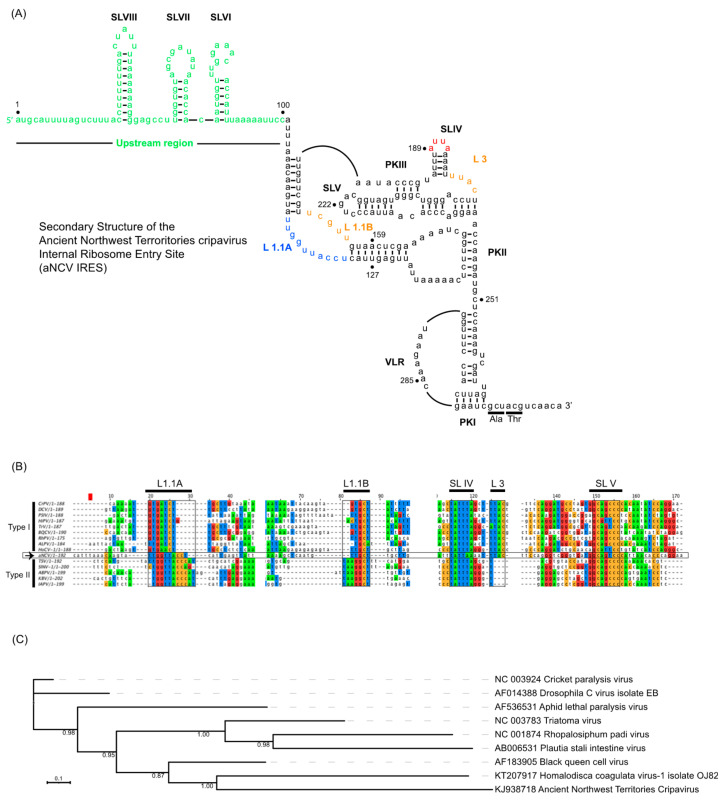
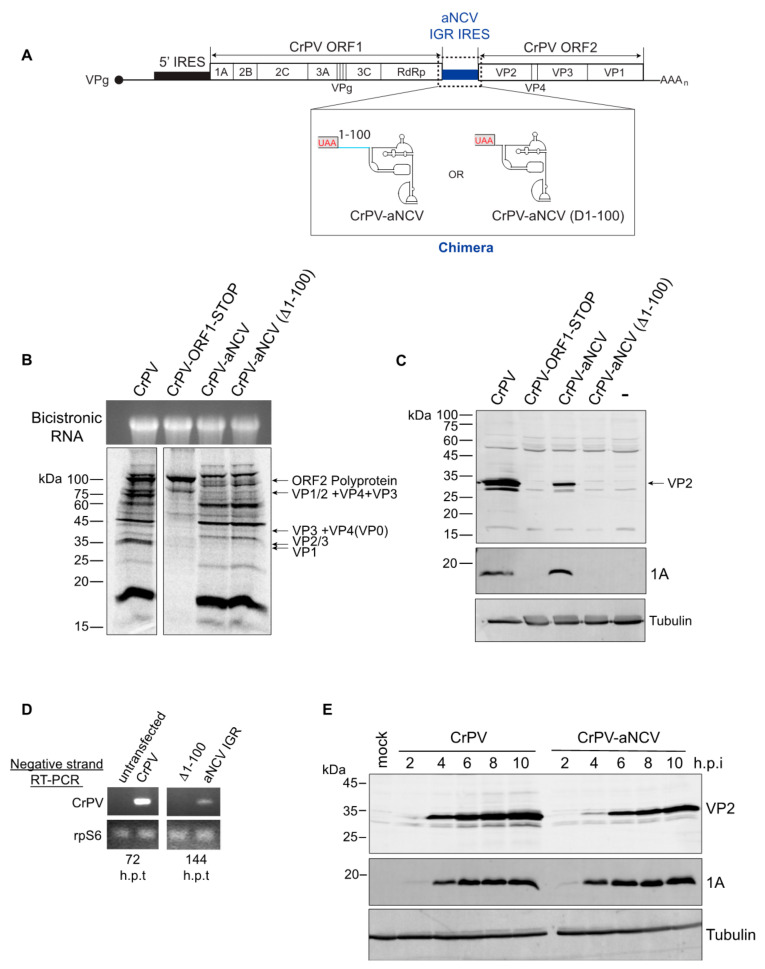
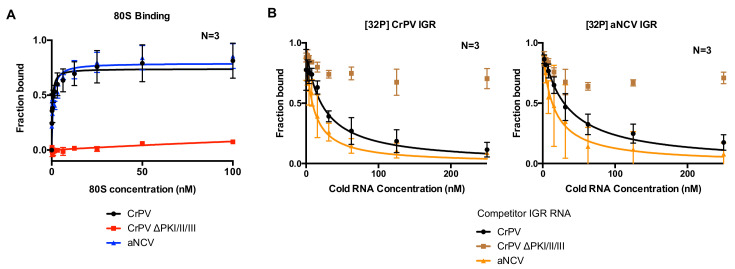
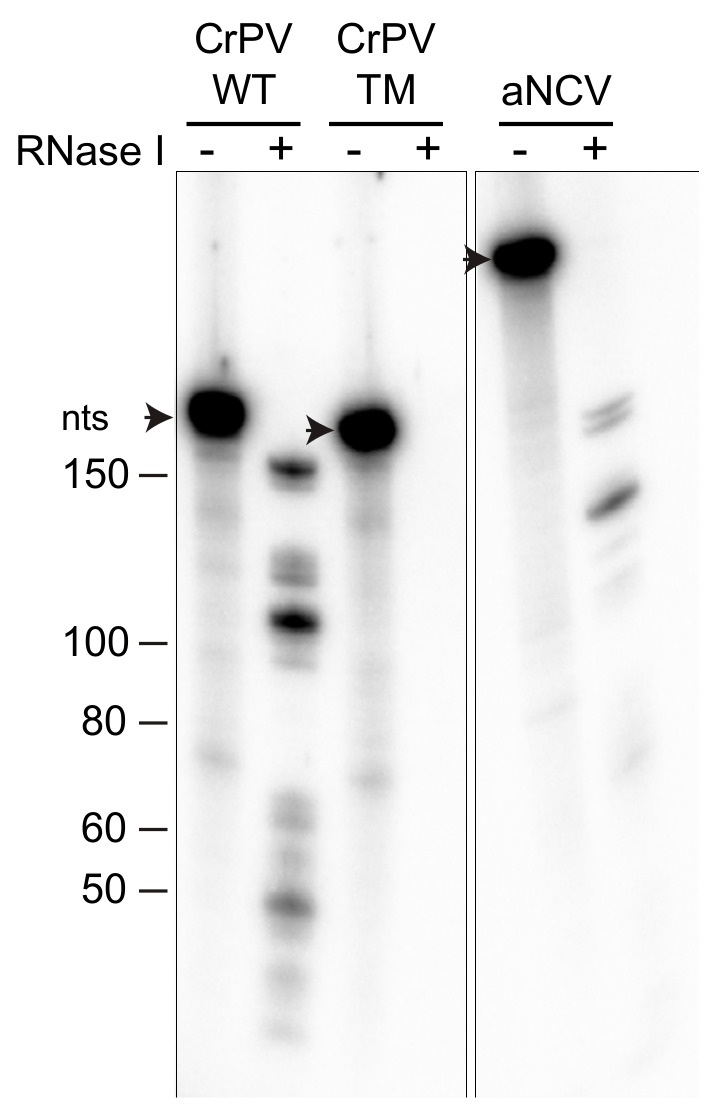
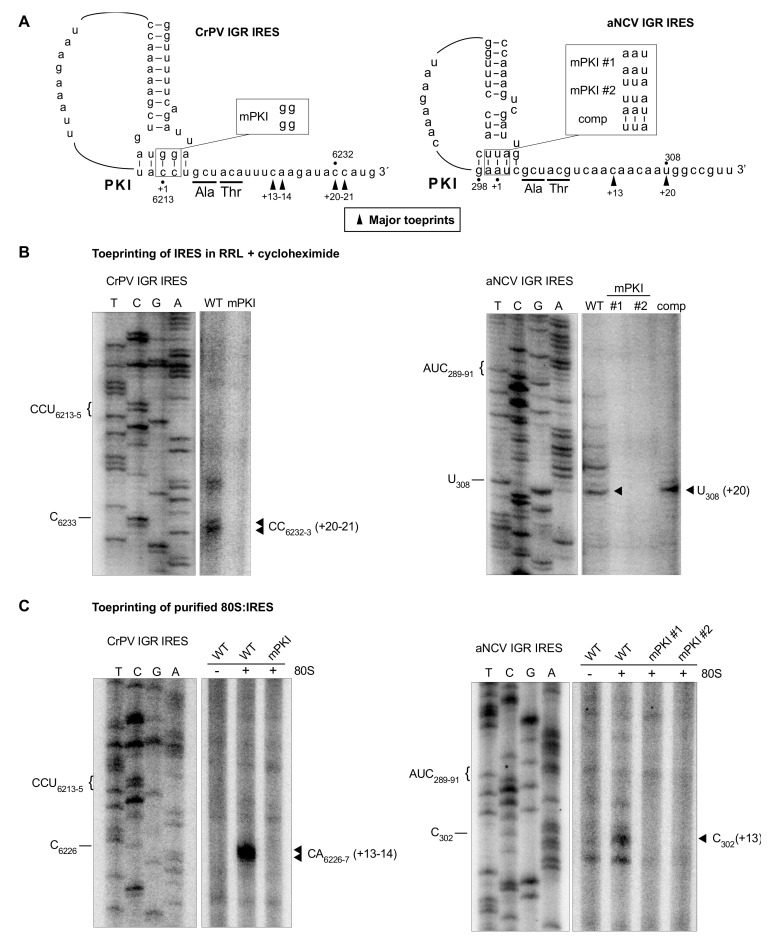
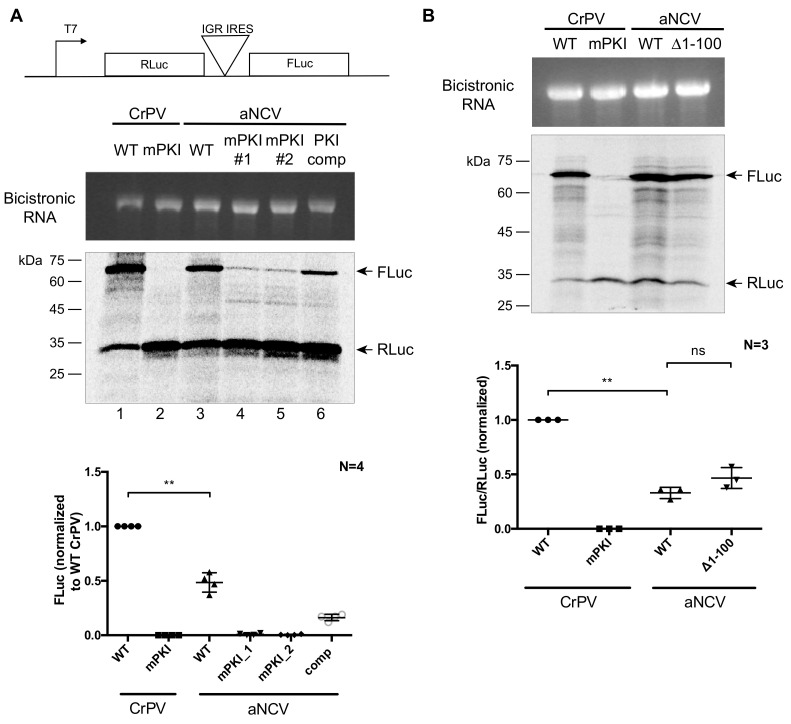
The dicistrovirus intergenic region internal ribosome entry site (IGR IRES) uses an unprecedented, streamlined mechanism whereby the IRES adopts a triple-pseudoknot (PK) structure to directly bind to the conserved core of the ribosome and drive translation from a non-AUG codon. The origin of this IRES mechanism is not known. Previously, a partial fragment of a divergent dicistrovirus RNA genome, named ancient Northwest territories cripavirus (aNCV), was extracted from 700-year-old caribou feces trapped in a subarctic ice patch. The aNCV IGR sequence adopts a secondary structure similar to contemporary IGR IRES structures, however, there are subtle differences including 105 nucleotides upstream of the IRES of unknown function. Using filter binding assays, we showed that the aNCV IRES could bind to purified ribosomes, and toeprinting analysis pinpointed the start site at a GCU alanine codon adjacent to PKI. Using a bicistronic reporter RNA, the aNCV IGR can direct translation in vitro in a PKI-dependent manner. Lastly, a chimeric infectious clone swapping in the aNCV IRES supported translation and virus infection. The characterization and resurrection of a functional IGR IRES from a divergent 700-year-old virus provides a historical framework for the importance of this viral translational mechanism.
双顺反子病毒基因间区内部核糖体进入位点(IGR IRES)采用了一种前所未有的简化机制,即 IRES 采用三假结(PK)结构直接与核糖体的保守核心结合,并从非 AUG 密码子驱动翻译。这种 IRES 机制的起源尚不清楚。此前,从被困在亚北极冰片中的 700 年前驯鹿粪便中提取了一种分化双顺反子病毒 RNA 基因组的部分片段,命名为古老的西北地区卷曲病毒(aNCV)。aNCV IGR 序列采用类似于当代 IGR IRES 结构的二级结构,但是存在细微差异,包括 IRES 上游的 105 个核苷酸具有未知功能。通过滤膜结合测定,我们表明 aNCV IRES 可以与纯化的核糖体结合,并且加尾分析将起始位点定点在紧邻 PKI 的 GCU 丙氨酸密码子上。使用双顺反子报告 RNA,aNCV IGR 可以以 PKI 依赖性方式在体外指导翻译。最后,交换 aNCV IRES 的嵌合感染性克隆支持翻译和病毒感染。从分化的 700 年前病毒中鉴定和复活具有功能的 IGR IRES 为这种病毒翻译机制的重要性提供了历史框架。