AO Research Institute Davos, 7270 Davos, Switzerland.
Department of Orthopedics and Trauma Surgery, Medical Center, Faculty of Medicine, University of Freiburg, 79106 Freiburg, Germany.
Cells. 2021 Mar 15;10(3):650. doi: 10.3390/cells10030650.
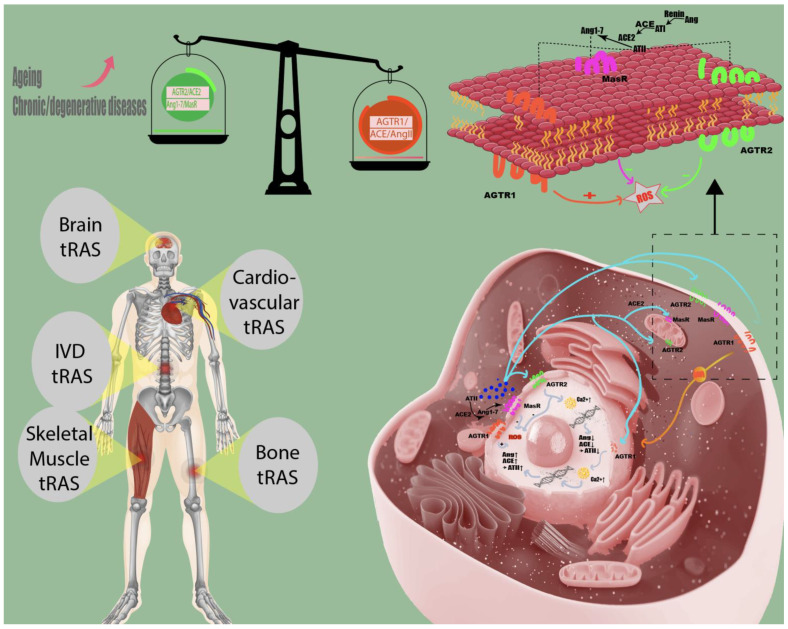
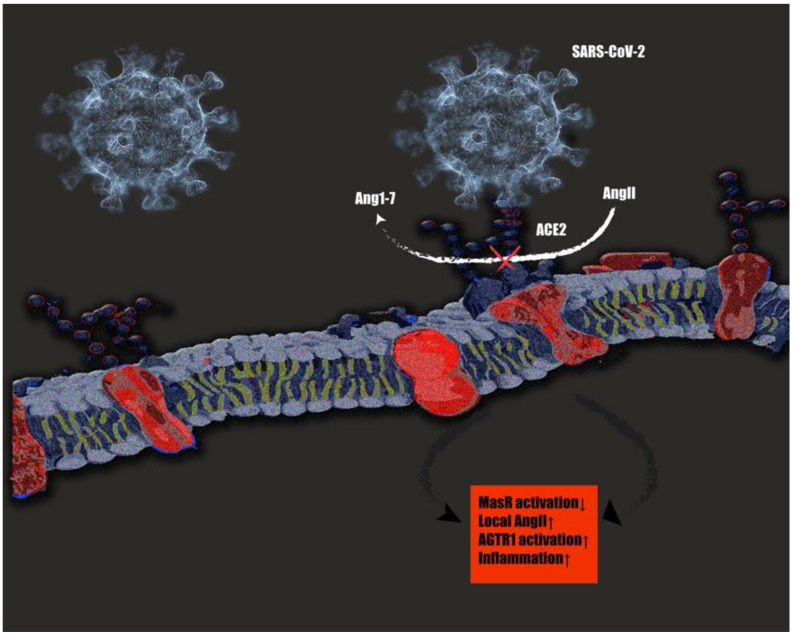
Evidence has arisen in recent years suggesting that a tissue renin-angiotensin system (tRAS) is involved in the progression of various human diseases. This system contains two regulatory pathways: a pathological pro-inflammatory pathway containing the Angiotensin Converting Enzyme (ACE)/Angiotensin II (AngII)/Angiotensin II receptor type 1 (AGTR1) axis and a protective anti-inflammatory pathway involving the Angiotensin II receptor type 2 (AGTR2)/ACE2/Ang1-7/MasReceptor axis. Numerous studies reported the positive effects of pathologic tRAS pathway inhibition and protective tRAS pathway stimulation on the treatment of cardiovascular, inflammatory, and autoimmune disease and the progression of neuropathic pain. Cell senescence and aging are known to be related to RAS pathways. Further, this system directly interacts with SARS-CoV 2 and seems to be an important target of interest in the COVID-19 pandemic. This review focuses on the involvement of tRAS in the progression of the mentioned diseases from an interdisciplinary clinical perspective and highlights therapeutic strategies that might be of major clinical importance in the future.
近年来的研究证据表明,组织肾素-血管紧张素系统(tRAS)参与了多种人类疾病的进展。该系统包含两条调节途径:一条是含有血管紧张素转换酶(ACE)/血管紧张素 II(AngII)/血管紧张素 II 受体 1(AGTR1)轴的病理性促炎途径,另一条是涉及血管紧张素 II 受体 2(AGTR2)/ACE2/Ang1-7/Mas 受体轴的保护性抗炎途径。许多研究报告了病理性 tRAS 途径抑制和保护性 tRAS 途径刺激对心血管、炎症和自身免疫性疾病以及神经病理性疼痛进展的治疗作用。细胞衰老和老化与 RAS 途径有关。此外,该系统直接与 SARS-CoV 2 相互作用,似乎是 COVID-19 大流行中一个重要的关注靶点。本综述从跨学科临床角度关注 tRAS 在上述疾病进展中的作用,并强调了未来可能具有重要临床意义的治疗策略。