Interdisciplinary Centre for Clinical Research (IZKF), RWTH Aachen University, 52074 Aachen, Germany.
Institute for Molecular Cardiovascular Research (IMCAR), RWTH Aachen University, 52074 Aachen, Germany.
Int J Mol Sci. 2021 Mar 1;22(5):2478. doi: 10.3390/ijms22052478.
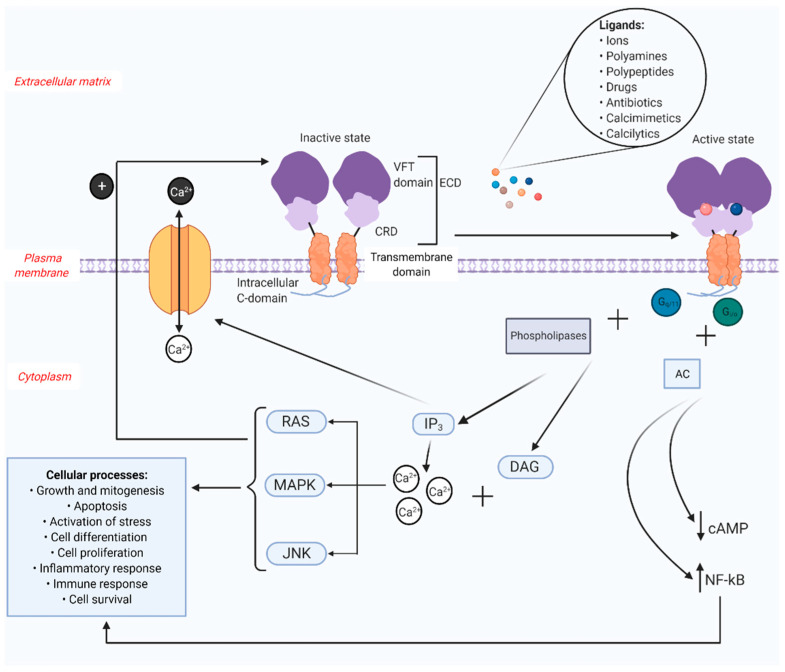
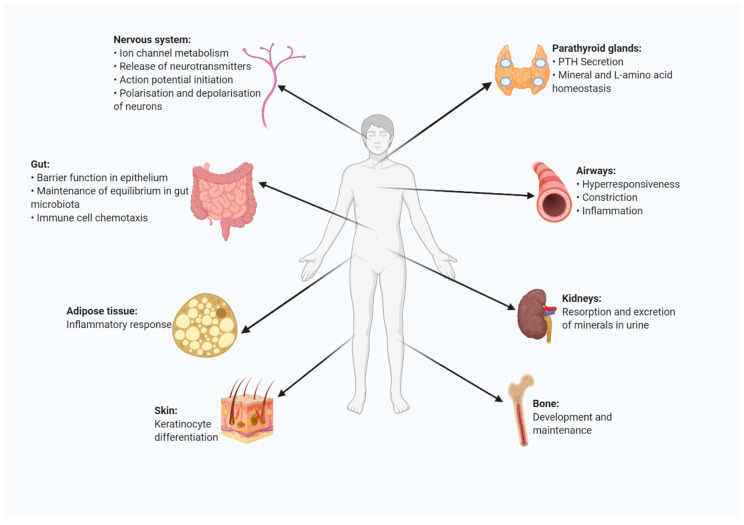
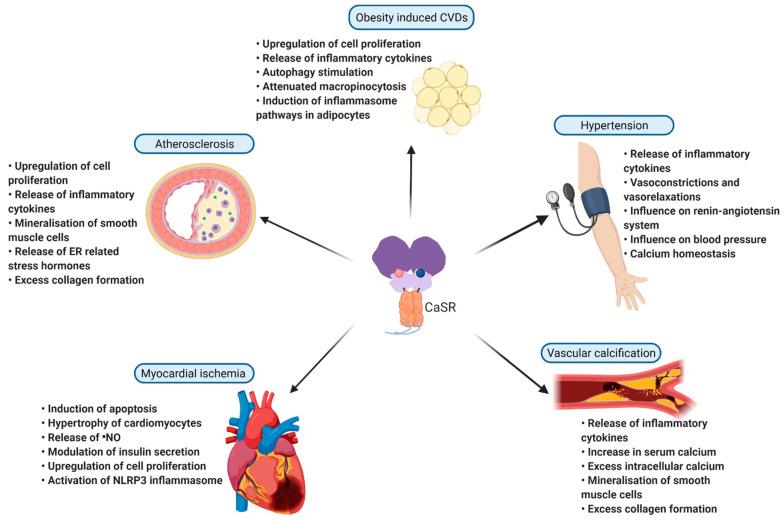
The calcium Sensing Receptor (CaSR) is a cell surface receptor belonging to the family of G-protein coupled receptors. CaSR is mainly expressed by parathyroid glands, kidneys, bone, skin, adipose tissue, the gut, the nervous system, and the cardiovascular system. The receptor, as its name implies is involved in sensing calcium fluctuations in the extracellular matrix of cells, thereby having a major impact on the mineral homeostasis in humans. Besides calcium ions, the receptor is also activated by other di- and tri-valent cations, polypeptides, polyamines, antibiotics, calcilytics and calcimimetics, which upon binding induce intracellular signaling pathways. Recent studies have demonstrated that CaSR influences a wide variety of cells and processes that are involved in inflammation, the cardiovascular system, such as vascular calcification, atherosclerosis, myocardial infarction, hypertension, and obesity. Therefore, in this review, the current understanding of the role that CaSR plays in inflammation and its consequences on the cardiovascular system will be highlighted.
钙敏感受体(CaSR)是一种细胞表面受体,属于 G 蛋白偶联受体家族。CaSR 主要表达于甲状旁腺、肾脏、骨骼、皮肤、脂肪组织、胃肠道、神经系统和心血管系统。顾名思义,该受体参与感知细胞外基质中钙的波动,从而对人类的矿物质稳态产生重大影响。除钙离子外,该受体还被其他二价和三价阳离子、多肽、多胺、抗生素、钙敏感受体激活剂和钙敏感受体调节剂激活,这些物质结合后会诱导细胞内信号通路。最近的研究表明,CaSR 影响涉及炎症、心血管系统的多种细胞和过程,如血管钙化、动脉粥样硬化、心肌梗死、高血压和肥胖。因此,在这篇综述中,将重点阐述 CaSR 在炎症中的作用及其对心血管系统的影响。