Clinical Neuroscience, Max Planck Institute of Experimental Medicine, 37075 Göttingen, Germany.
Department of Neurogenetics, Max Planck Institute of Experimental Medicine, 37075 Göttingen, Germany.
Int J Mol Sci. 2021 Mar 20;22(6):3164. doi: 10.3390/ijms22063164.
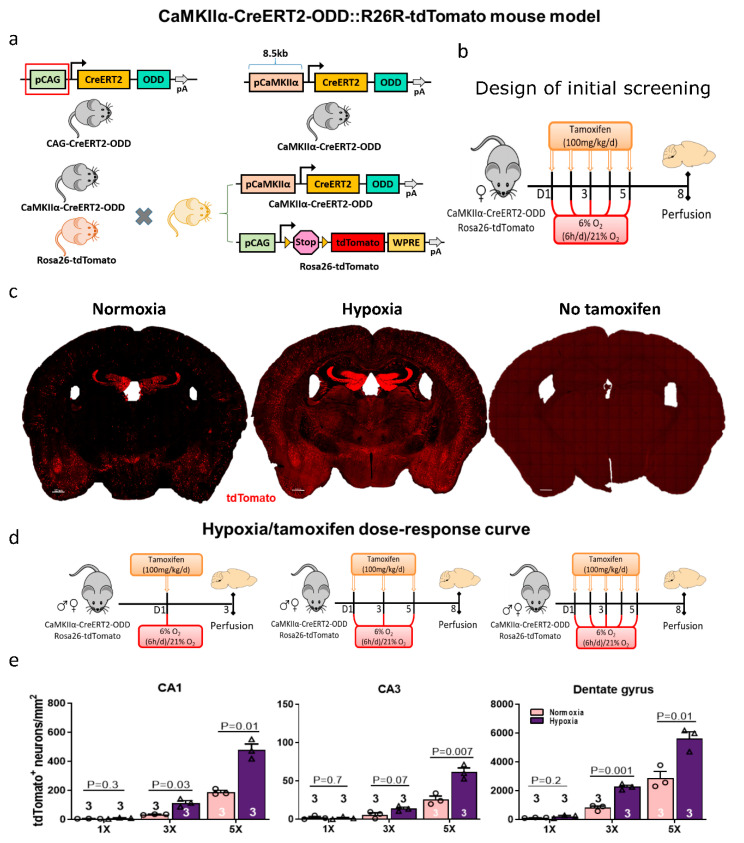
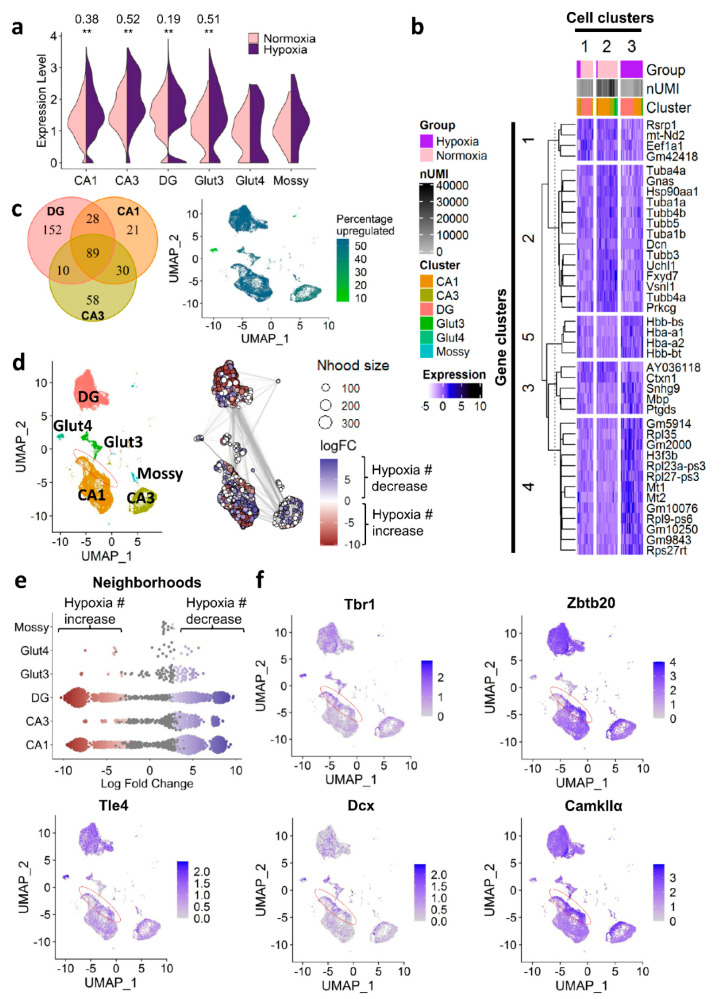
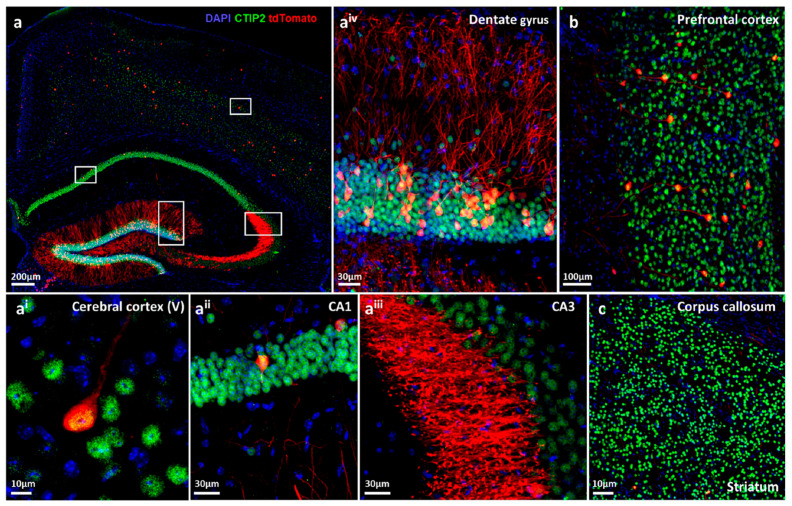
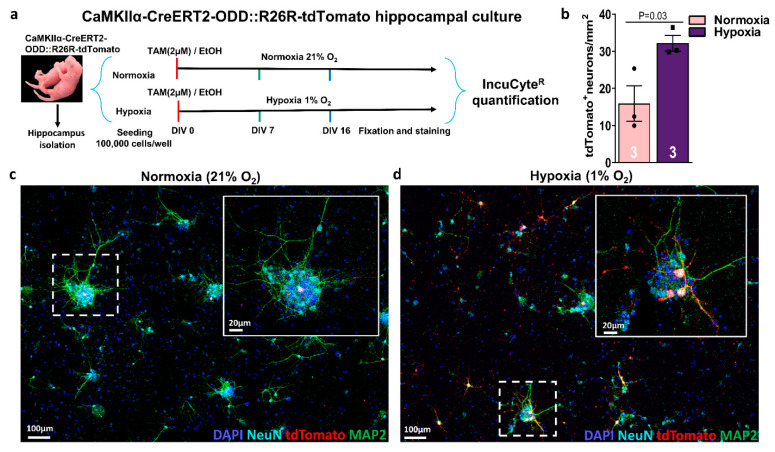
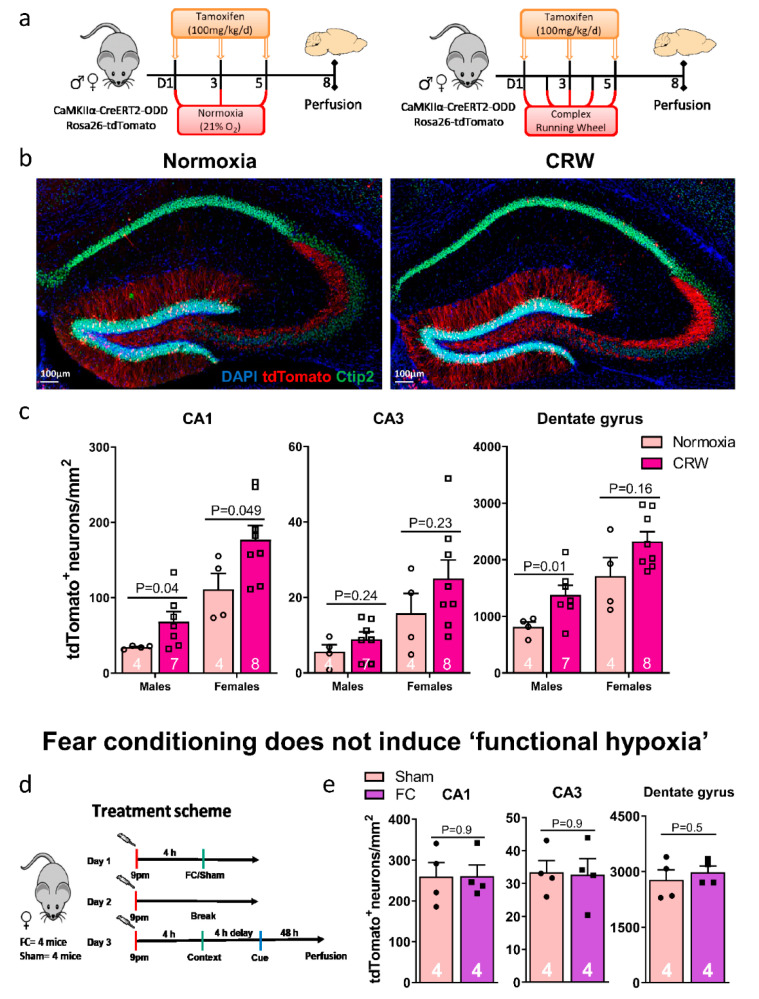
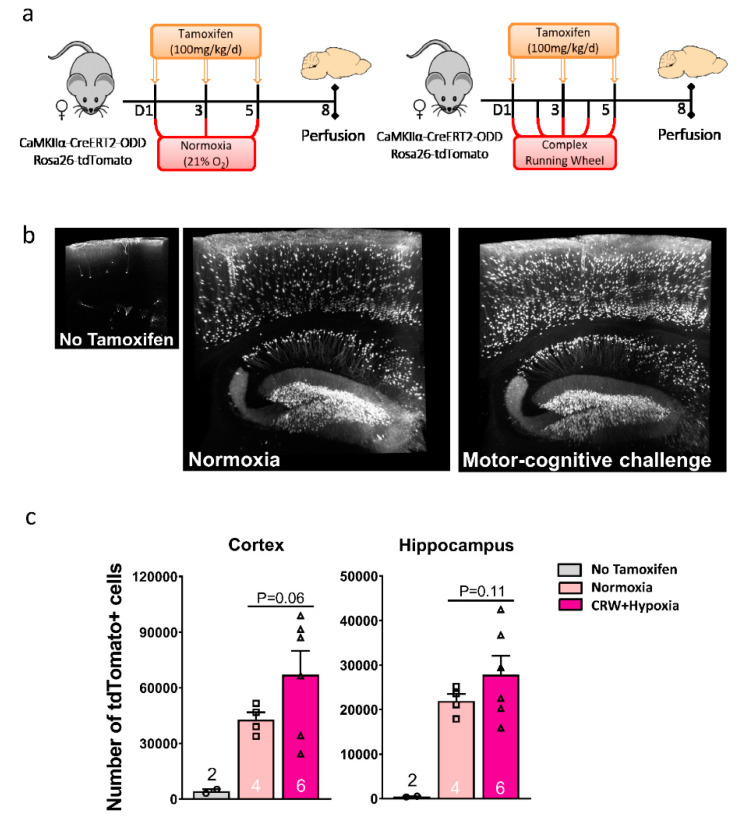
We previously introduced the brain erythropoietin (EPO) circle as a model to explain the adaptive 'brain hardware upgrade' and enhanced performance. In this fundamental circle, brain cells, challenged by motor-cognitive tasks, experience functional hypoxia, triggering the expression of EPO among other genes. We attested hypoxic cells by a transgenic reporter approach under the ubiquitous CAG promoter, with Hif-1α oxygen-dependent degradation-domain (ODD) fused to CreERT2-recombinase. To specifically focus on the functional hypoxia of excitatory pyramidal neurons, here, we generated CaMKIIα-CreERT2-ODD::R26R-tdTomato mice. Behavioral challenges, light-sheet microscopy, immunohistochemistry, single-cell mRNA-seq, and neuronal cultures under normoxia or hypoxia served to portray these mice. Upon complex running wheel performance as the motor-cognitive task, a distinct increase in functional hypoxic neurons was assessed immunohistochemically and confirmed three-dimensionally. In contrast, fear conditioning as hippocampal stimulus was likely too short-lived to provoke neuronal hypoxia. Transcriptome data of hippocampus under normoxia versus inspiratory hypoxia revealed increases in CA1 CaMKIIα-neurons with an immature signature, characterized by the expression of α, , and , and consistent with accelerated differentiation. The hypoxia reporter response was reproduced in vitro upon neuronal maturation. To conclude, task-associated activity triggers neuronal functional hypoxia as a local and brain-wide reaction mediating adaptive neuroplasticity. Hypoxia-induced genes such as EPO drive neuronal differentiation, brain maturation, and improved performance.
我们之前介绍了脑促红细胞生成素 (EPO) 循环,作为解释适应性“大脑硬件升级”和增强性能的模型。在这个基本循环中,脑细胞受到运动认知任务的挑战,经历功能性缺氧,触发 EPO 等基因的表达。我们通过在广泛表达的 CAG 启动子下融合 Hif-1α 氧依赖性降解结构域 (ODD) 的转基因报告基因方法来证明缺氧细胞的存在,该方法与 CreERT2-重组酶融合。为了专门关注兴奋性锥体神经元的功能性缺氧,我们在这里生成了 CaMKIIα-CreERT2-ODD::R26R-tdTomato 小鼠。行为挑战、光片显微镜、免疫组织化学、单细胞 mRNA-seq 和正常氧或缺氧下的神经元培养用于描述这些小鼠。在复杂的跑步轮性能作为运动认知任务时,通过免疫组织化学评估和三维确认,明显增加了功能性缺氧神经元。相比之下,作为海马刺激的恐惧条件反射可能持续时间太短,无法引起神经元缺氧。正常氧与吸气性缺氧下海马转录组数据显示 CA1 CaMKIIα-神经元表达增加,具有不成熟的特征,其特征是表达 α、β和γ,并与加速分化一致。缺氧报告基因反应在体外神经元成熟时重现。总之,与任务相关的活动引发神经元功能性缺氧,作为介导适应性神经可塑性的局部和全脑反应。缺氧诱导基因,如 EPO,可驱动神经元分化、大脑成熟和提高性能。