Velázquez-Moctezuma Rodrigo, Augestad Elias H, Castelli Matteo, Holmboe Olesen Christina, Clementi Nicola, Clementi Massimo, Mancini Nicasio, Prentoe Jannick
Copenhagen Hepatitis C Program (CO-HEP), Department of Immunology and Microbiology, Faculty of Health and Medical Sciences, University of Copenhagen, 2200 Copenhagen, Denmark.
Department of Infectious Diseases, Hvidovre Hospital, 2650 Hvidovre, Denmark.
Vaccines (Basel). 2021 Mar 20;9(3):291. doi: 10.3390/vaccines9030291.
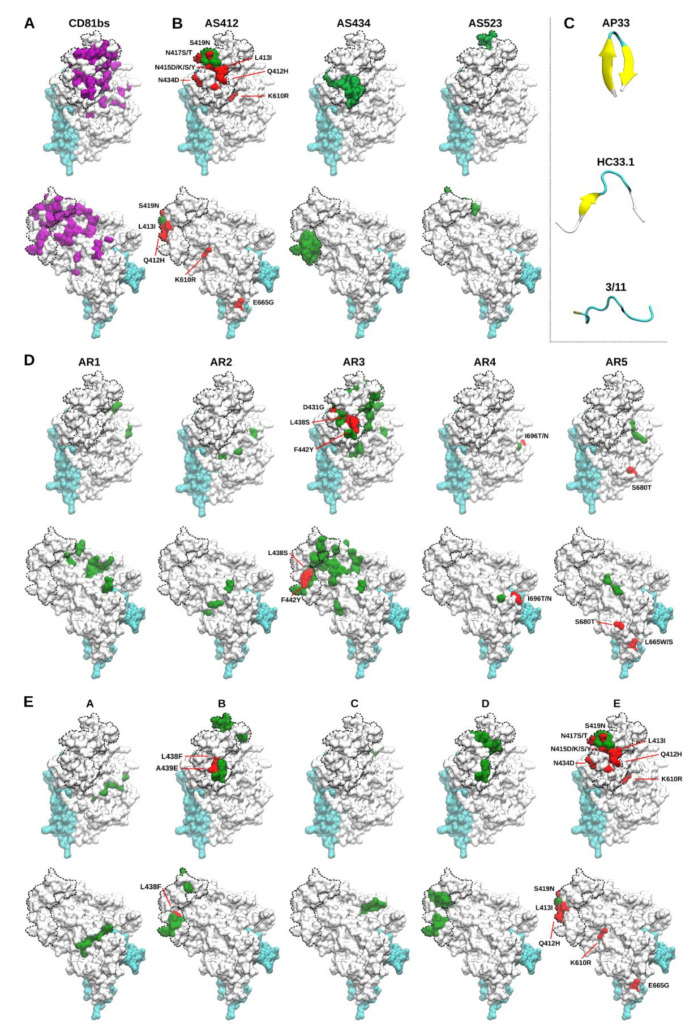
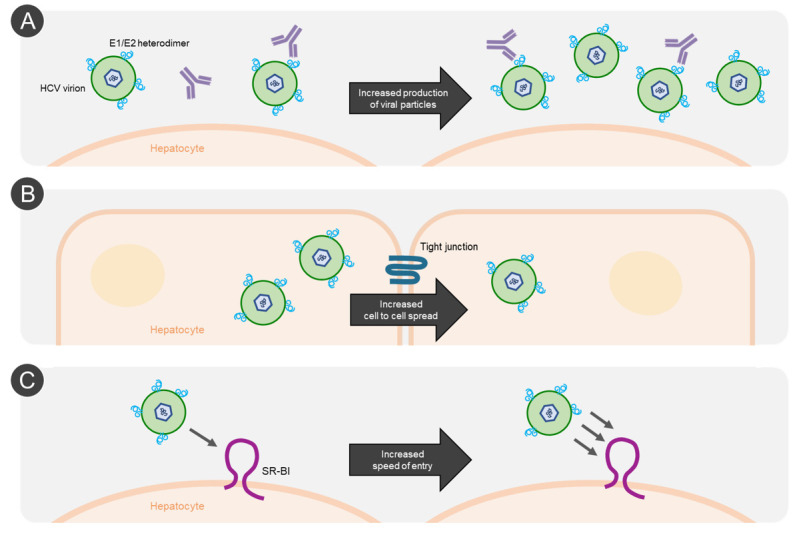
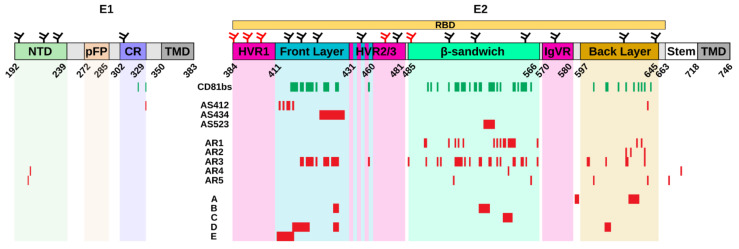
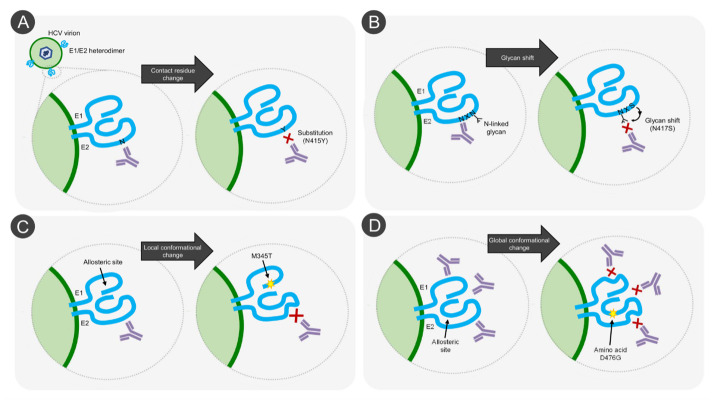
Hepatitis C virus (HCV) is a major causative agent of acute and chronic hepatitis. It is estimated that 400,000 people die every year from chronic HCV infection, mostly from severe liver-related diseases such as cirrhosis and liver cancer. Although HCV was discovered more than 30 years ago, an efficient prophylactic vaccine is still missing. The HCV glycoprotein complex, E1/E2, is the principal target of neutralizing antibodies (NAbs) and, thus, is an attractive antigen for B-cell vaccine design. However, the high genetic variability of the virus necessitates the identification of conserved epitopes. Moreover, the high intrinsic mutational capacity of HCV allows the virus to continually escape broadly NAbs (bNAbs), which is likely to cause issues with vaccine-resistant variants. Several studies have assessed the barrier-to-resistance of vaccine-relevant bNAbs in vivo and in vitro. Interestingly, recent studies have suggested that escape substitutions can confer antibody resistance not only by direct modification of the epitope but indirectly through allosteric effects, which can be grouped based on the breadth of these effects on antibody susceptibility. In this review, we summarize the current understanding of HCV-specific NAbs, with a special focus on vaccine-relevant bNAbs and their targets. We highlight antibody escape studies pointing out the different methodologies and the escape mutations identified thus far. Finally, we analyze the antibody escape mechanisms of envelope protein escape substitutions and polymorphisms according to the most recent evidence in the HCV field. The accumulated knowledge in identifying bNAb epitopes as well as assessing barriers to resistance and elucidating relevant escape mechanisms may prove critical in the successful development of an HCV B-cell vaccine.
丙型肝炎病毒(HCV)是急性和慢性肝炎的主要致病原。据估计,每年有40万人死于慢性HCV感染,主要死于肝硬化和肝癌等严重肝脏相关疾病。尽管HCV在30多年前就已被发现,但至今仍缺乏有效的预防性疫苗。HCV糖蛋白复合体E1/E2是中和抗体(NAbs)的主要靶点,因此是B细胞疫苗设计中具有吸引力的抗原。然而,该病毒的高基因变异性使得必须鉴定保守表位。此外,HCV的高内在突变能力使病毒能够持续逃避广泛中和抗体(bNAbs),这可能会引发疫苗抗性变异体的问题。多项研究已在体内和体外评估了与疫苗相关的bNAbs的抗性屏障。有趣的是,最近的研究表明,逃逸替代不仅可通过直接修饰表位,还可通过变构效应间接赋予抗体抗性,可根据这些效应对抗体敏感性的影响广度对其进行分类。在本综述中,我们总结了目前对HCV特异性NAbs的认识,特别关注与疫苗相关的bNAbs及其靶点。我们重点介绍了抗体逃逸研究,指出了不同的方法以及迄今为止鉴定出的逃逸突变。最后,我们根据HCV领域的最新证据分析包膜蛋白逃逸替代和多态性的抗体逃逸机制。在鉴定bNAb表位、评估抗性屏障以及阐明相关逃逸机制方面积累的知识,可能对成功开发HCV B细胞疫苗至关重要。