College of Food Science and Technology, Shanghai Ocean University, Shanghai 201306, China.
Research Center for Marine Drugs, State Key Laboratory of Oncogenes and Related Genes, Department of Pharmacy, Ren Ji Hospital, School of Medicine, Shanghai Jiao Tong University, Shanghai 200127, China.
Molecules. 2021 Mar 24;26(7):1816. doi: 10.3390/molecules26071816.
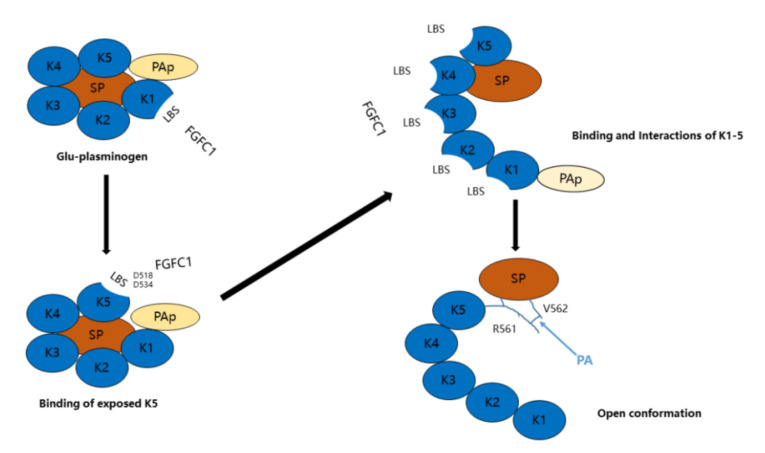
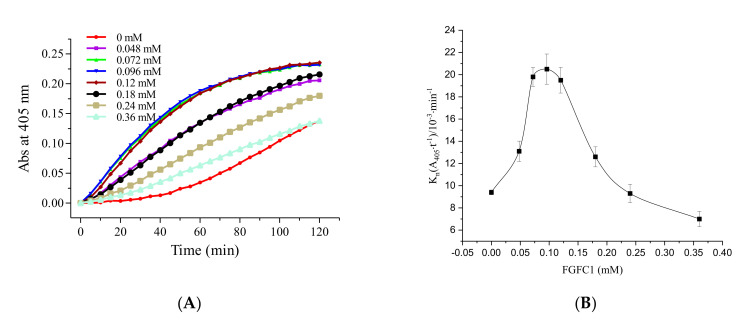
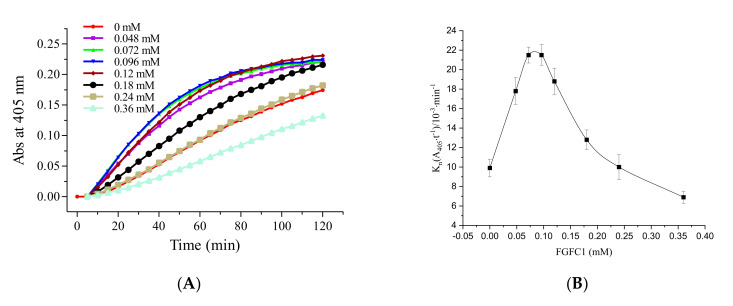
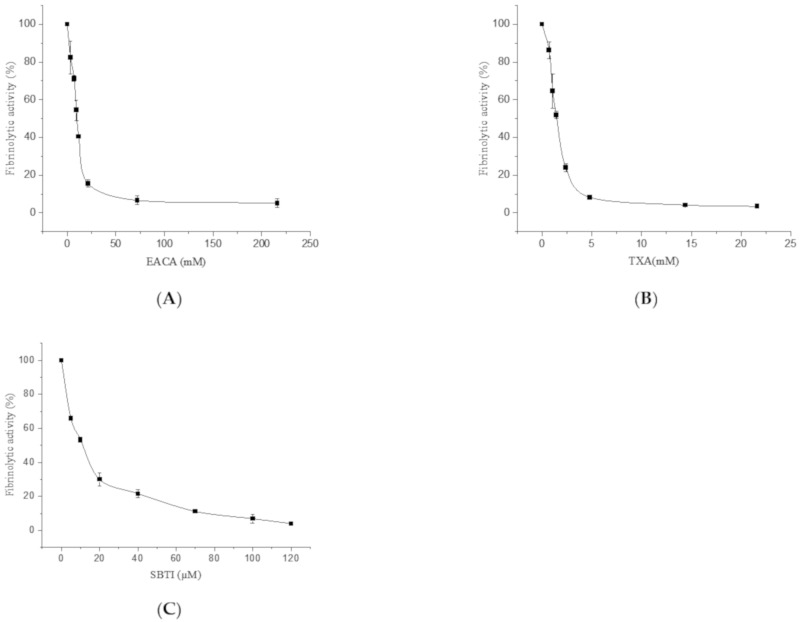
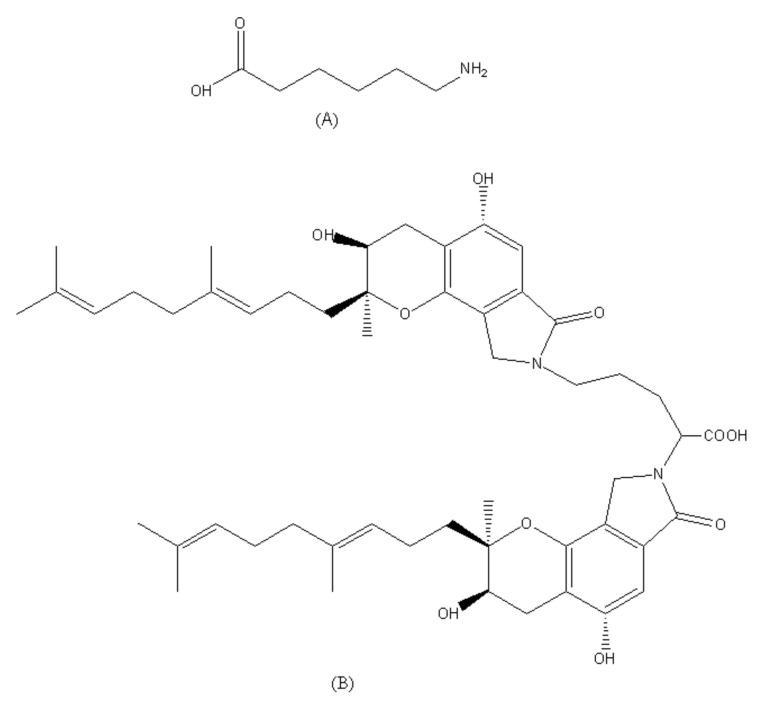
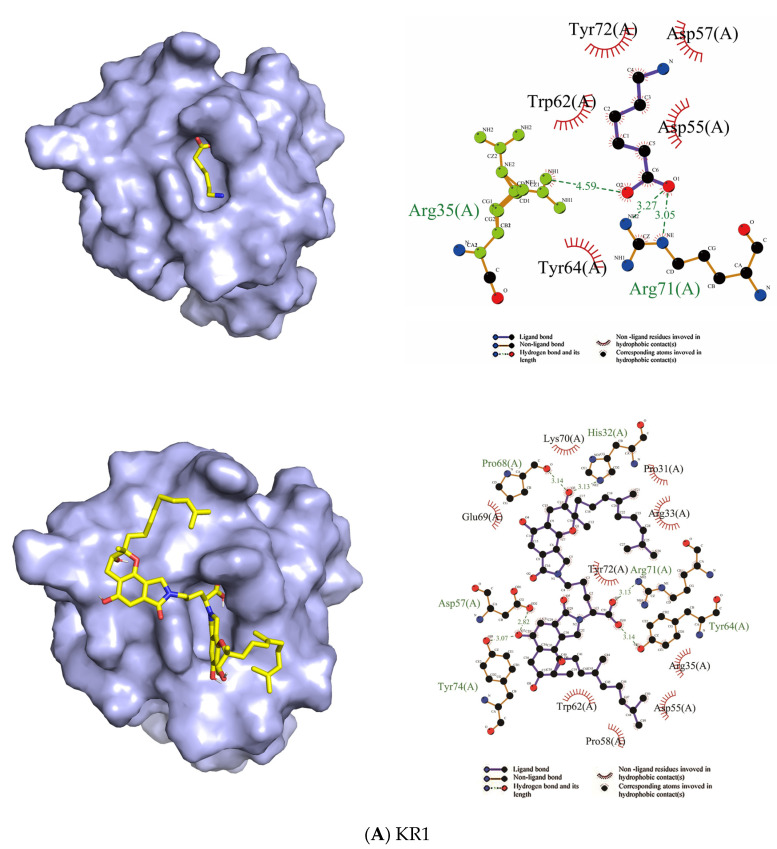
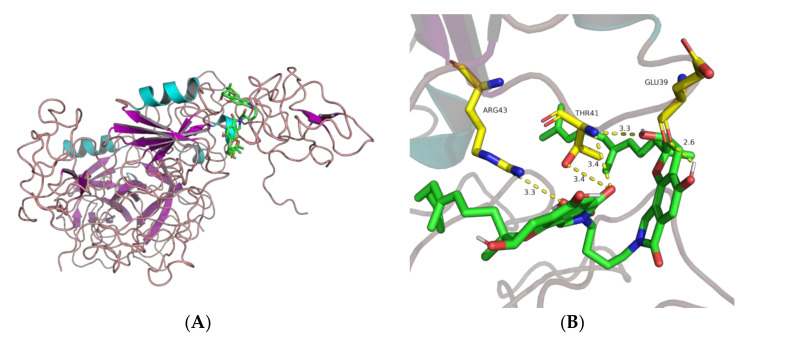
Fungi fibrinolytic compound 1 (FGFC1) is a rare marine-derived compound that can enhance fibrinolysis both in vitro and in vivo. The fibrinolytic activity characterization of FGFC1 mediated by plasminogen (Glu-/Lys-) and a single-chain urokinase-type plasminogen activator (pro-uPA) was further evaluated. The binding sites and mode of binding between FGFC1 and plasminogen were investigated by means of a combination of in vitro experiments and molecular docking. A 2.2-fold enhancement of fibrinolytic activity was achieved at 0.096 mM FGFC1, whereas the inhibition of fibrinolytic activity occurred when the FGFC1 concentration was above 0.24 mM. The inhibition of fibrinolytic activity of FGFC1 by 6-aminohexanoic acid (EACA) and tranexamic acid (TXA) together with the docking results revealed that the lysine-binding sites (LBSs) play a crucial role in the process of FGFC1 binding to plasminogen. The action mechanism of FGFC1 binding to plasminogen was inferred, and FGFC1 was able to induce plasminogen to exhibit an open conformation by binding through the LBSs. The molecular docking results showed that docking of ligands (EACA, FGFC1) with receptors (KR1-KR5) mainly occurred through hydrophilic and hydrophobic interactions. In addition, the binding affinity values of EACA to KR1-KR5 were -5.2, -4.3, -3.7, -4.5, and -4.3 kcal/moL, respectively, and those of FGFC1 to KR1-KR5 were -7.4, -9.0, -6.3, -8.3, and -6.7 kcal/moL, respectively. The findings demonstrate that both EACA and FGFC1 bound to KR1-KR5 with moderately high affinity. This study could provide a theoretical basis for the clinical pharmacology of FGFC1 and establish a foundation for practical applications of FGFC1.
真菌纤溶化合物 1(FGFC1)是一种罕见的海洋来源化合物,可在体外和体内增强纤溶。进一步评估了 FGFC1 通过纤溶酶原(Glu-/Lys-)和单链尿激酶型纤溶酶原激活剂(pro-uPA)介导的纤溶活性特征。通过体外实验和分子对接相结合的方法研究了 FGFC1 与纤溶酶原之间的结合部位和结合方式。在 0.096mM FGFC1 时,纤溶活性提高了 2.2 倍,而当 FGFC1 浓度高于 0.24mM 时,纤溶活性受到抑制。6-氨基己酸(EACA)和氨甲环酸(TXA)对 FGFC1 纤溶活性的抑制作用以及对接结果表明,赖氨酸结合位(LBS)在 FGFC1 与纤溶酶原结合过程中起关键作用。推断了 FGFC1 与纤溶酶原结合的作用机制,并且 FGFC1 通过结合 LBS 能够诱导纤溶酶原呈现开放构象。分子对接结果表明,配体(EACA、FGFC1)与受体(KR1-KR5)的对接主要通过亲水和疏水相互作用发生。此外,EACA 与 KR1-KR5 的结合亲和力值分别为-5.2、-4.3、-3.7、-4.5 和-4.3kcal/mol,而 FGFC1 与 KR1-KR5 的结合亲和力值分别为-7.4、-9.0、-6.3、-8.3 和-6.7 kcal/mol。研究结果表明,EACA 和 FGFC1 均与 KR1-KR5 具有中等亲和力结合。该研究可为 FGFC1 的临床药理学提供理论依据,并为 FGFC1 的实际应用奠定基础。