Kim Jihoon, Kim Jee Seon, Min Kyung Hyun, Kim Young-Hwa, Chen Xiaoyuan
Parker H. Petit Institute for Bioengineering and Bioscience, Georgia Institute of Technology, 315 Ferst Dr NW, Atlanta, GA 30332, USA.
LG Chem, Seoul 07336, Korea.
Bioengineering (Basel). 2021 Mar 29;8(4):43. doi: 10.3390/bioengineering8040043.
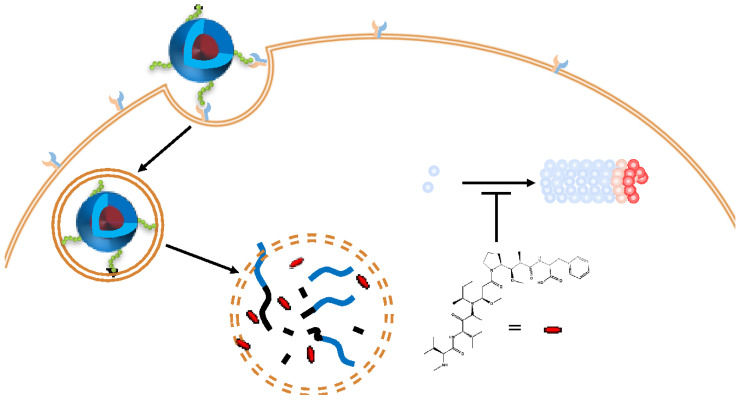
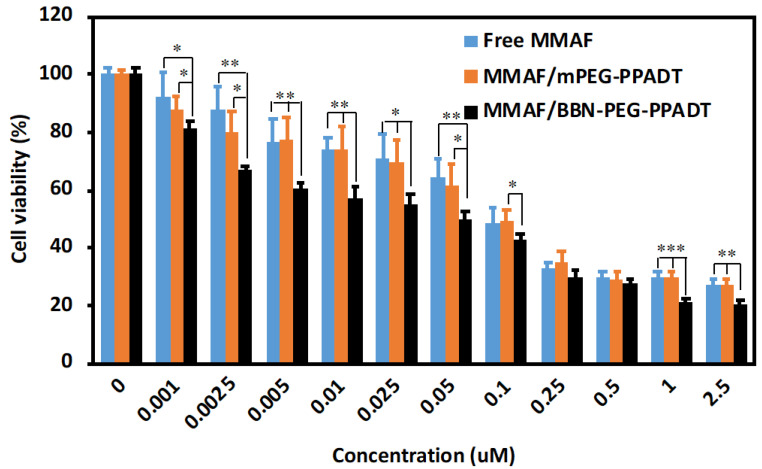
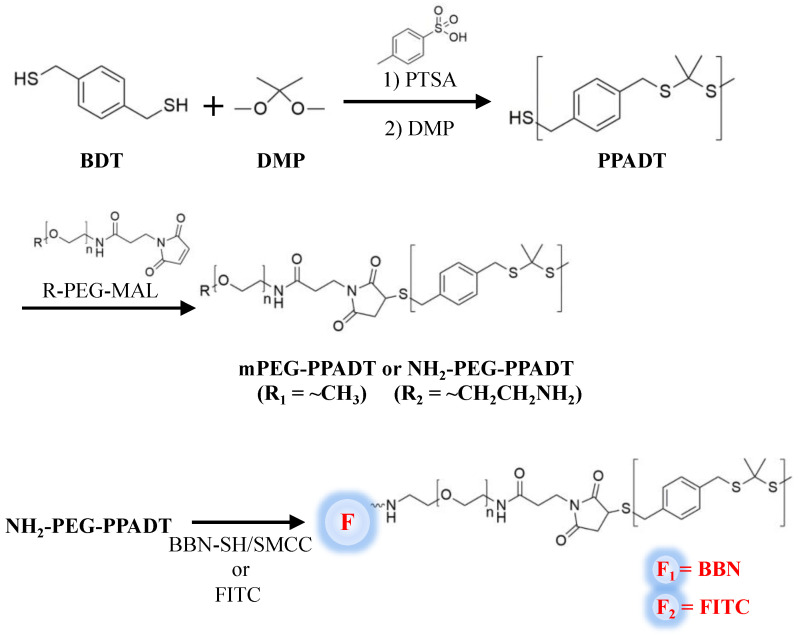
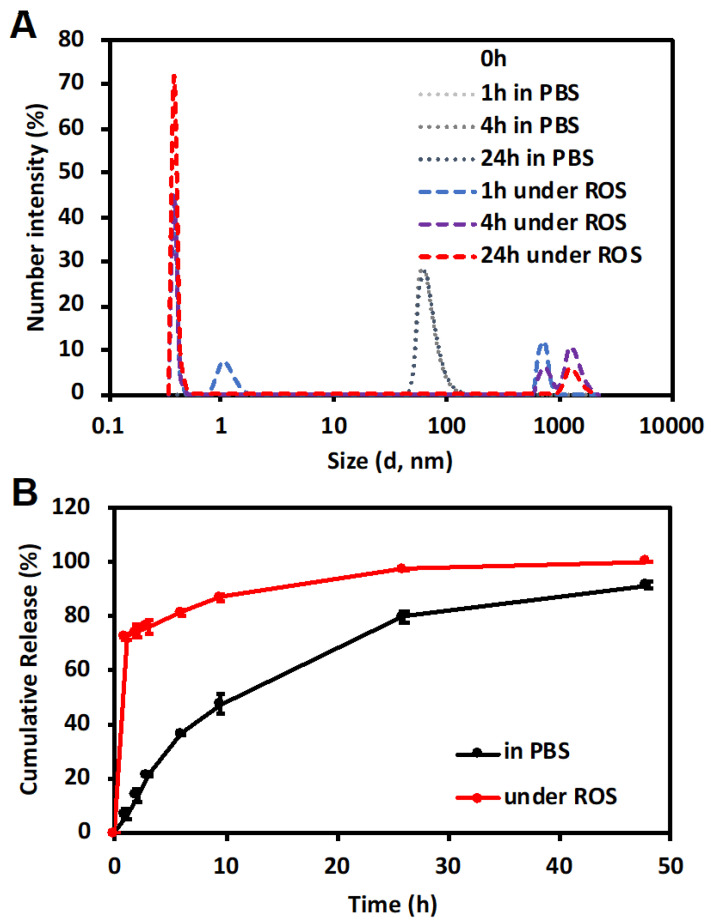
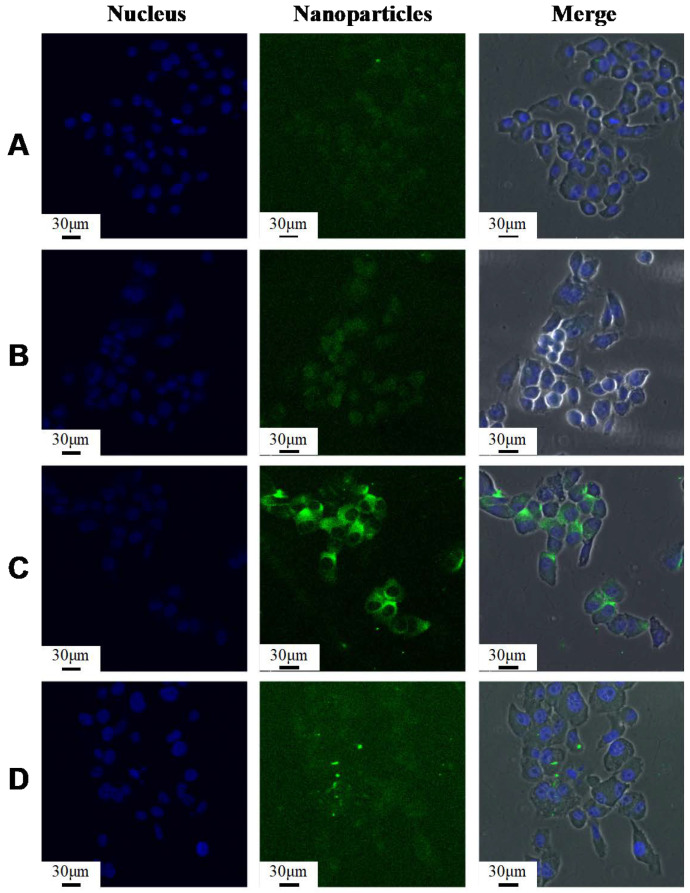
Dolastatin derivatives, represented by monomethylauristatin E (MMAE), have been translated in clinic with a form of antibody-drug conjugate; however, their potential in nanoparticle systems has not been well established due to the potential risk of immature release of extremely high cytotoxic dolastatin drugs during blood circulation. Herein, we rationally propose monomethylauristatin F (MMAF), a dolastatin-derived, loaded nanoparticle system composed of bombesin (BBN)-tethered ROS-responsive micelle system (BBN-PEG-PPADT) to achieve efficient anticancer therapy with targeted and efficient delivery of MMAF. The developed MMAF-loaded BBN-PEG-PPADT micelles (MMAF@BBN-PEG-PPADT) exhibited improved cellular uptake via interactions between BBN and gastrin-releasing peptide receptors on the cancer cells and the intracellular burst release of MMAF, owing to the ROS-responsive disruption, which allowed the efficient anticancer effects of MMAF in vitro. This study suggests the potential of nanoparticle systems in the delivery of dolastatin drugs.
以单甲基澳瑞他汀E(MMAE)为代表的多拉司他汀衍生物已作为抗体药物偶联物形式进入临床应用;然而,由于在血液循环过程中,具有极高细胞毒性的多拉司他汀药物存在提前释放的潜在风险,其在纳米颗粒系统中的潜力尚未得到充分证实。在此,我们合理地提出了单甲基澳瑞他汀F(MMAF),这是一种由与蛙皮素(BBN)相连的活性氧(ROS)响应性胶束系统(BBN-PEG-PPADT)构成的、负载多拉司他汀的纳米颗粒系统,旨在通过靶向且高效地递送MMAF实现有效的抗癌治疗。所研发的负载MMAF的BBN-PEG-PPADT胶束(MMAF@BBN-PEG-PPADT)通过BBN与癌细胞上胃泌素释放肽受体之间的相互作用以及MMAF的细胞内爆发式释放,表现出增强的细胞摄取能力,这归因于ROS响应性破坏,从而使MMAF在体外具有高效的抗癌效果。本研究表明了纳米颗粒系统在递送多拉司他汀药物方面的潜力。