Kaczka Piotr, Kubicka Katarzyna, Batra Amit, Maciejczyk Marcin, Kopera Edyta, Bira Justyna, Zając Tomasz
Academy of Physical Education in Katowice, Mikołowska 72a, 40-065 Katowice, Poland.
Department of Physiology and Biochemistry, Faculty of Physical Education and Sport, University of Physical Education in Krakow, Jana Pawła II 78, 31-571 Kraków, Poland.
Nutrients. 2021 Mar 25;13(4):1064. doi: 10.3390/nu13041064.
The aim of the study was to determine the effect of simultaneous supplementation of β-hydroxy-β-methylbutyrate and L-Arginine α-ketoglutarate on lower limb power and muscle damage in medium distance runners aged 15.3 (±0.9) years old.
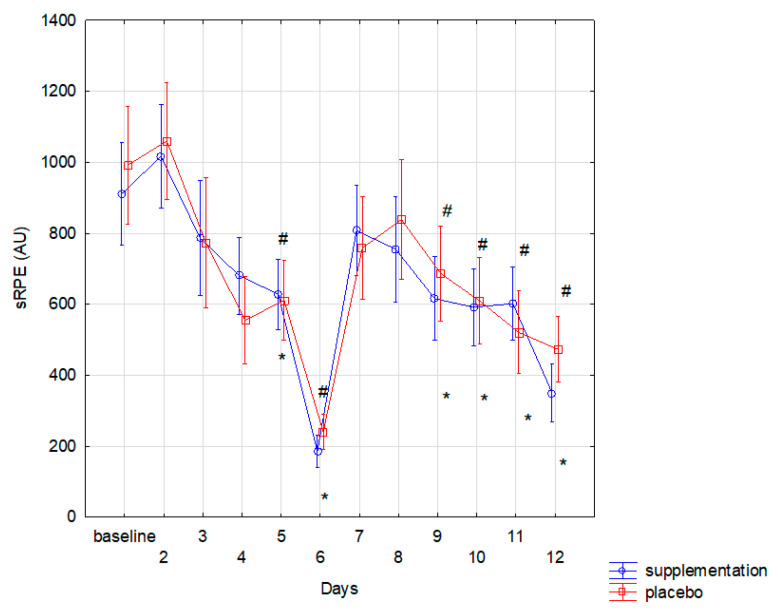
The study group consisted of 40 volunteers aged 14-17 years practicing medium distance running for at least two years. The study lasted 12 days and followed a randomized, double-blind, placebo-controlled, parallel design. All subjects attended a familiarization session on day 0 before the test. The subjects were randomly divided into two groups: supplements and placebo group. The same training cycle protocol was used in both groups during the 12-day training period. Morning warm-up involved 10 min jogging at 60-75% of maximal heart rate and countermovement jump height measurement. Main training units were carried out for both groups with the same volume. Training load assessment (the daily session Rating of Perceived Exertion (s-RPE) method) method takes into consideration the intensity and the duration of the training session to calculate the "training load" (TL).
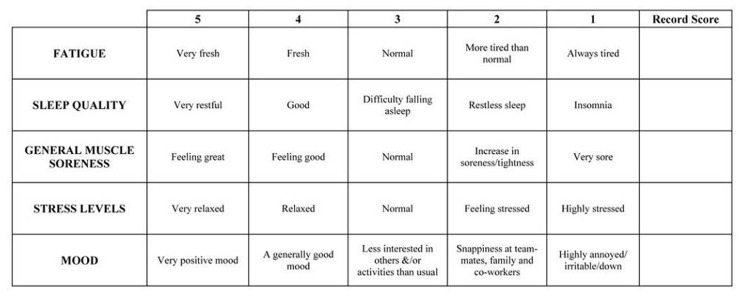
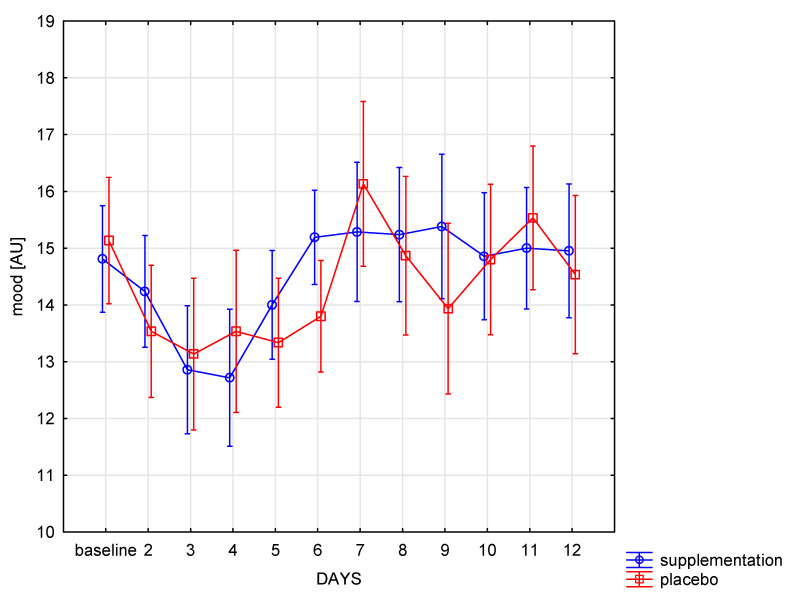
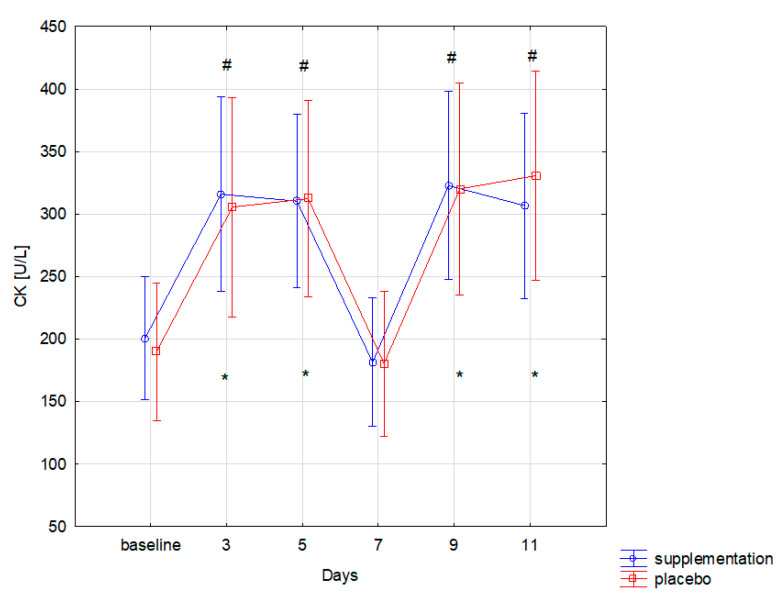
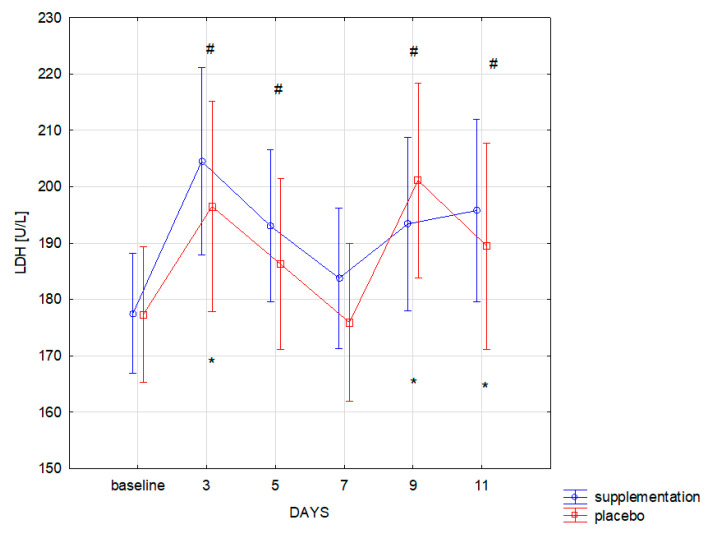
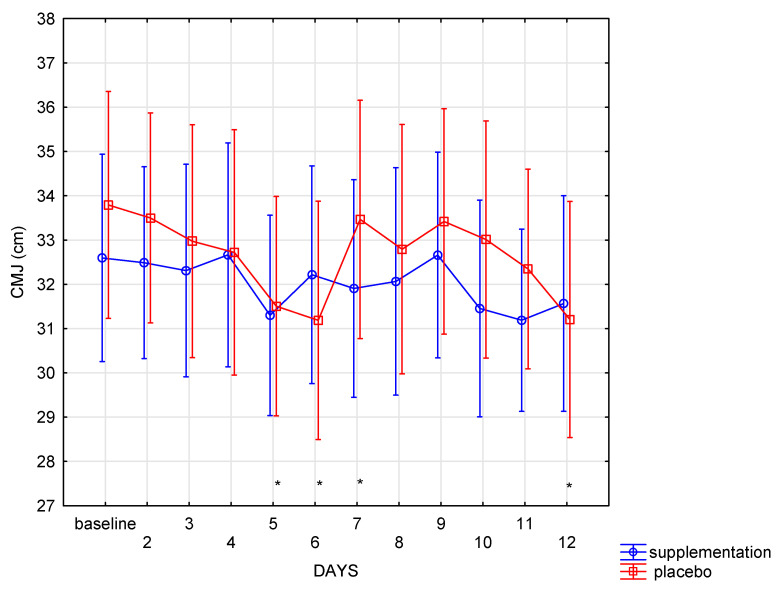
At the end of the training cycle, a significant ( = 0.002) decrease in the countermovement jump (CMJ) height was found in the placebo group when compared to the baseline. In the supplement group, there was no decrease in the countermovement jump height. Creatine kinase and lactate dehydrogenase concentration increased during the training days similarly in both groups and decreased on rest days. There were no differences between groups in enzymes concentration. The research results indicate that the supplement combination used in the supplements group prevented a reduction in the CMJ values. In contrast to the supplements group, in the placebo group, the CMJ changes were statistically significant: a noticeable ( = 0.002) decrease in CMJ was noted between the baseline measurement and the 6th measurement. The well-being of the subjects from both groups changed significantly during the training period, and the intergroup differences in the mood level were similar and not statistically significant.
The results of this study indicate that the daily co-supplementation with calcium salt of β-hydroxy-β-methylbutyrate (7.5 g) and L-Arginine α-ketoglutarate (10 g) during training might help to prevent decline in jump performance. No influence on muscle damage markers or mood was shown.
本研究的目的是确定同时补充β-羟基-β-甲基丁酸酯和L-精氨酸α-酮戊二酸对15.3(±0.9)岁的中长跑运动员下肢力量和肌肉损伤的影响。
研究组由40名年龄在14 - 17岁、进行中长跑至少两年的志愿者组成。研究持续12天,采用随机、双盲、安慰剂对照、平行设计。所有受试者在测试前的第0天参加了一次适应性训练。受试者被随机分为两组:补充剂组和安慰剂组。在为期12天的训练期间,两组采用相同的训练周期方案。早晨热身包括以最大心率的60 - 75%进行10分钟慢跑以及测量反向纵跳高度。两组的主要训练单元训练量相同。训练负荷评估(每日训练主观用力程度评分(s-RPE)方法)考虑训练课的强度和持续时间来计算“训练负荷”(TL)。
在训练周期结束时,与基线相比,安慰剂组的反向纵跳(CMJ)高度显著( = 0.002)下降。在补充剂组中,反向纵跳高度没有下降。两组在训练期间肌酸激酶和乳酸脱氢酶浓度均有相似升高,在休息日下降。两组酶浓度无差异。研究结果表明,补充剂组使用的补充剂组合可防止CMJ值降低。与补充剂组相比,安慰剂组的CMJ变化具有统计学意义:在基线测量和第6次测量之间,CMJ显著( = 0.002)下降。两组受试者的幸福感在训练期间均有显著变化,且情绪水平的组间差异相似,无统计学意义。
本研究结果表明,训练期间每日联合补充β-羟基-β-甲基丁酸钙盐(7.5克)和L-精氨酸α-酮戊二酸(10克)可能有助于防止跳跃成绩下降。未显示对肌肉损伤标志物或情绪有影响。