Yeung Oscar Wai Ho, Qi Xiang, Pang Li, Liu Hui, Ng Kevin Tak Pan, Liu Jiang, Lo Chung Mau, Man Kwan
Department of Surgery, HKU-SZH & The University of Hong Kong, Pokfulam, Hong Kong SAR, China.
Cancers (Basel). 2021 Mar 25;13(7):1503. doi: 10.3390/cancers13071503.
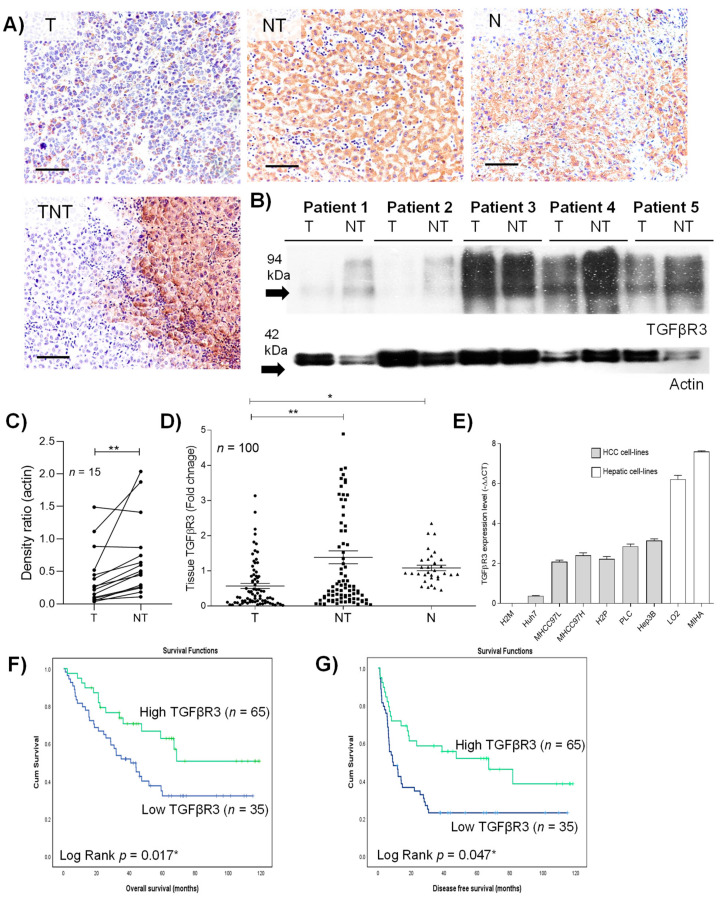
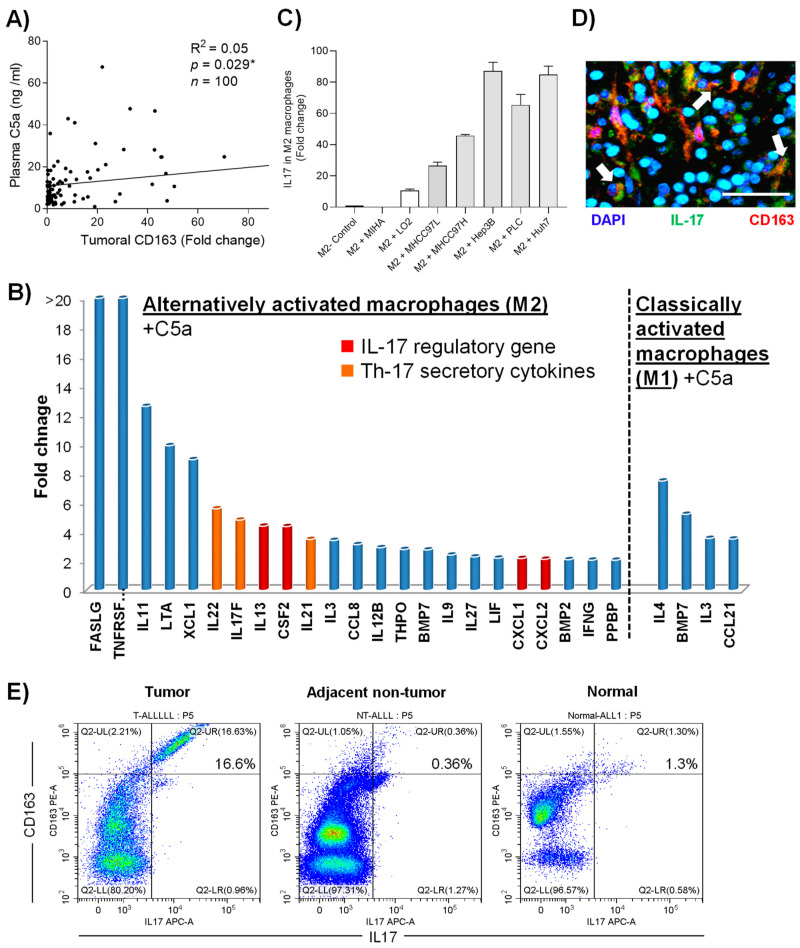
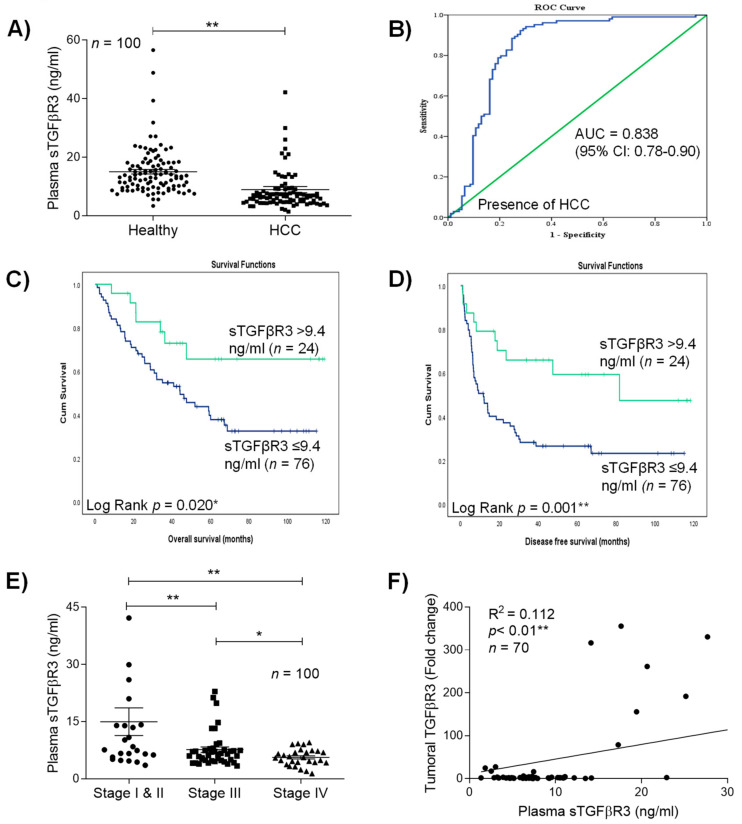
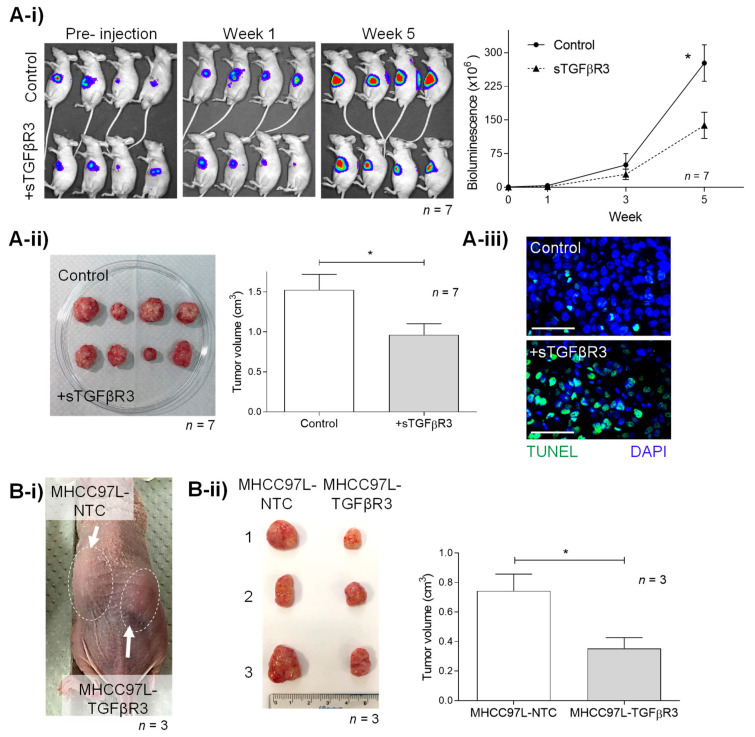
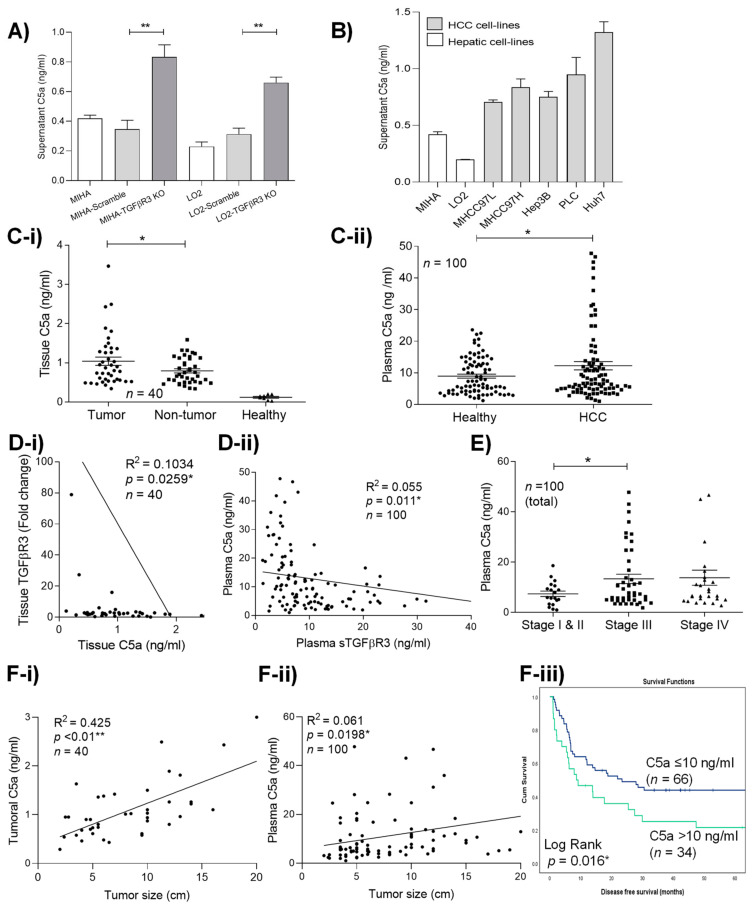
Background and Aims-Transforming growth factor-beta (TGF-β) signaling orchestrates tumorigenesis and one of the family members, TGF-β receptor type III (TGFβR3), are distinctively under-expressed in numerous malignancies. Currently, the clinical impact of TGFβR3 down-regulation and the underlying mechanism remains unclear in hepatocellular carcinoma (HCC). Here, we aimed to identify the tumor-promoting roles of decreased TGFβR3 expression in HCC progression. Materials and Methods-For clinical analysis, plasma and liver specimens were collected from 100 HCC patients who underwent curative resection for the quantification of TGFβR3 by q-PCR and ELISA. To study the tumor-promoting mechanism of TGFβR3 downregulation, HCC mouse models and TGFβR3 knockout cell lines were applied. Results-Significant downregulation of TGFβR3 and its soluble form (sTGFβR3) were found in HCC tissues and plasma compared to healthy individuals ( < 0.01). Patients with <9.4 ng/mL sTGFβR3 exhibited advanced tumor stage, higher recurrence rate and shorter disease-free survival ( < 0.05). The tumor-suppressive function of sTGFβR3 was further revealed in an orthotopic mouse HCC model, resulting in 2-fold tumor volume reduction. In TGFβR3 knockout hepatocyte and HCC cells, increased complement component C5a was observed and strongly correlated with shorter survival and advanced tumor stage ( < 0.01). Interestingly, C5a activated the tumor-promoting Th-17 response in tumor associated macrophages. Conclusion-TGFβR3 suppressed tumor progression, and decreased expression resulted in poor prognosis in HCC patients through upregulation of tumor-promoting complement C5a.
背景与目的——转化生长因子-β(TGF-β)信号传导调控肿瘤发生,其家族成员之一,III型TGF-β受体(TGFβR3)在众多恶性肿瘤中显著低表达。目前,TGFβR3下调在肝细胞癌(HCC)中的临床影响及潜在机制尚不清楚。在此,我们旨在确定TGFβR3表达降低在HCC进展中的促肿瘤作用。材料与方法——为进行临床分析,从100例行根治性切除术的HCC患者中收集血浆和肝脏标本,通过q-PCR和ELISA定量检测TGFβR3。为研究TGFβR3下调的促肿瘤机制,应用了HCC小鼠模型和TGFβR3基因敲除细胞系。结果——与健康个体相比,HCC组织和血浆中TGFβR3及其可溶性形式(sTGFβR3)显著下调(<0.01)。sTGFβR3<9.4 ng/mL的患者表现出肿瘤分期较晚、复发率较高和无病生存期较短(<0.05)。原位小鼠HCC模型进一步揭示了sTGFβR3的肿瘤抑制功能,使肿瘤体积减少了2倍。在TGFβR3基因敲除的肝细胞和HCC细胞中,观察到补体成分C5a增加,且与较短生存期和较晚肿瘤分期密切相关(<0.01)。有趣的是,C5a激活了肿瘤相关巨噬细胞中促肿瘤的Th-17反应。结论——TGFβR3抑制肿瘤进展,其表达降低通过上调促肿瘤补体C5a导致HCC患者预后不良。