Lauer Jasmin C, Selig Mischa, Hart Melanie L, Kurz Bodo, Rolauffs Bernd
G.E.R.N. Research Center for Tissue Replacement, Regeneration & Neogenesis, Department of Orthopedics and Trauma Surgery, Faculty of Medicine, Medical Center-Albert-Ludwigs-University of Freiburg, 79085 Freiburg im Breisgau, Germany.
Faculty of Biology, University of Freiburg, Schaenzlestrasse 1, D-79104 Freiburg, Germany.
Int J Mol Sci. 2021 Mar 23;22(6):3279. doi: 10.3390/ijms22063279.
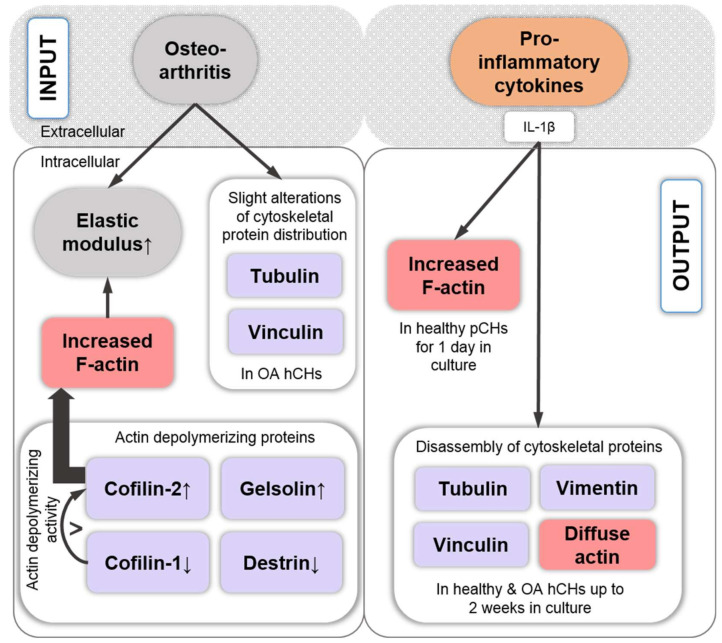
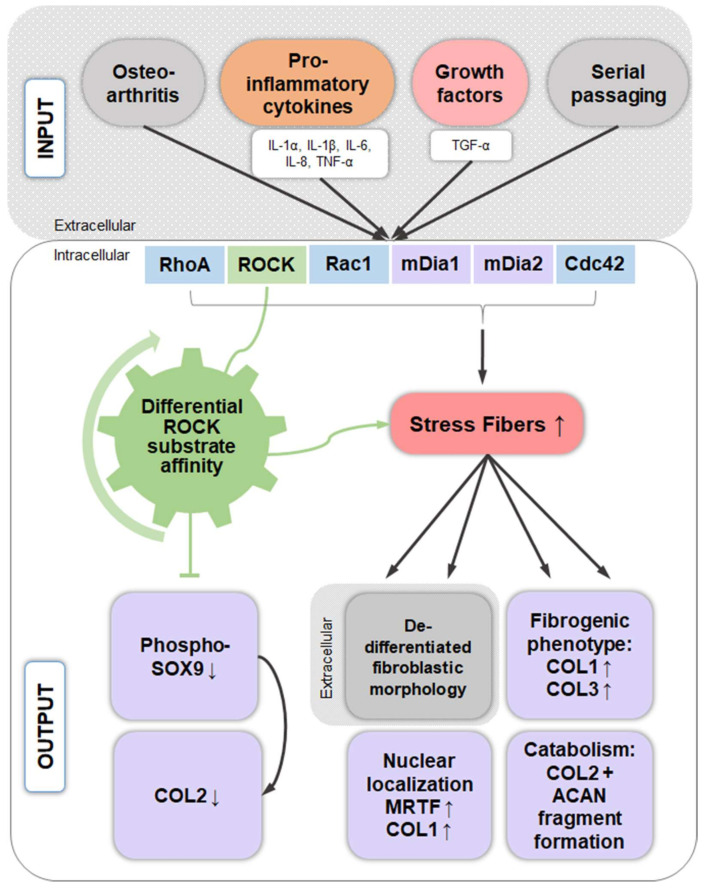
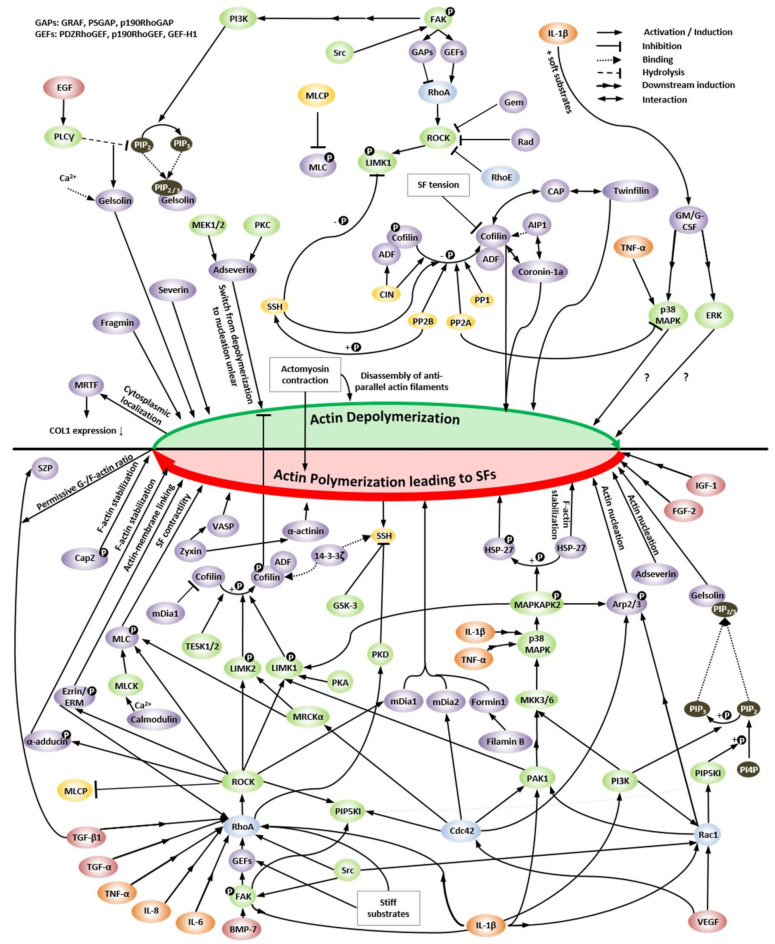
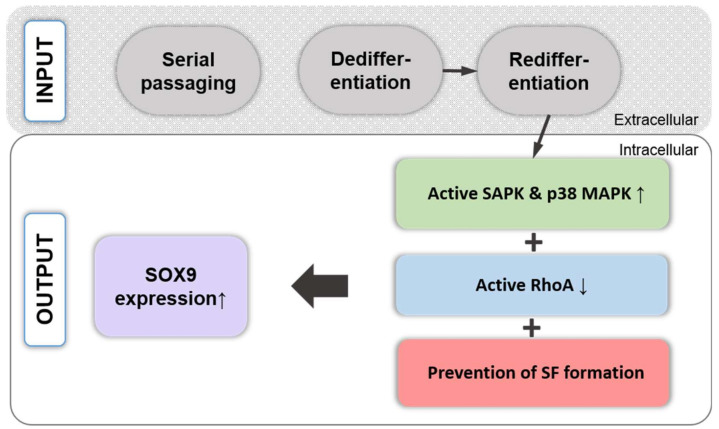
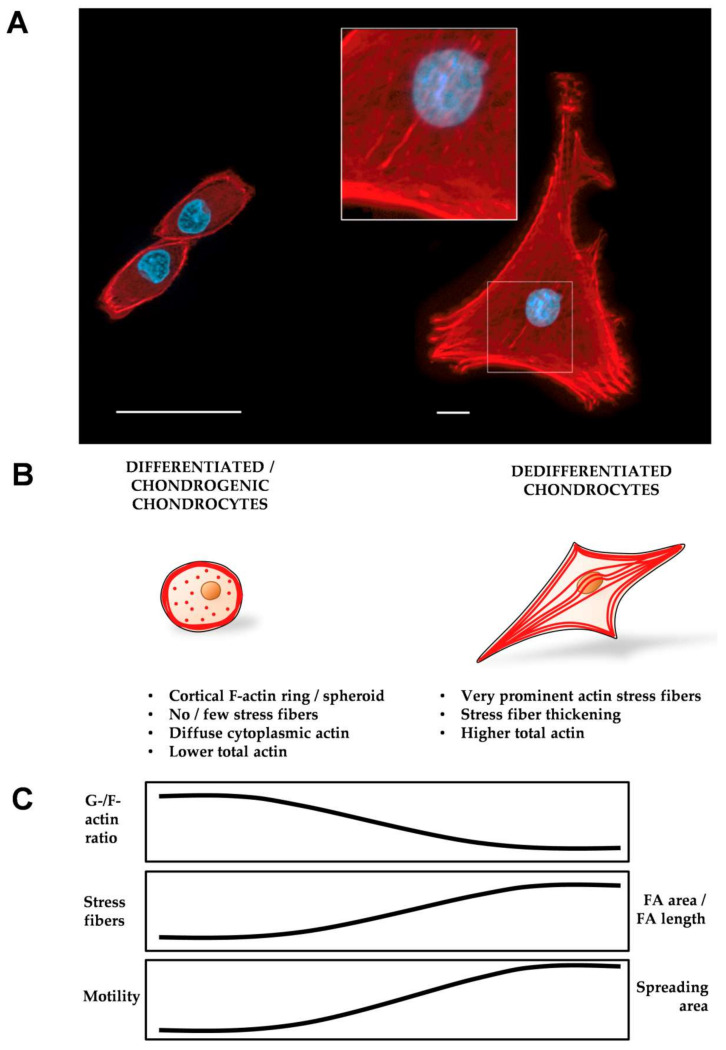
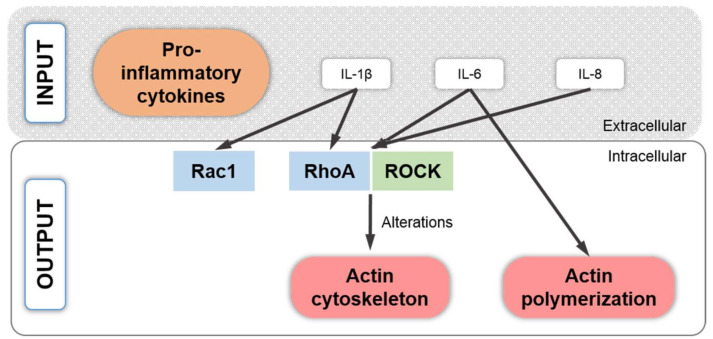
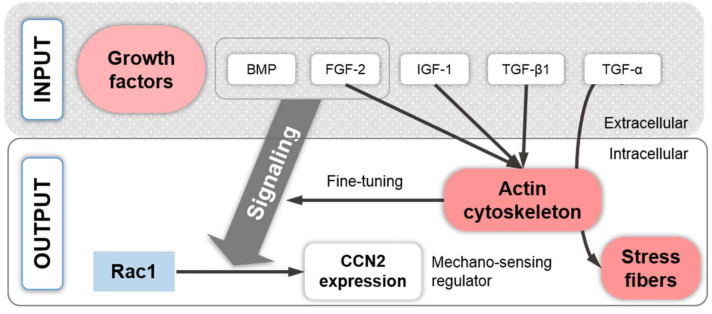
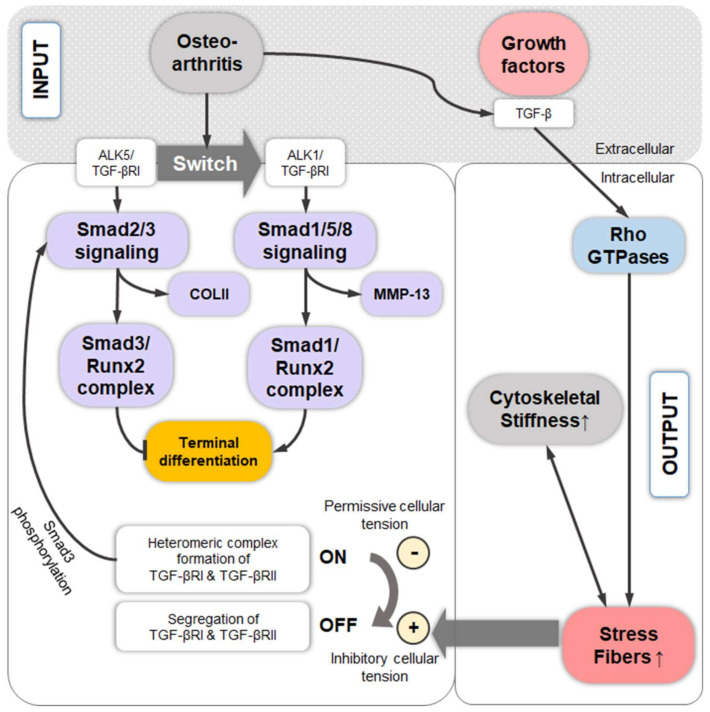
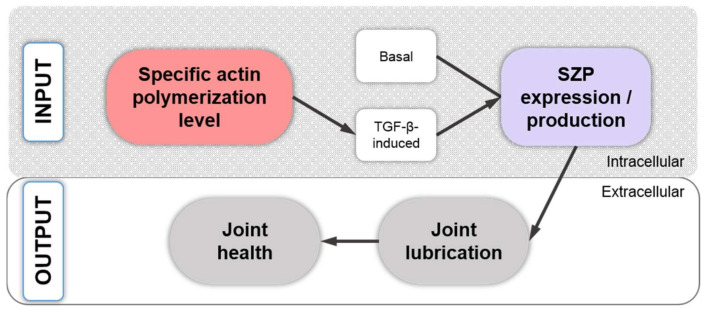
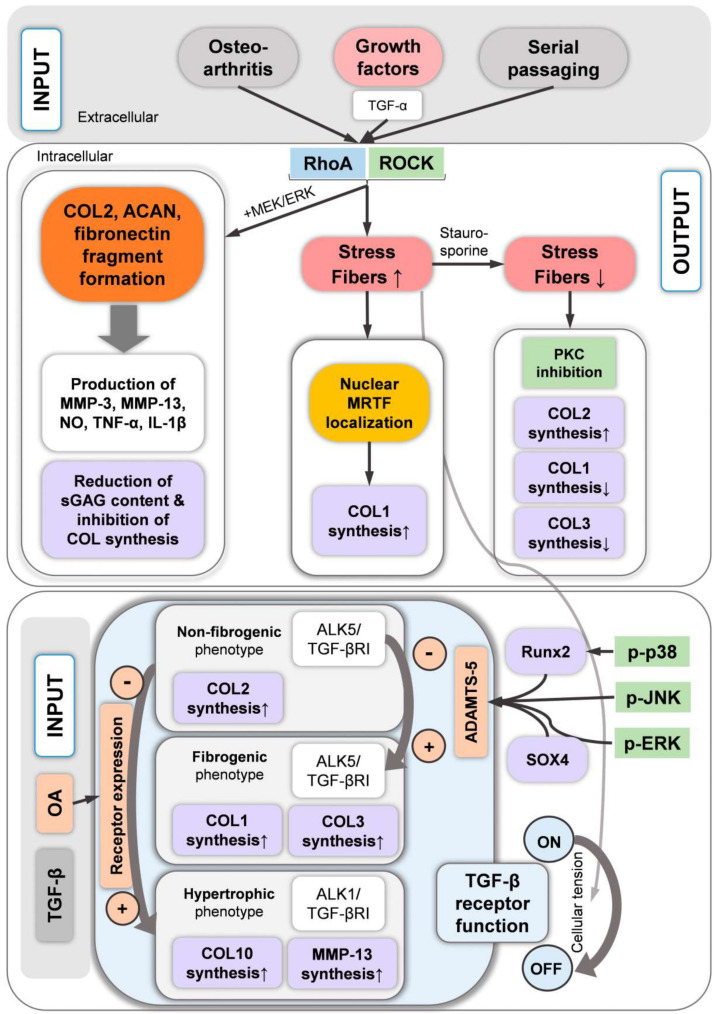
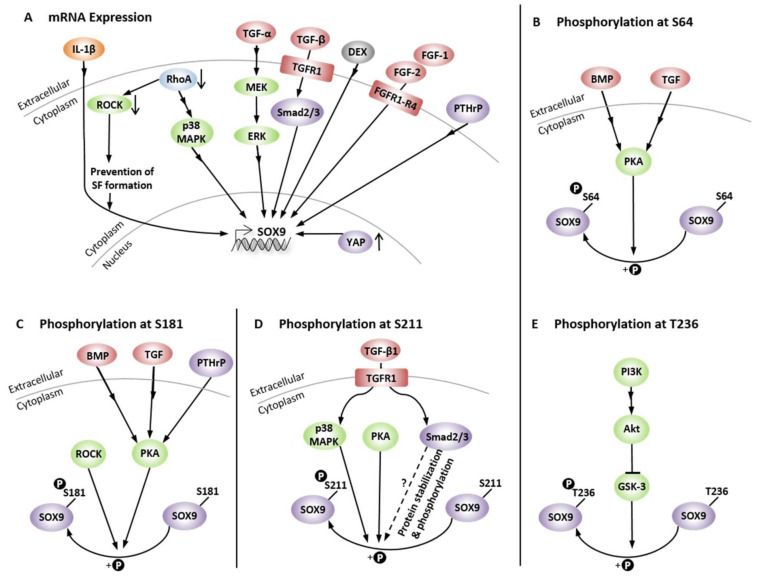
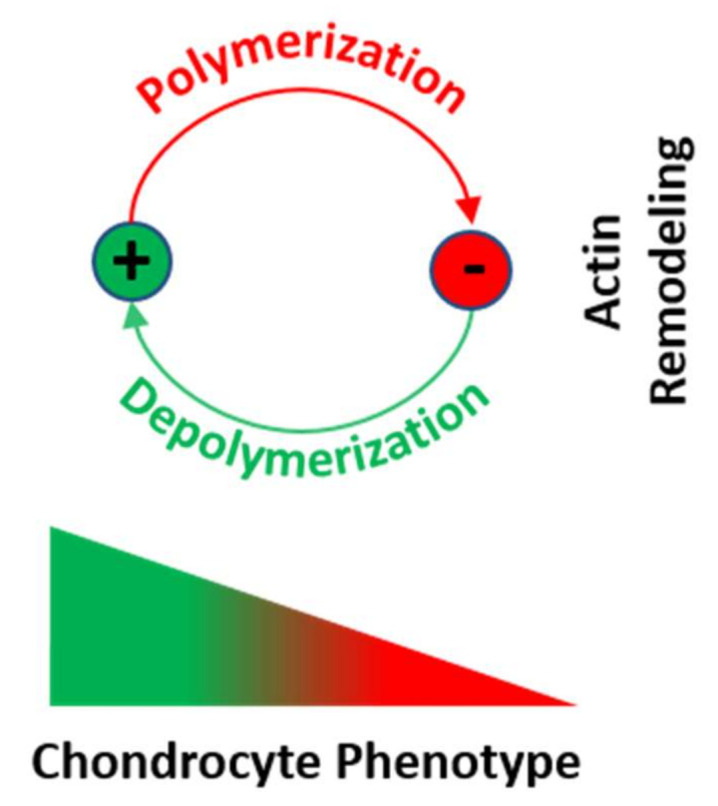
Numerous studies have assembled a complex picture, in which extracellular stimuli and intracellular signaling pathways modulate the chondrocyte phenotype. Because many diseases are mechanobiology-related, this review asked to what extent phenotype regulators control chondrocyte function through the cytoskeleton and cytoskeleton-regulating signaling processes. Such information would generate leverage for advanced articular cartilage repair. Serial passaging, pro-inflammatory cytokine signaling (TNF-α, IL-1α, IL-1β, IL-6, and IL-8), growth factors (TGF-α), and osteoarthritis not only induce dedifferentiation but also converge on RhoA/ROCK/Rac1/mDia1/mDia2/Cdc42 to promote actin polymerization/crosslinking for stress fiber (SF) formation. SF formation takes center stage in phenotype control, as both SF formation and SOX9 phosphorylation for expression are ROCK activity-dependent. Explaining how it is molecularly possible that dedifferentiation induces low expression but high SF formation, this review theorized that, in chondrocyte SOX9, phosphorylation by ROCK might effectively be sidelined in favor of other SF-promoting ROCK substrates, based on a differential ROCK affinity. In turn, actin depolymerization for redifferentiation would "free-up" ROCK to increase expression. Moreover, the actin cytoskeleton regulates expression, modulates COL2/aggrecan fragment generation, and mediates a fibrogenic/catabolic expression profile, highlighting that actin dynamics-regulating processes decisively control the chondrocyte phenotype. This suggests modulating the balance between actin polymerization/depolymerization for therapeutically controlling the chondrocyte phenotype.
众多研究描绘出了一幅复杂的图景,其中细胞外刺激和细胞内信号通路调节软骨细胞表型。由于许多疾病与机械生物学相关,本综述探讨了表型调节因子在多大程度上通过细胞骨架和细胞骨架调节信号过程来控制软骨细胞功能。此类信息将为高级关节软骨修复提供助力。连续传代、促炎细胞因子信号传导(TNF-α、IL-1α、IL-1β、IL-6和IL-8)、生长因子(TGF-α)以及骨关节炎不仅会诱导去分化,还会汇聚于RhoA/ROCK/Rac1/mDia1/mDia2/Cdc42,以促进肌动蛋白聚合/交联,从而形成应力纤维(SF)。SF形成在表型控制中占据核心地位,因为SF形成和SOX9磷酸化以进行表达均依赖于ROCK活性。为了解释去分化如何在分子层面导致低表达但高SF形成,本综述提出理论,基于不同的ROCK亲和力,在软骨细胞SOX9中,ROCK磷酸化可能有效地被边缘化,转而有利于其他促进SF的ROCK底物。反过来,用于再分化的肌动蛋白解聚将“释放”ROCK以增加表达。此外,肌动蛋白细胞骨架调节表达,调节COL2/聚集蛋白聚糖片段的产生,并介导促纤维化/分解代谢的表达谱,这突出表明调节肌动蛋白动力学的过程决定性地控制着软骨细胞表型。这表明调节肌动蛋白聚合/解聚之间的平衡以治疗性地控制软骨细胞表型。