Key Laboratory of Trace Elements and Endemic Diseases, Collaborative Innovation Center of Endemic Disease and Health Promotion for Silk Road Region, School of Public Health, Health Science Center, Xi'an Jiaotong University, Xi'an 710061, China.
Nutrients. 2021 Mar 31;13(4):1150. doi: 10.3390/nu13041150.
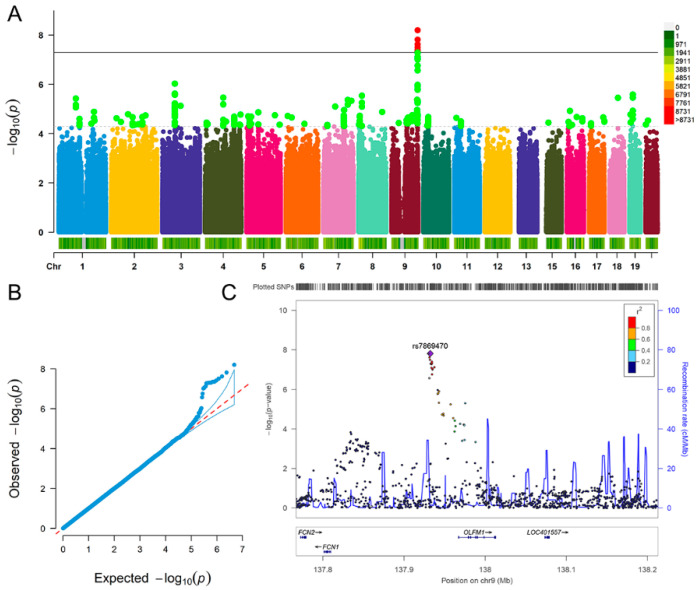
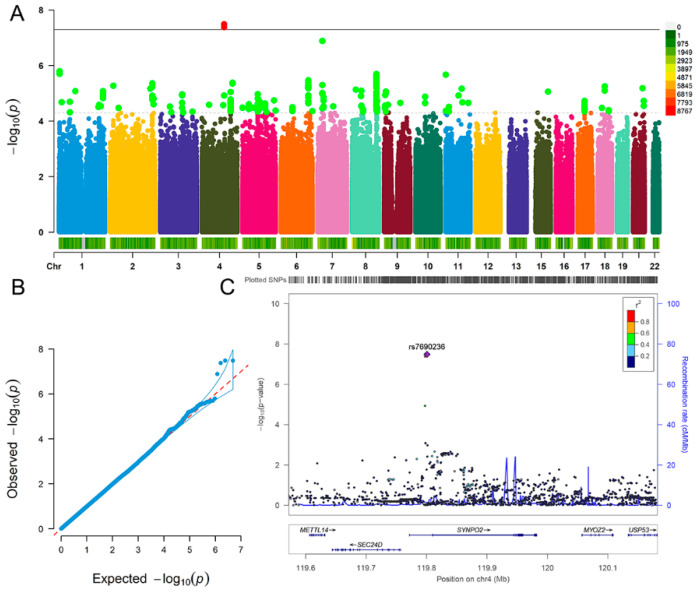
Dietary habits have considerable impact on brain development and mental health. Despite long-standing interest in the association of dietary habits with mental health, few population-based studies of dietary habits have assessed depression and fluid intelligence. Our aim is to investigate the association of dietary habits with depression and fluid intelligence. In total, 814 independent loci were utilized to calculate the individual polygenic risk score (PRS) for 143 dietary habit-related traits. The individual genotype data were obtained from the UK Biobank cohort. Regression analyses were then conducted to evaluate the association of dietary habits with depression and fluid intelligence, respectively. PLINK 2.0 was utilized to detect the single nucleotide polymorphism (SNP) × dietary habit interaction effect on the risks of depression and fluid intelligence. We detected 22 common dietary habit-related traits shared by depression and fluid intelligence, such as red wine glasses per month, and overall alcohol intake. For interaction analysis, we detected that interacted with champagne/white wine in depression, while interacted with coffee type in fluid intelligence. Our study results provide novel useful information for understanding how eating habits affect the fluid intelligence and depression.
饮食习惯对大脑发育和心理健康有很大影响。尽管人们长期以来一直关注饮食习惯与心理健康之间的关联,但很少有基于人群的饮食习惯研究评估过抑郁和流体智力。我们的目的是研究饮食习惯与抑郁和流体智力之间的关系。总共利用了 814 个独立的基因座来计算与 143 种饮食习惯相关的特征的个体多基因风险评分 (PRS)。个体基因型数据来自英国生物库队列。然后进行回归分析,分别评估饮食习惯与抑郁和流体智力的关系。PLINK 2.0 用于检测单核苷酸多态性 (SNP) 与饮食习惯对抑郁和流体智力风险的相互作用效应。我们检测到了 22 种与抑郁和流体智力共同的常见饮食习惯相关特征,如每月红酒杯数和总体酒精摄入量。对于交互分析,我们检测到 与抑郁中的香槟/白葡萄酒相互作用,而 与流体智力中的咖啡类型相互作用。我们的研究结果为理解饮食习惯如何影响流体智力和抑郁提供了新的有用信息。