Kornum Ditte S, Terkelsen Astrid J, Bertoli Davide, Klinge Mette W, Høyer Katrine L, Kufaishi Huda H A, Borghammer Per, Drewes Asbjørn M, Brock Christina, Krogh Klaus
Department of Hepatology and Gastroenterology, Aarhus University Hospital, DK8200 Aarhus, Denmark.
Steno Diabetes Centre Aarhus, Aarhus University Hospital, DK8200 Aarhus, Denmark.
J Clin Med. 2021 Mar 31;10(7):1392. doi: 10.3390/jcm10071392.
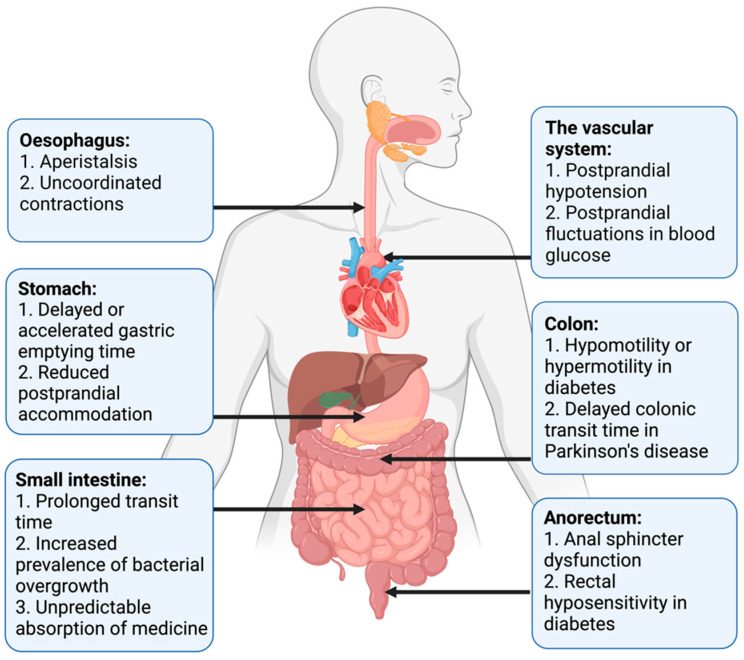
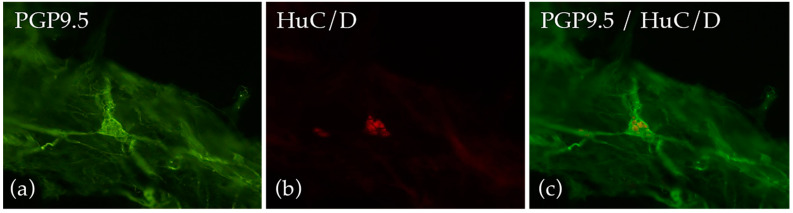
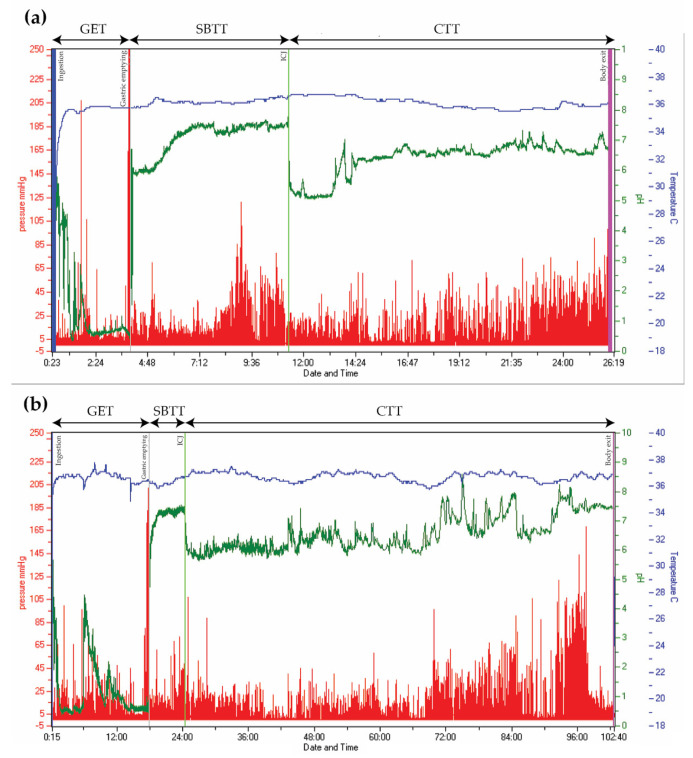
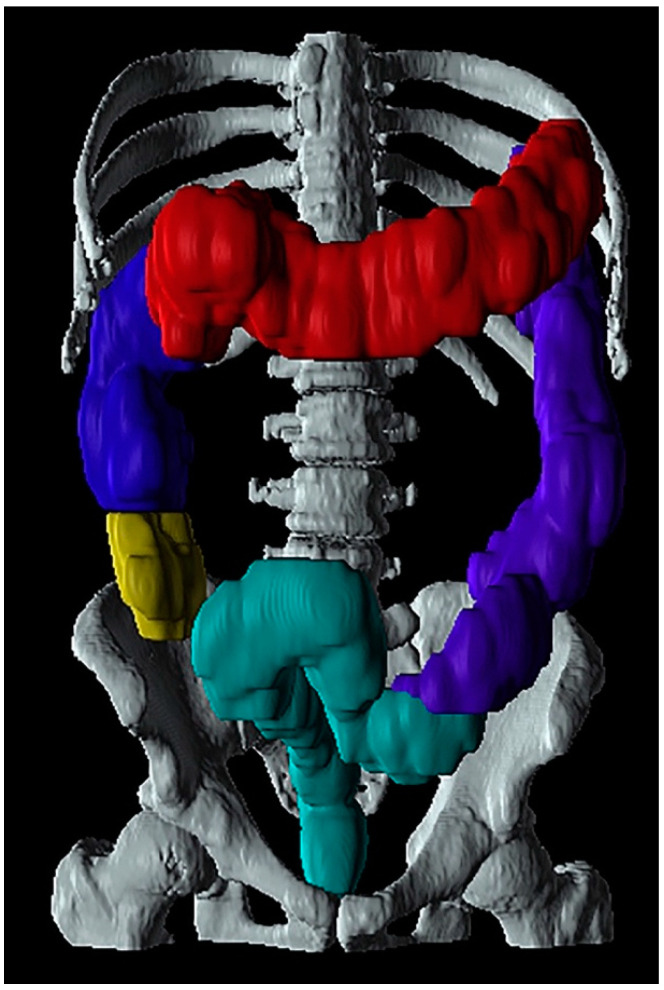
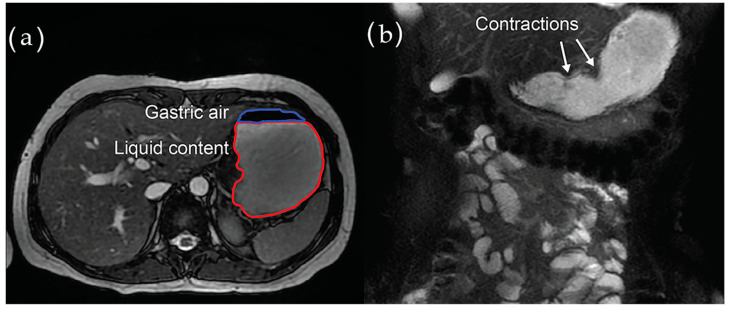
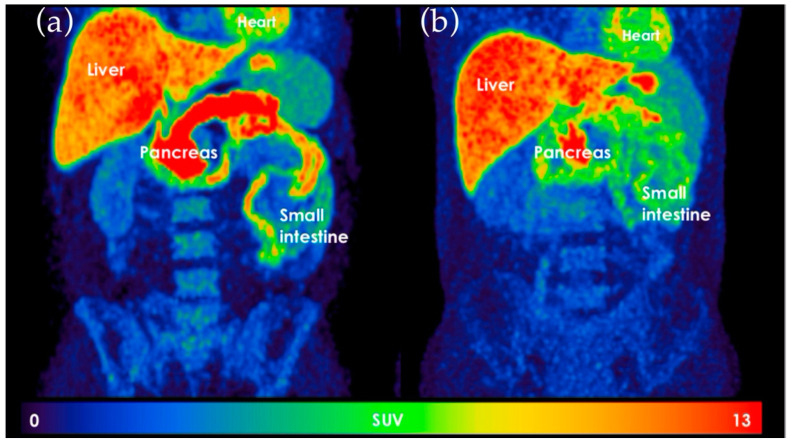
The autonomic nervous system delicately regulates the function of several target organs, including the gastrointestinal tract. Thus, nerve lesions or other nerve pathologies may cause autonomic dysfunction (AD). Some of the most common causes of AD are diabetes mellitus and α-synucleinopathies such as Parkinson's disease. Widespread dysmotility throughout the gastrointestinal tract is a common finding in AD, but no commercially available method exists for direct verification of enteric dysfunction. Thus, assessing segmental enteric physiological function is recommended to aid diagnostics and guide treatment. Several established assessment methods exist, but disadvantages such as lack of standardization, exposure to radiation, advanced data interpretation, or high cost, limit their utility. Emerging methods, including high-resolution colonic manometry, 3D-transit, advanced imaging methods, analysis of gut biopsies, and microbiota, may all assist in the evaluation of gastroenteropathy related to AD. This review provides an overview of established and emerging assessment methods of physiological function within the gut and assessment methods of autonomic neuropathy outside the gut, especially in regards to clinical performance, strengths, and limitations for each method.
自主神经系统精细地调节包括胃肠道在内的多个靶器官的功能。因此,神经损伤或其他神经病变可能导致自主神经功能障碍(AD)。AD最常见的一些病因是糖尿病和α-突触核蛋白病,如帕金森病。胃肠道广泛的运动功能障碍是AD的常见表现,但目前尚无用于直接验证肠道功能障碍的商用方法。因此,建议评估节段性肠道生理功能以辅助诊断和指导治疗。现有的评估方法有多种,但诸如缺乏标准化、暴露于辐射、数据解读复杂或成本高等缺点限制了它们的实用性。新兴方法,包括高分辨率结肠测压、三维转运、先进成像方法、肠道活检分析和微生物群分析等,都可能有助于评估与AD相关的胃肠病。本综述概述了已有的和新兴的肠道内生理功能评估方法以及肠道外自主神经病变的评估方法,尤其涉及每种方法的临床性能、优点和局限性。