Mehlman Camille, Takam Kamga Paul, Costantini Adrien, Julié Catherine, Dumenil Coraline, Dumoulin Jennifer, Ouaknine Julia, Giraud Violaine, Chinet Thierry, Emile Jean-François, Giroux Leprieur Etienne
EA 4340 BECCOH, UVSQ, Université Paris-Saclay, 92100 Boulogne-Billancourt, France.
Department of Respiratory Diseases and Thoracic Oncology, APHP-Hopital Ambroise Pare, 92100 Boulogne-Billancourt, France.
Cancers (Basel). 2021 Mar 5;13(5):1107. doi: 10.3390/cancers13051107.
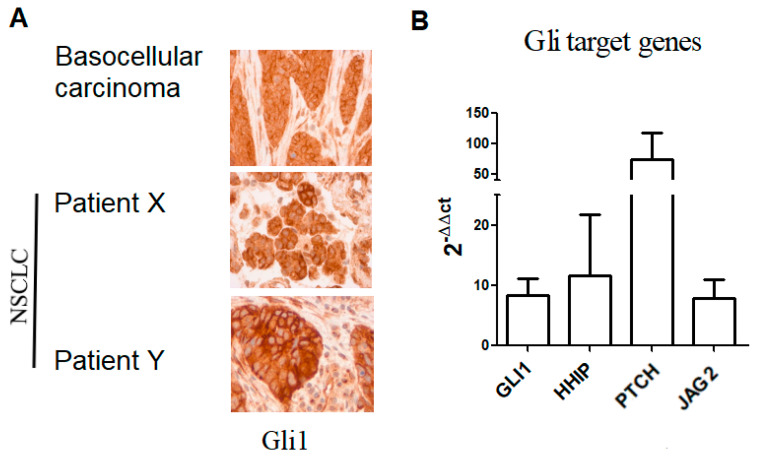
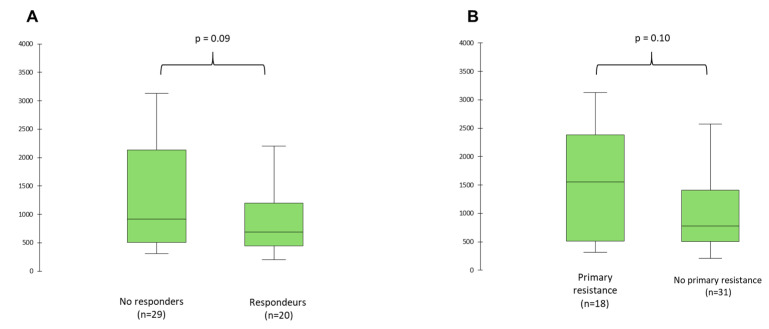
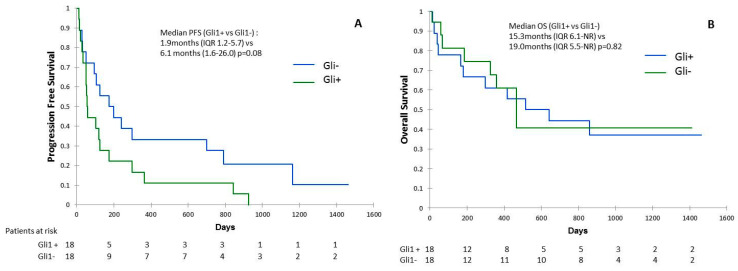
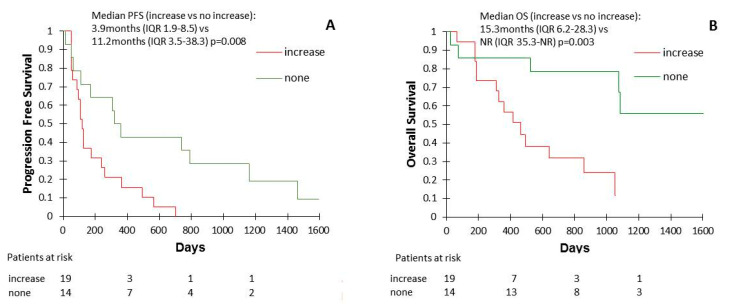
Hedgehog (Hh) and Wingless-type (Wnt) pathways are associated with resistance to immune checkpoint inhibitors (ICIs) in preclinical studies. This study aimed to assess the association between expression and activation levels of Wnt and Sonic Hedgehog (Shh) pathways and resistance to ICIs in advanced NSCLC patients treated with ICI. Hh and Wnt pathways activation was assessed by immunohistochemistry (Gli1 and beta-catenin) on corresponding tumor tissues, and by plasma concentrations of Shh and Wnt (Wnt1, Wnt2 and Wnt3) at ICI introduction and at the first clinical evaluation. Sixty-three patients were included, with 36 patients (57.1%) with available tissue. Response rate was lower in Gli1+ NSCLC (20.0%) compared to Gli1 negative (Gli-) NSCLC (55.6%) ( = 0.015). Rate of primary resistance was 69.8%, vs. 31.2%, respectively ( = 0.04), and median progression-free survival (PFS) was 1.9 months (interquartile range (IQR) 1.2-5.7) vs. 6.1 months (1.6-26.0), respectively ( = 0.08). Median PFS and overall survival were shorter in case of increase of Wnt1 concentration during ICI treatment compared to other patients: 3.9 months vs. 11.2 months ( = 0.008), and 15.3 months vs. not reached ( = 0.003). In conclusion, baseline activation of Hh pathway and increase of Wnt1 concentrations during ICI treatment were associated with poor outcome in NSCLC patients treated with ICIs.
在临床前研究中,刺猬信号通路(Hh)和无翅型(Wnt)信号通路与免疫检查点抑制剂(ICI)耐药相关。本研究旨在评估Wnt和音猬因子(Shh)信号通路的表达和激活水平与接受ICI治疗的晚期非小细胞肺癌(NSCLC)患者ICI耐药之间的关联。通过对相应肿瘤组织进行免疫组织化学检测(Gli1和β-连环蛋白)以及在开始ICI治疗时和首次临床评估时检测血浆中Shh和Wnt(Wnt1、Wnt2和Wnt3)的浓度来评估Hh和Wnt信号通路的激活情况。纳入63例患者,其中36例(57.1%)有可用组织。与Gli1阴性(Gli-)NSCLC(55.6%)相比,Gli1阳性NSCLC的缓解率较低(20.0%)(P = 0.015)。原发性耐药率分别为69.8%和31.2%(P = 0.04),无进展生存期(PFS)中位数分别为1.9个月(四分位间距(IQR)1.2 - 5.7)和6.1个月(1.6 - 26.0)(P = 0.08)。与其他患者相比,ICI治疗期间Wnt1浓度升高的患者PFS中位数和总生存期较短:分别为3.9个月和11.2个月(P = 0.008),以及15.3个月和未达到(P = 0.003)。总之,Hh信号通路的基线激活以及ICI治疗期间Wnt1浓度升高与接受ICI治疗的NSCLC患者预后不良相关。