Department of Research & Development, Quantgene Inc. 2940 Nebraska Ave, Santa Monica, CA 90404, USA.
Department of General, Visceral and Accident Surgery, University Hospital Heidelberg, Im Neuenheimer Feld 672, 69120 Heidelberg, Germany.
Genes (Basel). 2021 Mar 30;12(4):507. doi: 10.3390/genes12040507.
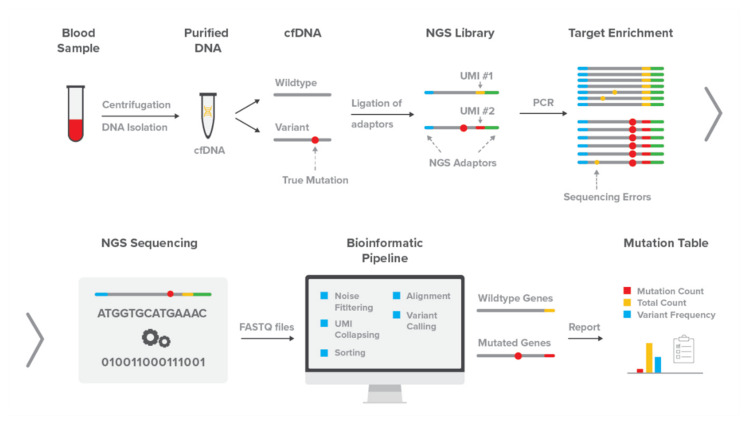
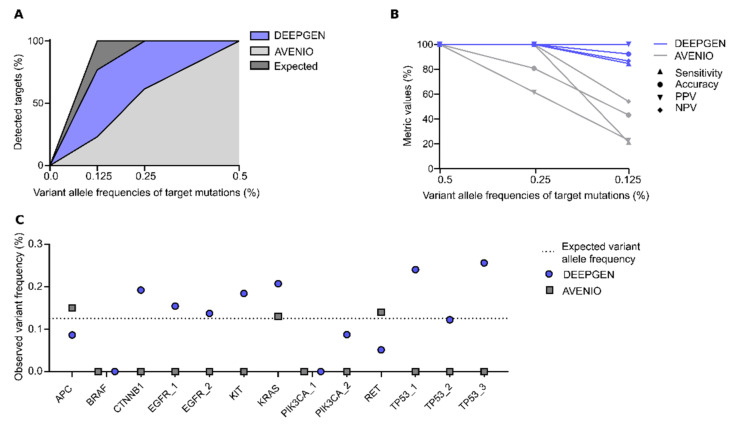
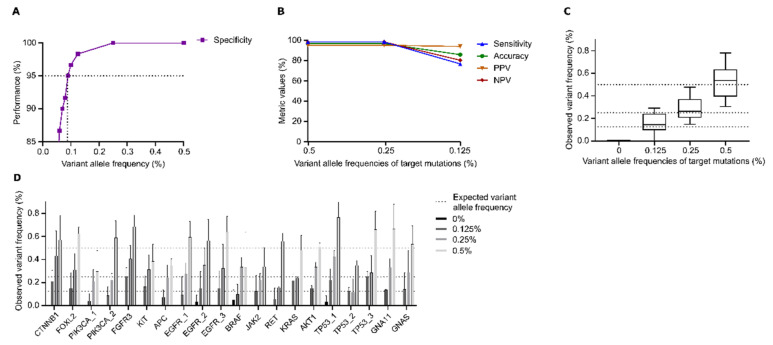
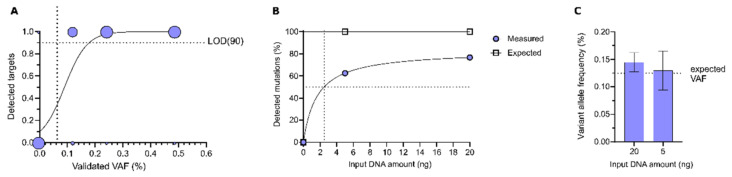
Detection of genetic variants in clinically relevant genomic hot-spot regions has become a promising application of next-generation sequencing technology in precision oncology. Effective personalized diagnostics requires the detection of variants with often very low frequencies. This can be achieved by targeted, short-read sequencing that provides high sequencing depths. However, rare genetic variants can contain crucial information for early cancer detection and subsequent treatment success, an inevitable level of background noise usually limits the accuracy of low frequency variant calling assays. To address this challenge, we developed DEEPGEN, a variant calling assay intended for the detection of low frequency variants within liquid biopsy samples. We processed reference samples with validated mutations of known frequencies (0%-0.5%) to determine DEEPGEN's performance and minimal input requirements. Our findings confirm DEEPGEN's effectiveness in discriminating between signal and noise down to 0.09% variant allele frequency and an LOD(90) at 0.18%. A superior sensitivity was also confirmed by orthogonal comparison to a commercially available liquid biopsy-based assay for cancer detection.
在精准肿瘤学中,检测临床相关基因组热点区域中的遗传变异已成为下一代测序技术的一种很有前途的应用。有效的个性化诊断需要检测通常频率非常低的变异。这可以通过靶向、短读测序来实现,该方法提供了高测序深度。然而,罕见的遗传变异可能包含早期癌症检测和随后治疗成功的关键信息,通常,不可避免的背景噪声水平限制了低频变异呼叫检测的准确性。为了解决这一挑战,我们开发了 DEEPGEN,这是一种旨在检测液体活检样本中低频变异的变异呼叫检测方法。我们处理了具有已知频率(0%-0.5%)的经验证突变的参考样本,以确定 DEEPGEN 的性能和最小输入要求。我们的研究结果证实,DEEPGEN 能够有效地将信号与噪声区分开来,其变异等位基因频率低至 0.09%,LOD(90)低至 0.18%。通过与商业上可用的基于液体活检的癌症检测方法的正交比较,也证实了其具有较高的灵敏度。