Zhong Xiaotian, D'Antona Aaron M
Department of BioMedicine Design, Medicinal Sciences, Pfizer Worldwide R&D, 610 Main Street, Cambridge, MA 02139, USA.
Antibodies (Basel). 2021 Mar 30;10(2):13. doi: 10.3390/antib10020013.
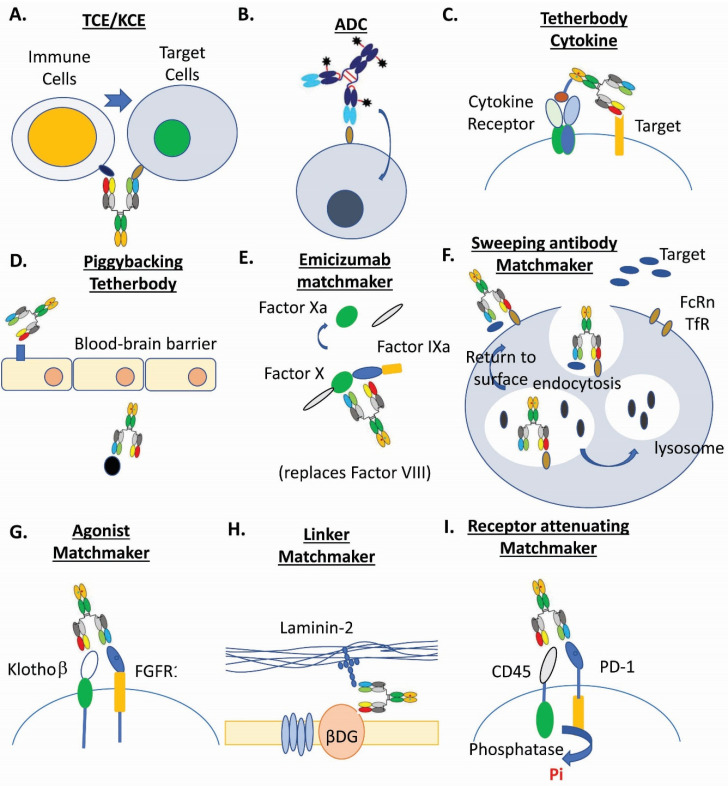
Recombinant protein-based biotherapeutics drugs have transformed clinical pipelines of the biopharmaceutical industry since the launch of recombinant insulin nearly four decades ago. These biologic drugs are structurally more complex than small molecules, and yet share a similar principle for rational drug discovery and development: That is to start with a pre-defined target and follow with the functional modulation with a therapeutic agent. Despite these tremendous successes, this "one target one drug" paradigm has been challenged by complex disease mechanisms that involve multiple pathways and demand new therapeutic routes. A rapidly evolving wave of multispecific biotherapeutics is coming into focus. These new therapeutic drugs are able to engage two or more protein targets via distinct binding interfaces with or without the chemical conjugation to large or small molecules. They possess the potential to not only address disease intricacy but also exploit new therapeutic mechanisms and assess undruggable targets for conventional monospecific biologics. This review focuses on the recent advances in molecular design and applications of major classes of multispecific biotherapeutics drugs, which include immune cells engagers, antibody-drug conjugates, multispecific tetherbodies, biologic matchmakers, and small-scaffold multispecific modalities. Challenges posed by the multispecific biotherapeutics drugs and their future outlooks are also discussed.
自近四十年前重组胰岛素问世以来,基于重组蛋白的生物治疗药物改变了生物制药行业的临床研发进程。这些生物药物在结构上比小分子更为复杂,但在合理的药物发现和开发方面却有着相似的原则:即以一个预先确定的靶点为起点,接着用一种治疗剂进行功能调节。尽管取得了这些巨大成功,但这种“一个靶点一种药物”的模式受到了涉及多种途径且需要新治疗途径的复杂疾病机制的挑战。一波快速发展的多特异性生物治疗药物正成为焦点。这些新型治疗药物能够通过不同的结合界面与两个或更多蛋白质靶点结合,无论是否与大分子或小分子进行化学偶联。它们不仅有可能解决疾病的复杂性,还能利用新的治疗机制并评估传统单特异性生物制剂难以靶向的靶点。本综述重点关注主要类别多特异性生物治疗药物在分子设计和应用方面的最新进展,包括免疫细胞衔接器、抗体药物偶联物、多特异性系链体、生物媒分子和小支架多特异性模式。还讨论了多特异性生物治疗药物带来的挑战及其未来前景。