Lee Chae Bin, Chae Soon Uk, Jo Seong Jun, Jerng Ui Min, Bae Soo Kyung
College of Pharmacy and Integrated Research Institute of Pharmaceutical Sciences, The Catholic University of Korea, Bucheon 14662, Korea.
Department of Internal Medicine, College of Korean Medicine, Sangji University, Wonju 26339, Korea.
Int J Mol Sci. 2021 Mar 30;22(7):3566. doi: 10.3390/ijms22073566.
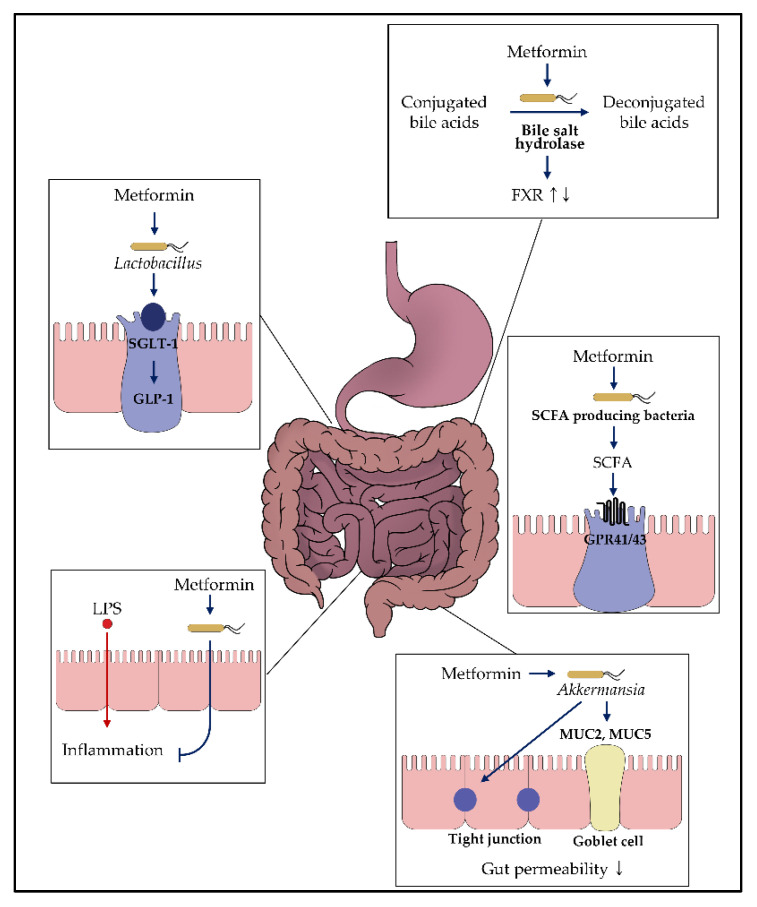
Metformin is the first-line pharmacotherapy for treating type 2 diabetes mellitus (T2DM); however, its mechanism of modulating glucose metabolism is elusive. Recent advances have identified the gut as a potential target of metformin. As patients with metabolic disorders exhibit dysbiosis, the gut microbiome has garnered interest as a potential target for metabolic disease. Henceforth, studies have focused on unraveling the relationship of metabolic disorders with the human gut microbiome. According to various metagenome studies, gut dysbiosis is evident in T2DM patients. Besides this, alterations in the gut microbiome were also observed in the metformin-treated T2DM patients compared to the non-treated T2DM patients. Thus, several studies on rodents have suggested potential mechanisms interacting with the gut microbiome, including regulation of glucose metabolism, an increase in short-chain fatty acids, strengthening intestinal permeability against lipopolysaccharides, modulating the immune response, and interaction with bile acids. Furthermore, human studies have demonstrated evidence substantiating the hypotheses based on rodent studies. This review discusses the current knowledge of how metformin modulates T2DM with respect to the gut microbiome and discusses the prospect of harnessing this mechanism in treating T2DM.
二甲双胍是治疗2型糖尿病(T2DM)的一线药物治疗方法;然而,其调节葡萄糖代谢的机制尚不清楚。最近的进展已确定肠道是二甲双胍的一个潜在靶点。由于患有代谢紊乱的患者表现出微生物群失调,肠道微生物群作为代谢疾病的一个潜在靶点已引起关注。此后,研究集中于阐明代谢紊乱与人类肠道微生物群之间的关系。根据各种宏基因组研究,T2DM患者中肠道微生物群失调明显。除此之外,与未接受治疗的T2DM患者相比,接受二甲双胍治疗的T2DM患者的肠道微生物群也有变化。因此,几项针对啮齿动物的研究提出了与肠道微生物群相互作用的潜在机制,包括调节葡萄糖代谢、增加短链脂肪酸、增强肠道对脂多糖的通透性、调节免疫反应以及与胆汁酸相互作用。此外,人体研究已经证明了基于啮齿动物研究的假设的证据。本综述讨论了关于二甲双胍如何通过肠道微生物群调节T2DM的当前知识,并讨论了利用这一机制治疗T2DM的前景。