National Institute for Occupational Health, A Division of the National Health Laboratory Service, Johannesburg 2001, South Africa.
School of Public Health, University of the Witwatersrand, Johannesburg 2193, South Africa.
Int J Environ Res Public Health. 2021 Mar 19;18(6):3189. doi: 10.3390/ijerph18063189.
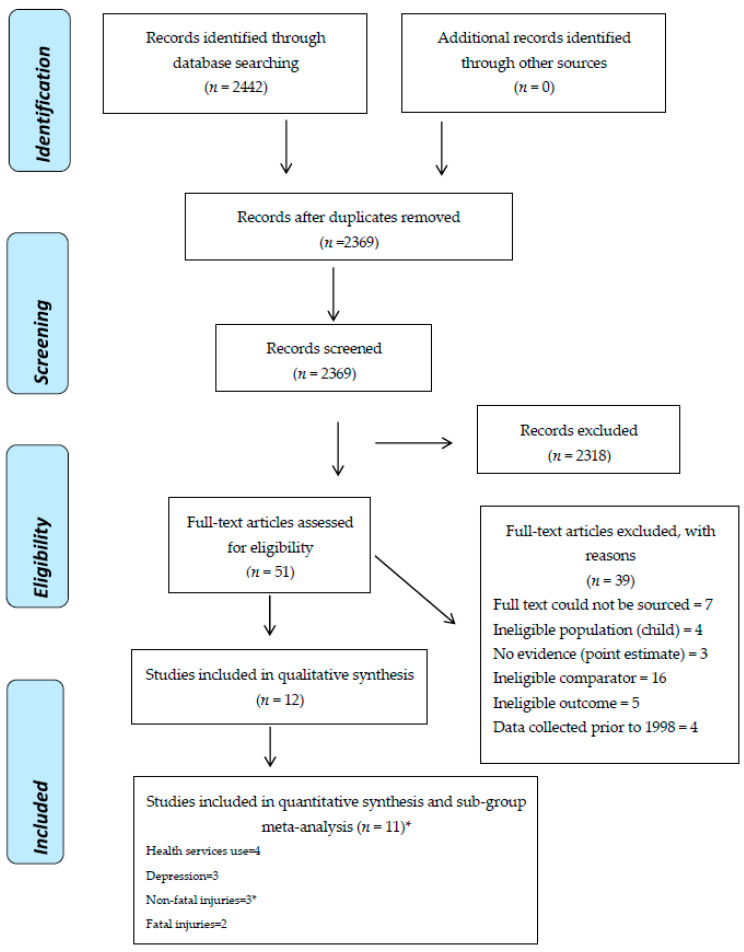
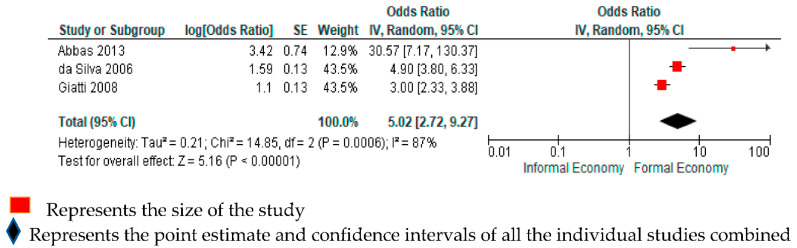
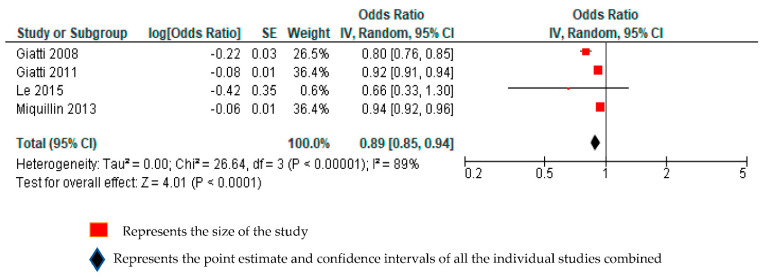
There are approximately two billion workers in the informal economy globally. Compared to workers in the formal economy, these workers are often marginalised with minimal or no benefits from occupational health and safety regulations, labour laws, social protection and/or health care. Thus, informal economy workers may have higher occupational health risks compared to their formal counterparts. Our objective was to systematically review and meta-analyse evidence on relative differences (or inequalities) in health services use and health outcomes among informal economy workers, compared with formal economy workers. We searched PubMed and EMBASE in March 2020 for studies published in 1999-2020. The eligible population was informal economy workers. The comparator was formal economy workers. The eligible outcomes were general and occupational health services use, fatal and non-fatal occupational injuries, HIV, tuberculosis, musculoskeletal disorders, depression, noise-induced hearing loss and respiratory infections. Two authors independently screened records, extracted data, assessed risk of bias with RoB-SPEO, and assessed quality of evidence with GRADE. Inverse variance meta-analyses were conducted with random effects. Twelve studies with 1,637,297 participants from seven countries in four WHO regions (Africa, Americas, Eastern Mediterranean and Western Pacific) were included. Compared with formal economy workers, informal economy workers were found to be less likely to use any health services (odds ratio 0.89, 95% confidence interval 0.85-0.94, four studies, 195,667 participants, I 89%, low quality of evidence) and more likely to have depression (odds ratio 5.02, 95% confidence interval 2.72-9.27, three studies, 26,260 participants, I 87%, low quality of evidence). We are very uncertain about the other outcomes (very-low quality of evidence). Informal economy workers may be less likely than formal economy workers to use any health services and more likely to have depression. The evidence is uncertain for relative differences in the other eligible outcomes. Further research is warranted to strengthen the current body of evidence and needed to improve population health and reduce health inequalities among workers.
全球非正式经济部门约有 20 亿工人。与正规经济部门的工人相比,这些工人往往处于边缘地位,几乎或完全没有受益于职业健康和安全法规、劳工法、社会保护和/或医疗保健。因此,与正规经济部门的工人相比,非正式经济部门的工人可能面临更高的职业健康风险。我们的目标是系统地审查和荟萃分析有关非正式经济部门工人与正规经济部门工人相比在卫生服务利用和健康结果方面相对差异(或不平等)的证据。我们于 2020 年 3 月在 PubMed 和 EMBASE 中检索了 1999 年至 2020 年期间发表的研究。符合条件的人群是非正式经济部门的工人。比较组是正规经济部门的工人。合格的结果是一般和职业卫生服务的利用、致命和非致命职业伤害、艾滋病毒、结核病、肌肉骨骼疾病、抑郁、噪声引起的听力损失和呼吸道感染。两名作者独立筛选记录、提取数据、使用 RoB-SPEO 评估偏倚风险,并使用 GRADE 评估证据质量。采用随机效应进行逆方差荟萃分析。纳入了来自四个世卫组织区域(非洲、美洲、东地中海和西太平洋)的七个国家的 12 项研究,共 1637297 名参与者。与正规经济部门的工人相比,非正式经济部门的工人使用任何卫生服务的可能性较小(比值比 0.89,95%置信区间 0.85-0.94,四项研究,195667 名参与者,I 89%,低质量证据),而抑郁的可能性较大(比值比 5.02,95%置信区间 2.72-9.27,三项研究,26260 名参与者,I 87%,低质量证据)。我们对其他结果(极低质量证据)非常不确定。与正规经济部门的工人相比,非正式经济部门的工人使用任何卫生服务的可能性较小,而抑郁的可能性较大。关于其他合格结果的相对差异的证据不确定。需要进一步研究来加强现有证据,并需要改善工人的人口健康和减少健康不平等。