Arechederra María, Recalde Miriam, Gárate-Rascón María, Fernández-Barrena Maite G, Ávila Matías A, Berasain Carmen
Program of Hepatology, Center for Applied Medical Research (CIMA), University of Navarra, 31008 Pamplona, Spain.
IdiSNA, Navarra Institute for Health Research, 31008 Pamplona, Spain.
Cancers (Basel). 2021 Mar 12;13(6):1265. doi: 10.3390/cancers13061265.
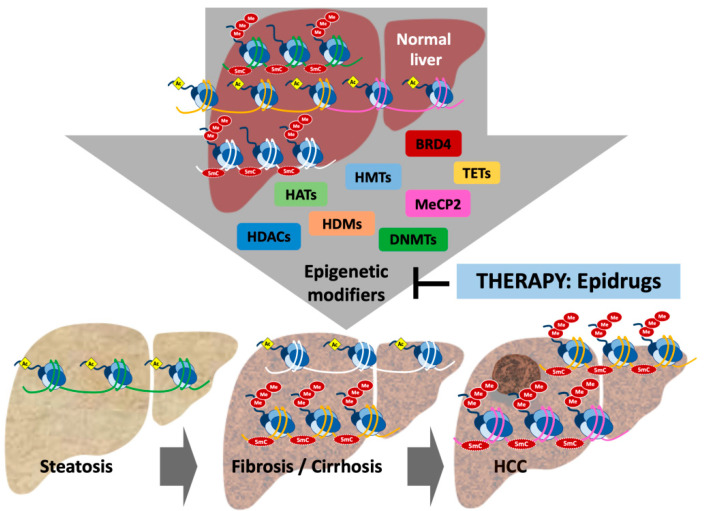
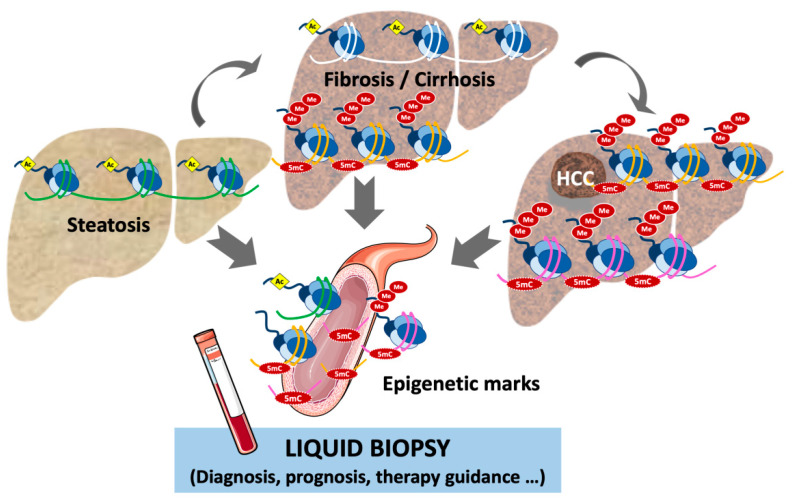
Research in the last decades has demonstrated the relevance of epigenetics in controlling gene expression to maintain cell homeostasis, and the important role played by epigenome alterations in disease development. Moreover, the reversibility of epigenetic marks can be harnessed as a therapeutic strategy, and epigenetic marks can be used as diagnosis biomarkers. Epigenetic alterations in DNA methylation, histone post-translational modifications (PTMs), and non-coding RNA (ncRNA) expression have been associated with the process of hepatocarcinogenesis. Here, we summarize epigenetic alterations involved in the pathogenesis of chronic liver disease (CLD), particularly focusing on DNA methylation. We also discuss their utility as epigenetic biomarkers in liquid biopsy for the diagnosis and prognosis of hepatocellular carcinoma (HCC). Finally, we discuss the potential of epigenetic therapeutic strategies for HCC treatment.
过去几十年的研究表明,表观遗传学在控制基因表达以维持细胞内稳态方面具有重要意义,并且表观基因组改变在疾病发展中发挥着重要作用。此外,表观遗传标记的可逆性可被用作一种治疗策略,并且表观遗传标记可用作诊断生物标志物。DNA甲基化、组蛋白翻译后修饰(PTM)和非编码RNA(ncRNA)表达的表观遗传改变已与肝癌发生过程相关联。在此,我们总结了慢性肝病(CLD)发病机制中涉及的表观遗传改变,尤其着重于DNA甲基化。我们还讨论了它们作为液体活检中的表观遗传生物标志物在肝细胞癌(HCC)诊断和预后方面的效用。最后,我们讨论了表观遗传治疗策略在HCC治疗中的潜力。