Sempere-Bigorra Mar, Julián-Rochina Iván, Cauli Omar
Department of Nursing, Faculty of Nursing and Podiatry, University of Valencia, 46010 Valencia, Spain.
Frailty Research Organized Group (FROG), Department of Nursing, University of Valencia, 46010 Valencia, Spain.
J Pers Med. 2021 Mar 22;11(3):230. doi: 10.3390/jpm11030230.
Diabetic neuropathy is defined as the dysfunction of the peripheral nervous system in diabetic patients. It is considered a microvascular complication of diabetes mellitus. Its presence is associated with increased morbidity and mortality. Although several studies have found alterations at somatic motor, sensory levels and at the level of autonomic nervous system in diabetic patients, there is not a systematic approach regarding the differences in neuropathy between the major variants of diabetes, e.g., type 1 and 2 diabetes at both neurological and molecular level.
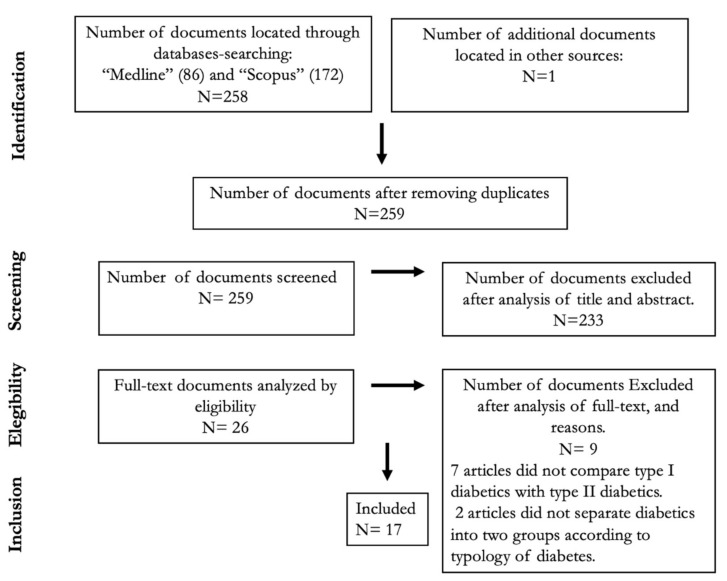
we systematically (Medline, Scopus, and Cochrane databases) evaluated the literature related to the difference of neuropathy in type 1 and 2 diabetes, differences in molecular biomarkers. Study characteristics: seventeen articles were selected based on pre-defined eligibility criteria.
both superficial sensitivity (primarily thermal sensitivity to cold) and deep sensitivity (such as vibratory sensitivity), have been reported mainly in type 2 diabetes. Cardiac autonomic neuropathy is one of the diabetic complications with the greatest impact at a clinical level but is nevertheless one of the most underdiagnosed. While for type 1 diabetes patients most neuropathy alterations have been reported for the Valsalva maneuver and for the lying-to-standing test, for type 2 diabetes patients, alterations have been reported for deep-breathing test and the Valsalva test. In addition, there is a greater sympathetic than parasympathetic impairment, as indicated by the screening tests for autonomic cardiac neuropathy. Regarding subclinical inflammation markers, patients with type 2 diabetes showed higher blood levels of inflammatory markers such as high-sensitivity C-reactive protein, proinflammatory cytokines IL-6, IL-18, soluble cell adhesion molecules and E-selectin and ICAM-1, than in type 1 diabetes patients. By contrast, the blood levels of adiponectin, an adipocyte-derived protein with multiple paracrine and endocrine activities (anti-inflammatory, insulin-sensitizing and proangiogenic effects) are higher in type 1 than in type 2 diabetic patients. This review provides new insights into the clinical differences in type 1 and 2 diabetes and provide future directions in this research field.
糖尿病性神经病变被定义为糖尿病患者外周神经系统功能障碍。它被认为是糖尿病的一种微血管并发症。其存在与发病率和死亡率的增加相关。尽管多项研究发现糖尿病患者在躯体运动、感觉水平以及自主神经系统水平存在改变,但在糖尿病的主要类型(如1型和2型糖尿病)之间,关于神经病变在神经学和分子水平上的差异,尚无系统的研究方法。
我们系统地(通过医学文献数据库、Scopus数据库和Cochrane数据库)评估了与1型和2型糖尿病神经病变差异、分子生物标志物差异相关的文献。研究特点:根据预先定义的纳入标准,筛选出17篇文章。
浅表感觉(主要是对冷的温度敏感性)和深部感觉(如振动觉)主要在2型糖尿病中被报道。心脏自主神经病变是临床上影响最大的糖尿病并发症之一,但也是诊断最不足的并发症之一。对于1型糖尿病患者,大多数神经病变改变在瓦尔萨尔瓦动作和卧立位试验中被报道;对于2型糖尿病患者,在深呼吸试验和瓦尔萨尔瓦试验中被报道有改变。此外,自主心脏神经病变筛查试验表明,交感神经损伤比副交感神经损伤更严重。关于亚临床炎症标志物,2型糖尿病患者血液中的炎症标志物水平,如高敏C反应蛋白、促炎细胞因子IL-6、IL-18、可溶性细胞粘附分子以及E选择素和细胞间粘附分子-1,高于1型糖尿病患者。相比之下,脂联素(一种具有多种旁分泌和内分泌活性的脂肪细胞衍生蛋白,具有抗炎、胰岛素增敏和促血管生成作用)的血液水平在1型糖尿病患者中高于2型糖尿病患者。本综述为1型和2型糖尿病的临床差异提供了新见解,并为该研究领域指明了未来方向。