Kaseke Tafadzwa, Opara Umezuruike Linus, Fawole Olaniyi Amos
Department of Food Science, Faculty of AgriSciences, Stellenbosch University, Private Bag X1, Stellenbosch 7602, South Africa.
Faculty of AgriSciences, Africa Institute for Postharvest Technology, South African Research Chair in Postharvest Technology, Stellenbosch University, Private Bag X1, Stellenbosch 7602, South Africa.
Foods. 2021 Mar 26;10(4):712. doi: 10.3390/foods10040712.
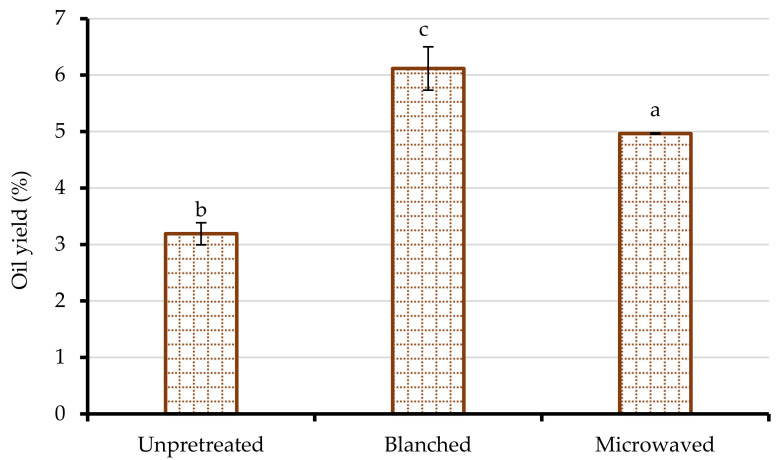
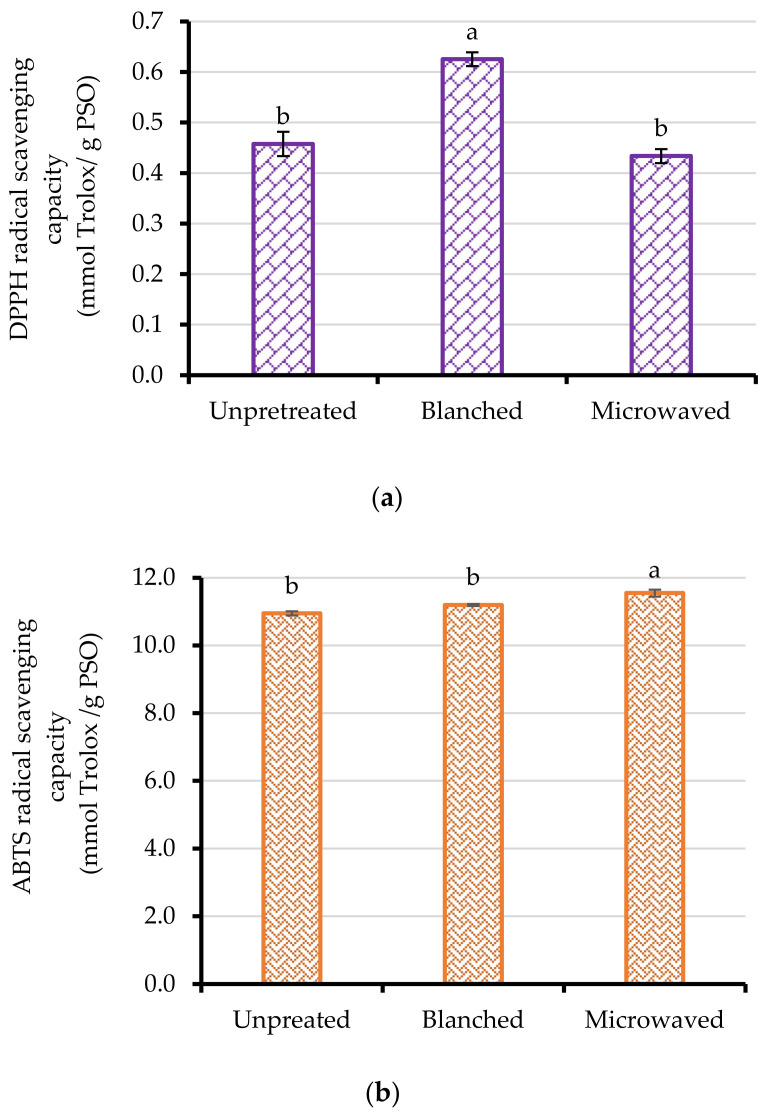
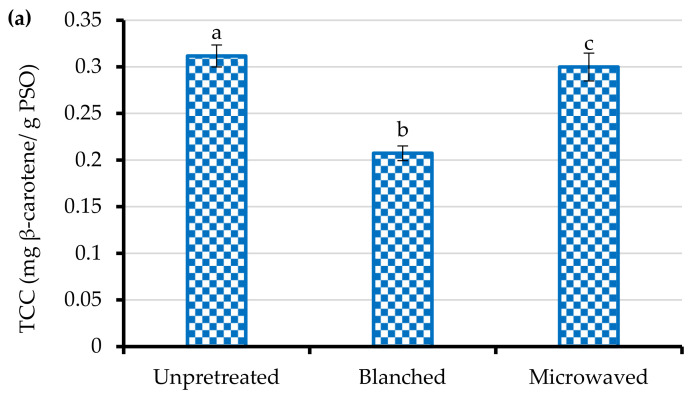
The present research studied the influence of blanching and microwave pretreatment of seeds on the quality of pomegranate seed oil (PSO) extracted by cold pressing. Pomegranate seeds (cv. Acco) were independently blanched (95 ± 2 °C/3 min) and microwave heated (261 W/102 s) before cold pressing. The quality of the extracted oil was evaluated with respect to oxidation indices, refractive index, yellowness index, total carotenoids content, total phenolic content, flavor compounds, fatty acid composition, and 2.2-diphenyl-1-picryl hydrazyl (DPPH) and 2.2-azino-bis (3-ethylbenzothiazoline-6-sulfonic acid) (ABTS) radical scavenging capacity. Blanching and microwave pretreatments of seeds before pressing enhanced oil yield, total phenolic content, flavor compounds, and DPPH and ABTS radical scavenging capacity. Although the levels of oxidation indices, including the peroxide value, free fatty acids, acid value, ρ-anisidine value, and total oxidation value, also increased, and the oil quality conformed to the requirements of the Codex Alimentarius Commission (CODEX STAN 19-1981) standard for cold-pressed vegetable oils. On the other hand, blanching and microwave heating of seeds decreased the pomegranate seed oil's yellowness index, whilst the refractive index was not significantly ( > 0.05) affected. Even though both blanching and microwave pretreatment of seeds added value to the cold-pressed PSO, the oil extracted from blanched seeds exhibited lower oxidation indices. Regarding fatty acids, microwave pretreatment of seeds before cold pressing significantly increased palmitic acid, oleic acid, and linoleic acid, whilst it decreased the level of punicic acid. On the contrary, blanching of seeds did not significantly affect the fatty acid composition of PSO, indicating that the nutritional quality of the oil was not significantly affected. Therefore, blanching of seeds is an appropriate and valuable step that could be incorporated into the mechanical processing of PSO.
本研究考察了种子的热烫和微波预处理对冷榨石榴籽油(PSO)品质的影响。石榴籽(品种Acco)在冷榨前分别进行热烫(95±2℃/3分钟)和微波加热(261瓦/102秒)。从氧化指标、折射率、黄度指数、总类胡萝卜素含量、总酚含量、风味化合物、脂肪酸组成以及2,2-二苯基-1-苦基肼(DPPH)和2,2'-联氮-双-(3-乙基苯并噻唑啉-6-磺酸)(ABTS)自由基清除能力等方面对提取油的品质进行了评估。压榨前对种子进行热烫和微波预处理提高了出油率、总酚含量、风味化合物以及DPPH和ABTS自由基清除能力。尽管包括过氧化值、游离脂肪酸、酸值、对茴香胺值和总氧化值在内的氧化指标水平也有所升高,但油的品质符合食品法典委员会(CODEX STAN 19-1981)冷榨植物油标准的要求。另一方面,种子的热烫和微波加热降低了石榴籽油的黄度指数,而折射率未受到显著影响(>0.05)。尽管种子的热烫和微波预处理都提高了冷榨PSO的价值,但热烫种子提取的油氧化指标较低。关于脂肪酸,冷榨前对种子进行微波预处理显著增加了棕榈酸、油酸和亚油酸的含量,同时降低了石榴酸的水平。相反,种子的热烫对PSO的脂肪酸组成没有显著影响,这表明油的营养品质没有受到显著影响。因此,种子热烫是一个合适且有价值的步骤,可纳入PSO的机械加工过程中。