Hemmati Ali Asghar, Dianat Mahin, Jalali Amir
Department of Pharmacology, School of Pharmacy and Physiology Research Centre, Ahvaz Jundishapur University of Medical Sciences, Ahvaz, Iran.
Department of Physiology, School of Medicine and Physiology Research Centre, Ahvaz Jundishapur University of Medical Sciences, Ahvaz, Iran.
Tanaffos. 2020 Jul;19(3):256-261.
Caffeic acid phenethyl ester (CAPE) is one of the major components of honeybee propolis and its structure is similar to flavonoids. CAPE has been shown to possess anti-inflammatory, immunomodulatory, and antioxidant properties. Despite a wide range of biological activities of CAPE, detailed biochemical mechanisms of its action are poorly described. The aim of the present study was to investigate the in vitro effect of CAPE on isolated rat trachea.
A 20 mm long portion of rat tracheal spiral was submerged in 20 ml Krebs solution in an isolated organ bath at 37°C. Changes in tracheal contractility in response to the application of agonist agents were measured using an isometric transducer connected to a Harvard polygraph.
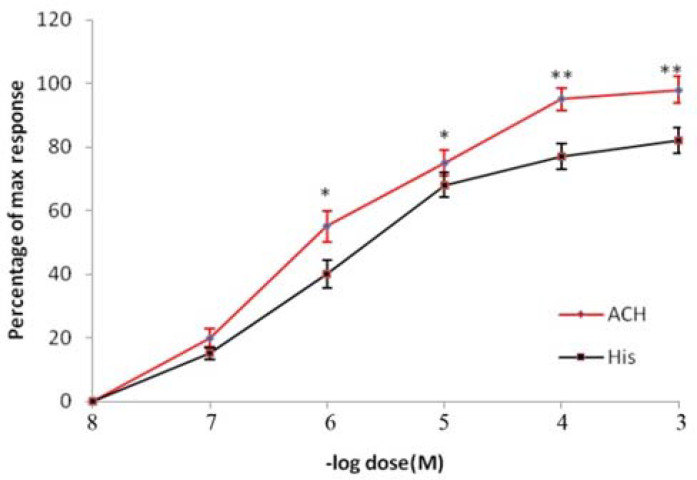
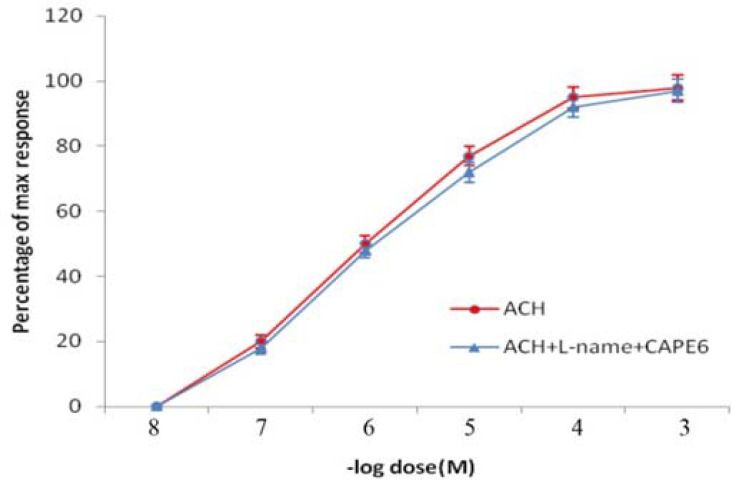
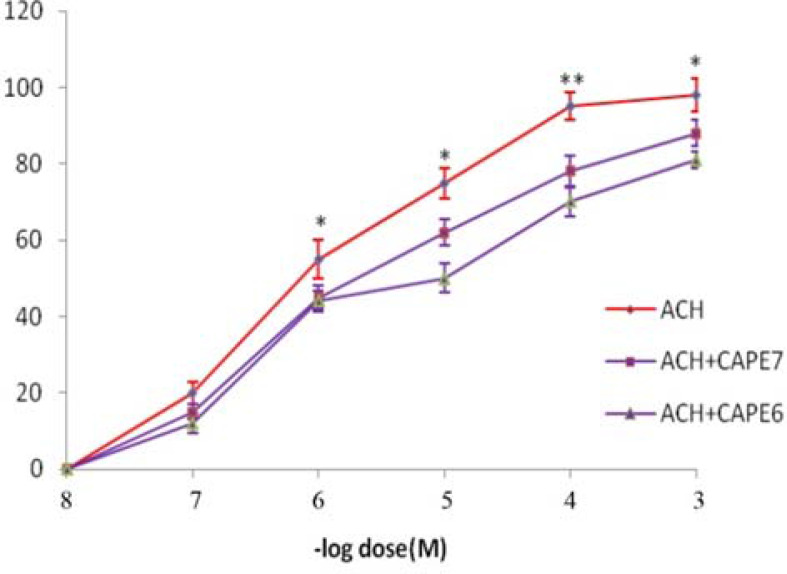
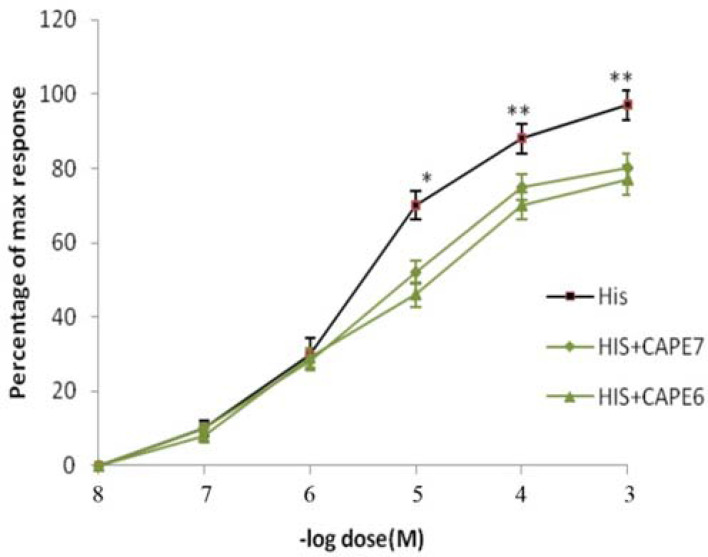
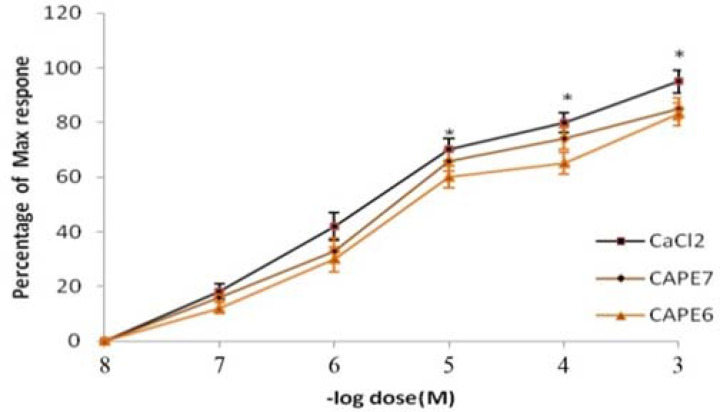
Acetylcholine (ACH), histamine (HIS), and CaCl2 caused the trachea to contract in a dose-dependent manner. Incubation of trachea with 10-7 M and 10-6M of CAPE induced a significant reduction in contraction induced by ACH and HIS. The degree of drug-induced tracheal contraction or relaxation was dose-dependent.
The CAPE potential to relax the trachea may antagonize cholinergic and histaminergic receptors of the trachea. The findings provide new insight into the effectiveness of CAPE in the control of asthma and the possible use of propolis for its treatment. The results highlight the anti-muscarinic, anti-histaminic, anti-inflammatory, and relaxant activities of CAPE and critically show its potential therapeutic effects.
咖啡酸苯乙酯(CAPE)是蜜蜂蜂胶的主要成分之一,其结构与类黄酮相似。已证明CAPE具有抗炎、免疫调节和抗氧化特性。尽管CAPE具有广泛的生物活性,但其详细的生化作用机制却鲜有描述。本研究的目的是探讨CAPE对离体大鼠气管的体外作用。
将一段20毫米长的大鼠气管螺旋条浸入37℃的离体器官浴槽中的20毫升Krebs溶液中。使用连接到哈佛记录仪的等长换能器测量应用激动剂后气管收缩性的变化。
乙酰胆碱(ACH)、组胺(HIS)和氯化钙以剂量依赖性方式引起气管收缩。用10-7M和10-6M的CAPE孵育气管可显著降低ACH和HIS诱导的收缩。药物诱导的气管收缩或舒张程度呈剂量依赖性。
CAPE使气管舒张的潜力可能拮抗气管的胆碱能和组胺能受体。这些发现为CAPE在控制哮喘方面的有效性以及蜂胶可能用于其治疗提供了新的见解。结果突出了CAPE的抗毒蕈碱、抗组胺、抗炎和舒张活性,并关键地显示了其潜在的治疗效果。