Li Qinyi, Badia Alba, Fernandez Rafael P, Mahajan Anoop S, López-Noreña Ana Isabel, Zhang Yan, Wang Shanshan, Puliafito Enrique, Cuevas Carlos A, Saiz-Lopez Alfonso
Department of Atmospheric Chemistry and Climate Institute of Physical Chemistry Rocasolano CSIC Madrid Spain.
Institute of Environmental Science and Technology (ICTA) Universitat Autònoma de Barcelona (UAB) Barcelona Spain.
J Geophys Res Atmos. 2021 Feb 27;126(4):e2020JD034175. doi: 10.1029/2020JD034175. Epub 2021 Feb 10.
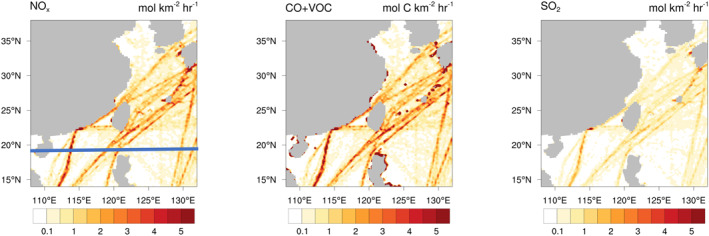
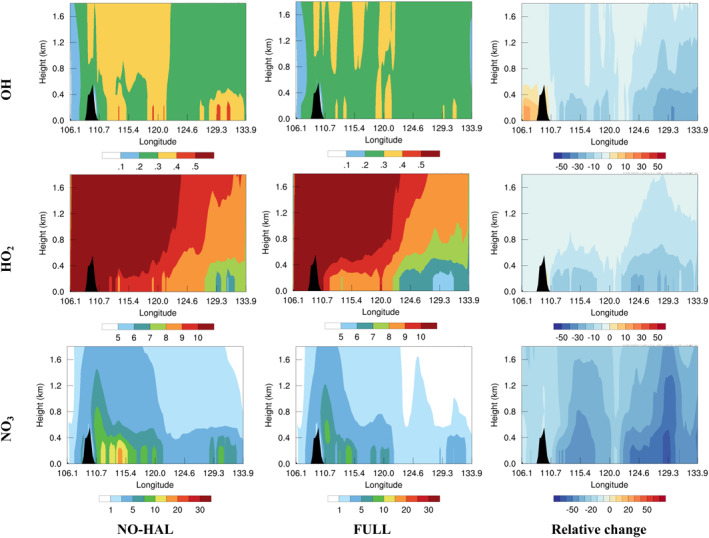
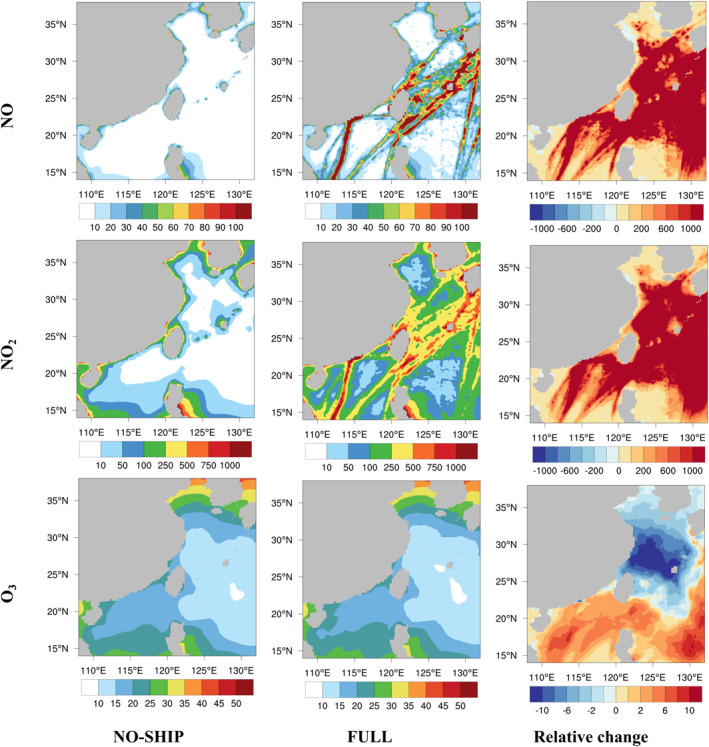
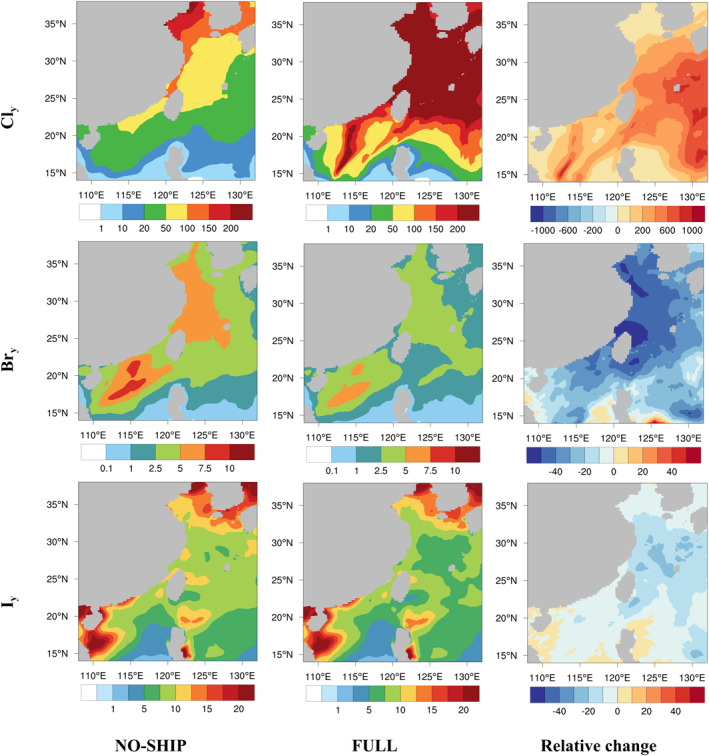
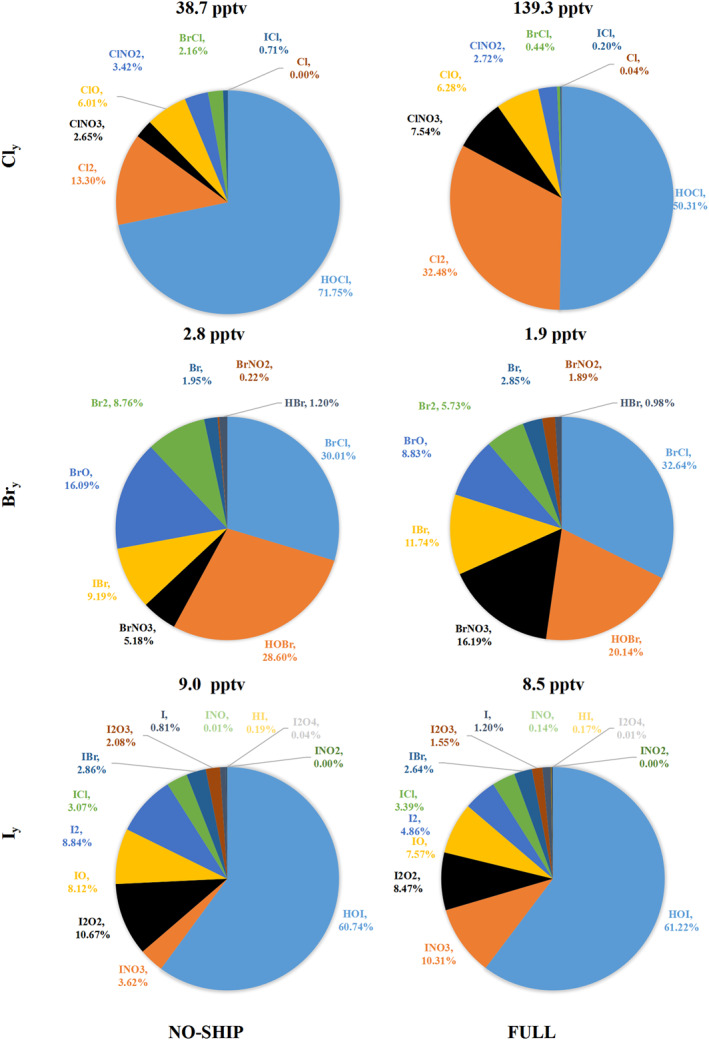
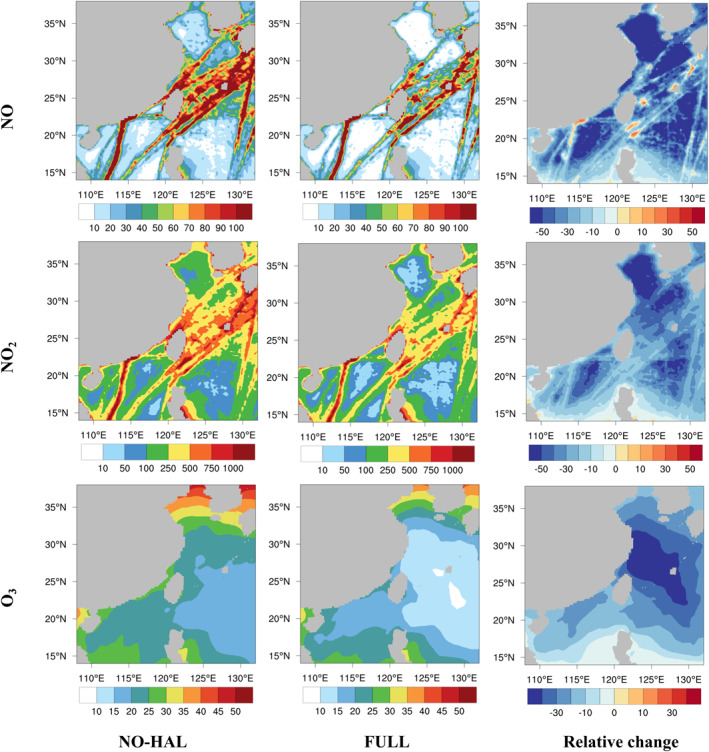
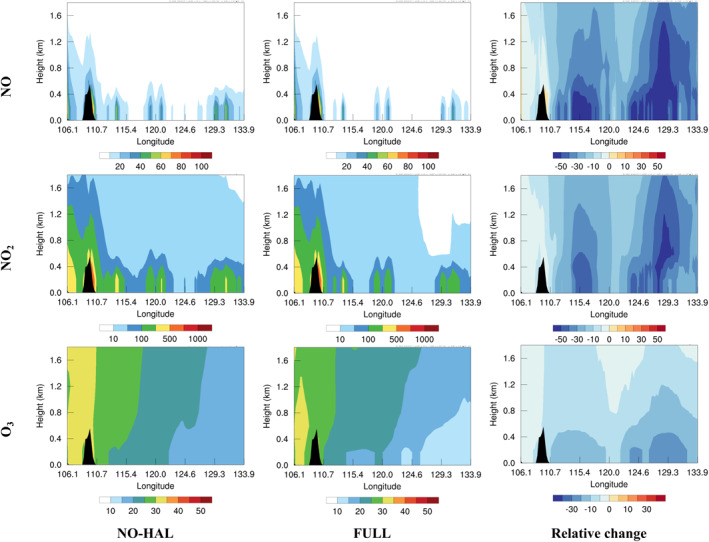
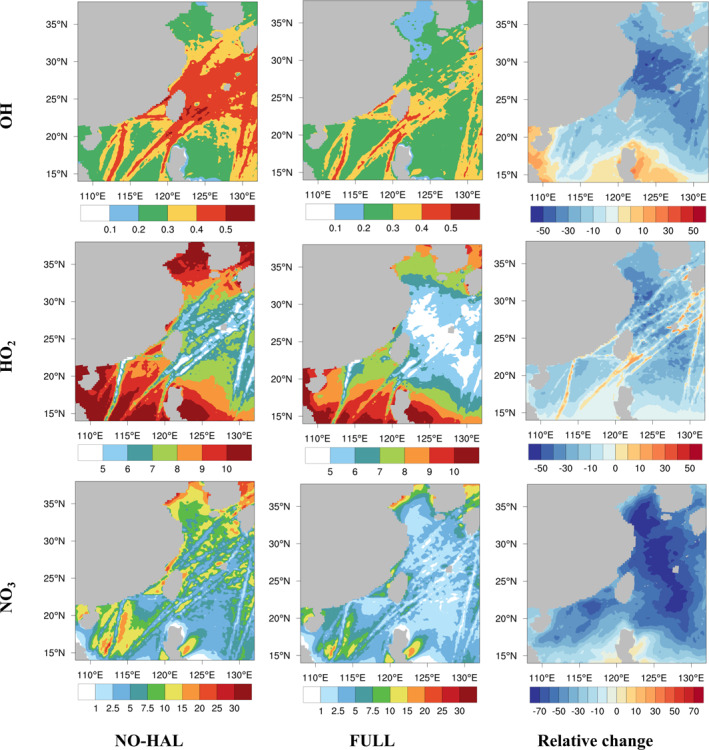
Ocean-going ships supply products from one region to another and contribute to the world's economy. Ship exhaust contains many air pollutants and results in significant changes in marine atmospheric composition. The role of reactive halogen species (RHS) in the troposphere has received increasing recognition and oceans are the largest contributors to their atmospheric burden. However, the impact of shipping emissions on RHS and that of RHS on ship-originated air pollutants have not been studied in detail. Here, an updated Weather Research Forecasting coupled with Chemistry model is utilized to explore the chemical interactions between ship emissions and oceanic RHS over the East Asia seas in summer. The emissions and resulting chemical transformations from shipping activities increase the level of NO and NO at the surface, increase O in the South China Sea, but decrease O in the East China Sea. Such changes in pollutants result in remarkable changes in the levels of RHS (>200% increase of chlorine; ∼30% and ∼5% decrease of bromine and iodine, respectively) as well as in their partitioning. The abundant RHS, in turn, reshape the loadings of air pollutants (∼20% decrease of NO and NO; ∼15% decrease of O) and those of the oxidants (>10% reduction of OH and HO; ∼40% decrease of NO) with marked patterns along the ship tracks. We, therefore, suggest that these important chemical interactions of ship-originated emissions with RHS should be considered in the environmental policy assessments of the role of shipping emissions in air quality and climate.
远洋船舶将产品从一个地区运往另一个地区,对世界经济做出贡献。船舶尾气含有许多空气污染物,导致海洋大气成分发生显著变化。活性卤素物种(RHS)在对流层中的作用已得到越来越多的认可,海洋是其大气负担的最大贡献者。然而,航运排放对RHS的影响以及RHS对船舶源空气污染物的影响尚未得到详细研究。在此,利用一个更新的耦合化学模型的天气研究预报模型,来探索夏季东亚海域船舶排放与海洋RHS之间的化学相互作用。航运活动的排放及其产生的化学转化增加了地表NO和NO的水平,增加了南海的O,但降低了东海的O。污染物的这种变化导致RHS水平发生显著变化(氯增加>200%;溴和碘分别减少约30%和5%)以及它们的分配变化。丰富的RHS反过来又重塑了空气污染物的负荷(NO和NO减少约20%;O减少约15%)以及氧化剂的负荷(OH和HO减少>10%;NO减少约40%),沿船舶航迹呈现明显的模式。因此,我们建议在航运排放对空气质量和气候作用的环境政策评估中,应考虑船舶源排放与RHS之间这些重要的化学相互作用。