Lee Sze Ting, Tebbutt Niall, Gan Hui Kong, Liu Zhanqi, Sachinidis John, Pathmaraj Kunthi, Scott Andrew Mark
Department of Molecular Imaging and Therapy, Austin Health, Melbourne, VIC, Australia.
Tumor Targeting Laboratory, Olivia Newton-John Cancer Research Institute, Austin Health, Melbourne, VIC, Australia.
Front Oncol. 2021 Mar 17;11:606210. doi: 10.3389/fonc.2021.606210. eCollection 2021.
Tumor hypoxia and angiogenesis are implicated in tumor growth and metastases, and anti-angiogenic therapies have an important role in treating patients with metastatic colorectal cancer. However, the prevalence of hypoxia has not been fully evaluated in colorectal liver metastases, and hypoxic response to anti-angiogenic therapy has not been clearly established. The aims of the study were to evaluate the changes seen on F-FMISO and F-FDG PET scans in patients treated with anti-angiogenic therapy, and to correlate these measures of hypoxia and metabolism with clinical outcomes, and blood biomarkers of angiogenesis.
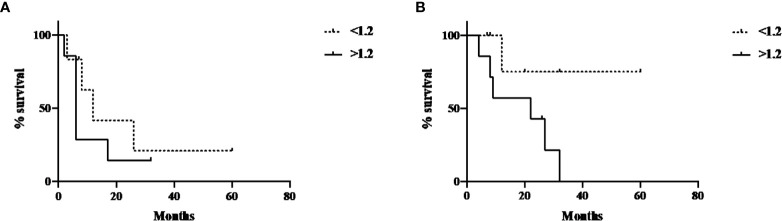
Patients with metastatic colorectal carcinoma planned for treatment with bevacizumab and chemotherapy received routine staging investigations prior to any treatment, including a FDG PET scan. A FMISO PET scan was performed within 4 weeks of staging tests, with blood specimens collected at that time for serum VEGF and osteopontin measurement. Follow-up FDG and FMISO scans were performed after 1 cycle of treatment. Results were compared to response (RECIST), progression free survival (PFS), and overall survival (OS).
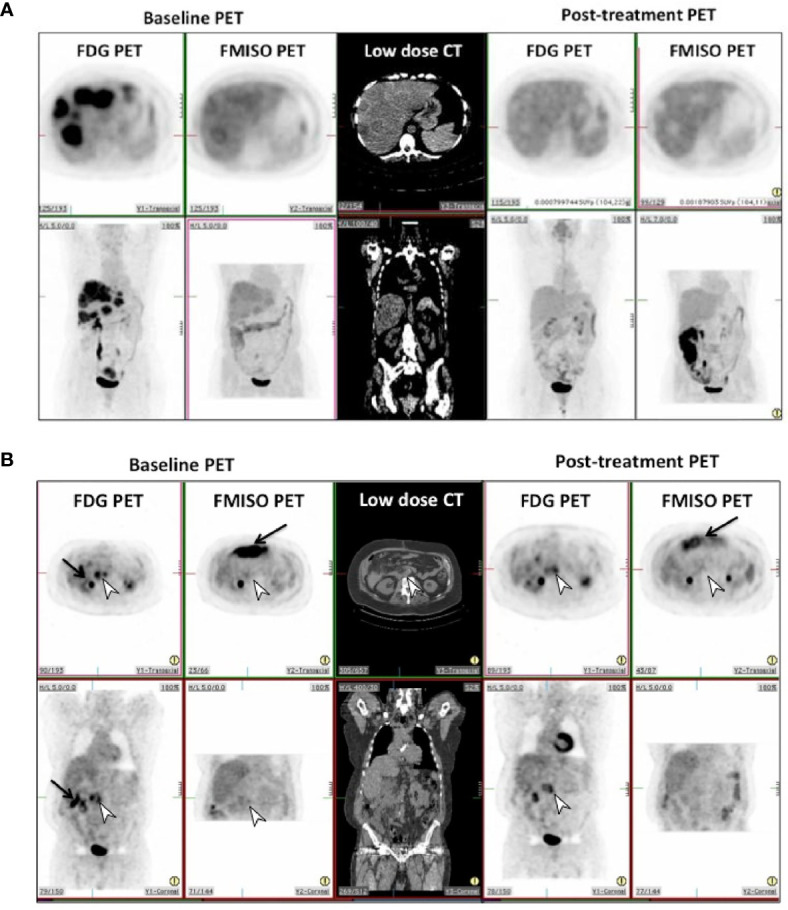
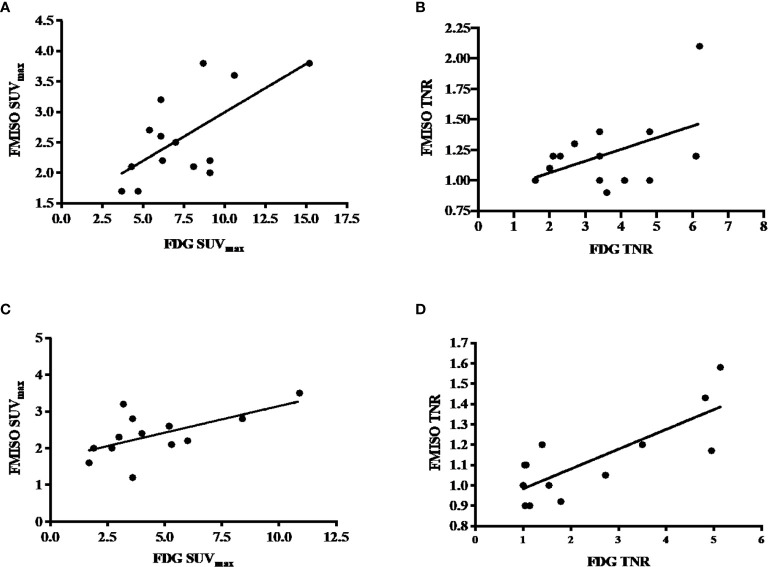
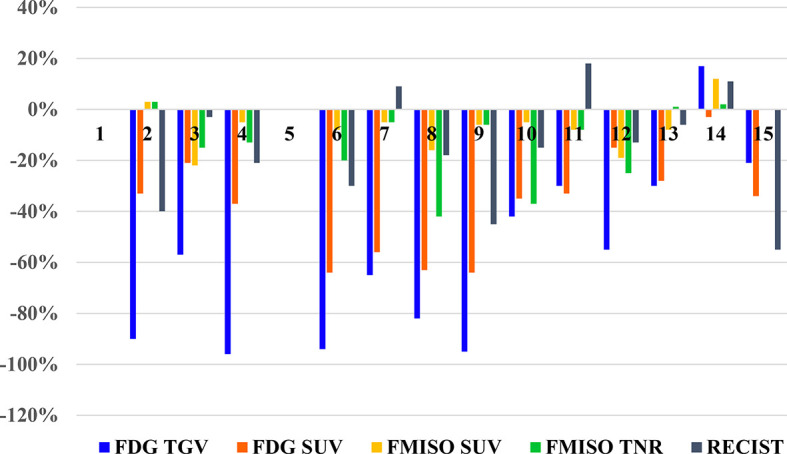
A total of 15 patients were recruited into this prospective trial, of which 13 patients were evaluable for assessment of treatment follow-up. Baseline FDG uptake was higher than FMISO uptake, and there was a significant decrease in FDG uptake (SUV and TGV) but not FMISO uptake (SUV and TNR) after treatment. There was a positive correlation between FDG and FMISO SUV on both baseline and post-treatment PET scans. Blood biomarkers of serum VEGF and osteopontin were significantly correlated with the FDG and FMISO PET parameters.
This study shows that hypoxia in metastatic colorectal cancer, assessed by FMISO PET, shows minor changes following initial treatment with anti-angiogenic therapy, but is associated with therapeutic response. FDG PET uptake changes (SUV, TLG) are also associated with response to anti-angiogenic therapy. These findings demonstrate the interplay between tumor metabolism and hypoxic regulation following anti-angiogenic treatment of metastatic colorectal cancer.
肿瘤缺氧和血管生成与肿瘤生长及转移有关,抗血管生成疗法在转移性结直肠癌患者的治疗中发挥着重要作用。然而,结直肠癌肝转移中缺氧的发生率尚未得到充分评估,且抗血管生成疗法的缺氧反应也未明确确立。本研究的目的是评估接受抗血管生成疗法治疗的患者在F-FMISO和F-FDG PET扫描上的变化,并将这些缺氧和代谢指标与临床结局以及血管生成的血液生物标志物相关联。
计划接受贝伐单抗和化疗的转移性结直肠癌患者在任何治疗前均接受常规分期检查,包括FDG PET扫描。在分期检查后4周内进行FMISO PET扫描,同时采集血样用于测定血清VEGF和骨桥蛋白。在1个治疗周期后进行随访FDG和FMISO扫描。将结果与反应(RECIST)、无进展生存期(PFS)和总生存期(OS)进行比较。
共有15名患者纳入该前瞻性试验,其中13名患者可评估治疗随访情况。基线时FDG摄取高于FMISO摄取,治疗后FDG摄取(SUV和TGV)显著下降,但FMISO摄取(SUV和TNR)未下降。基线和治疗后PET扫描上FDG和FMISO SUV之间均呈正相关。血清VEGF和骨桥蛋白的血液生物标志物与FDG和FMISO PET参数显著相关。
本研究表明,通过FMISO PET评估的转移性结直肠癌中的缺氧在初始抗血管生成疗法治疗后变化较小,但与治疗反应相关。FDG PET摄取变化(SUV、TLG)也与抗血管生成疗法的反应相关。这些发现证明了转移性结直肠癌抗血管生成治疗后肿瘤代谢与缺氧调节之间的相互作用。