Bernhard Nocht Institute for Tropical Medicine, Hamburg, Germany.
Institute of Infection, Veterinary & Ecological Sciences, University of Liverpool, Liverpool, United Kingdom.
Front Cell Infect Microbiol. 2021 Mar 19;11:641472. doi: 10.3389/fcimb.2021.641472. eCollection 2021.
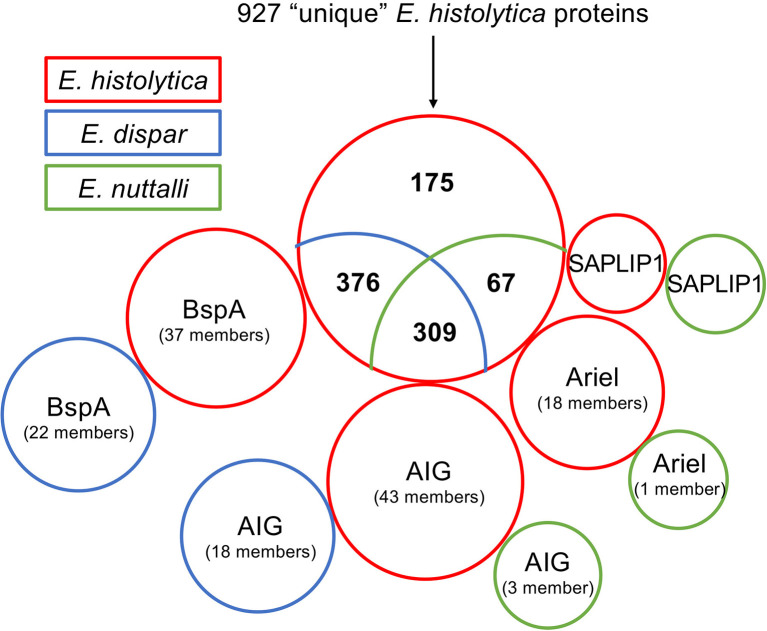
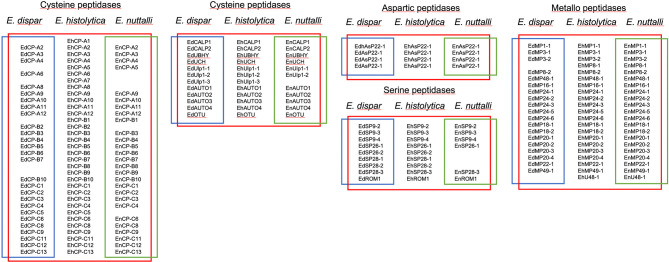
The human protozoan parasite can live in the human intestine for months or years without generating any symptoms in the host. For unknown reasons, amoebae can suddenly destroy the intestinal mucosa and become invasive. This can lead to amoebic colitis or extraintestinal amoebiasis whereby the amoebae spread to other organs the blood vessels, most commonly the liver where abscesses develop. is the closest genetic relative of and is found in wild macaques. Another close relative is , which asyptomatically infects the human intestine. Although all three species are closely related, only and are able to penetrate their host's intestinal epithelium. Lineage-specific genes and gene families may hold the key to understanding differences in virulence among species. Here we discuss those genes found in that have relatives in only one or neither of its sister species, with particular focus on the peptidase, AIG, Ariel, and BspA families.
可以在人类肠道中存活数月甚至数年而不使宿主产生任何症状。由于未知原因,变形虫可以突然破坏肠黏膜并变得具有侵袭性。这可能导致阿米巴结肠炎或肠外阿米巴病,变形虫会扩散到其他器官的血管中,最常见的是肝脏,那里会形成脓肿。 与 最为接近,存在于野生猕猴中。另一个近亲是 ,它无症状地感染人类肠道。尽管这三个物种密切相关,但只有 和 能够穿透宿主的肠上皮细胞。谱系特异性基因和基因家族可能是理解物种间毒力差异的关键。在这里,我们讨论了那些在 中发现的基因,它们在其姐妹种中只有一个或都没有亲缘关系,特别关注肽酶、AIG、Ariel 和 BspA 家族。