Sarabi Asiabar Ali, Sharifi Tahereh, Rezapour Aziz, Khatami Firouzabadi Seyed Mohammad Ali, Haghighat-Fard Payam, Mohammad-Pour Saeed
Health Management and Economics Research Center, Iran University of Medical Sciences, Tehran, Ira.
Department of Health Care Management, School of Health, Tehran University of Medical Sciences, Tehran, Iran.
Med J Islam Repub Iran. 2020 Dec 29;34:176. doi: 10.47176/mjiri.34.176. eCollection 2020.
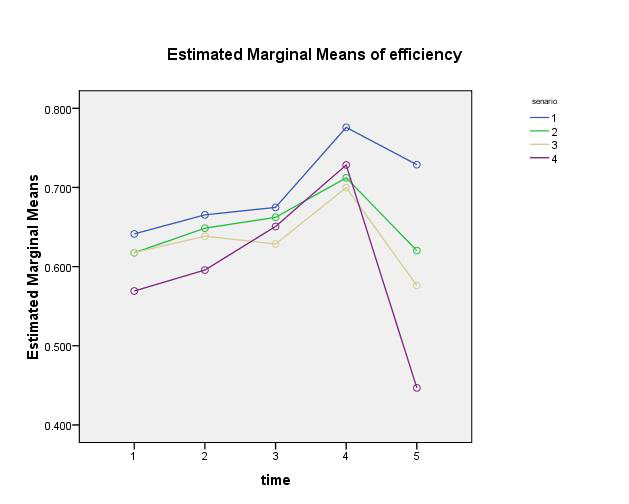
Measuring hospital efficiency is one of the tools for determining how to use resources. Considering the necessity of measuring the efficiency in hospitals, the current study was conducted to evaluate the efficiency and its determining factors in the Hospitals affiliated to medical universities in Tehran. This was a descriptive-analytical and longitudinal study. In the first stage of the research, the variables affecting the efficiency of hospitals were extracted using the Delphi method. In the second stage, th. Efficiency of 29 public hospitals in Tehran from 2012 to 2016 was calculated using data envelopment analysis techniques. We performed a sensitivity analysis of the efficiency scores by running the DEA model several times using different combinations of input variables. At last, applying the Tobit regression, factors explaining the inefficiencies of hospitals were determined. Data analysis was done by STATA 12 and SPSS 16 software. Significance level of all the tests was set at .05. In the first stage, 10 input variables and 10 output variables necessary from the mangers' point of view were identified to test efficiency. In the second stage, the mean of hospital efficiency was ascending from 2012 to 2015, and then it descending after 2015. According to the results of sensitivity analysis, despite the variability of technical efficiency during the study period (p<0.0001), the difference between the mean performance scores among different scenarios was not significant (p=0.066). Based on the third stage results, the average length of stay (Beta=-1.60E-12, p=0.030) and educational status (Beta=-2.89E+00, p=0.001) had a significant negative effect on hospitals' efficiency. The study results indicated that the efficiency changes during the years investigated were significant among Tehran public hospitals. The optimal use of inputs to produce hospital services should be on the agenda of health managers and policymakers.
衡量医院效率是确定资源使用方式的工具之一。鉴于衡量医院效率的必要性,本研究旨在评估德黑兰医科大学附属医院的效率及其决定因素。这是一项描述性分析纵向研究。在研究的第一阶段,使用德尔菲法提取影响医院效率的变量。在第二阶段,运用数据包络分析技术计算了2012年至2016年德黑兰29家公立医院的效率。我们通过使用不同输入变量组合多次运行DEA模型,对效率得分进行了敏感性分析。最后,应用Tobit回归确定了解释医院无效率的因素。数据分析使用STATA 12和SPSS 16软件完成。所有测试的显著性水平设定为0.05。在第一阶段,从管理者角度确定了10个输入变量和10个输出变量以测试效率。在第二阶段,医院效率均值从2012年到2015年呈上升趋势,然后在2015年后下降。根据敏感性分析结果,尽管研究期间技术效率存在差异(p<0.0001),但不同情景下平均绩效得分之间的差异不显著(p=0.066)。基于第三阶段结果,平均住院时间(Beta=-1.60E-12,p=0.030)和教育程度(Beta=-2.89E+00,p=0.001)对医院效率有显著负面影响。研究结果表明,在所调查的年份中,德黑兰公立医院的效率变化显著。卫生管理者和政策制定者应将优化投入以提供医院服务提上议程。