Renal Transplant Center "A. Vercellone," Nephrology, Dialysis, and Renal Transplant Division, Department of Medical Sciences, "AOU Città Della Salute e Della Scienza di Torino" University Hospital, University of Turin, Turin, Italy.
Department of Vascular Surgery, "AOU Città Della Salute e Della Scienza" Hospital, University of Turin, Turin, Italy.
PLoS One. 2021 Apr 5;16(4):e0249552. doi: 10.1371/journal.pone.0249552. eCollection 2021.
Pre-existing chronic hypotension affects a percentage of kidney transplanted patients (KTs). Although a relationship with delayed graft function (DGF) has been hypothesized, available data are still scarce and inconclusive.
A monocentric retrospective observational study was performed on 1127 consecutive KTs from brain death donors over 11 years (2003-2013), classified according to their pre-transplant Mean Blood Pressure (MBP) as hypotensive (MBP < 80 mmHg) or normal-hypertensive (MBP ≥ 80 mmHg, with or without effective antihypertensive therapy).
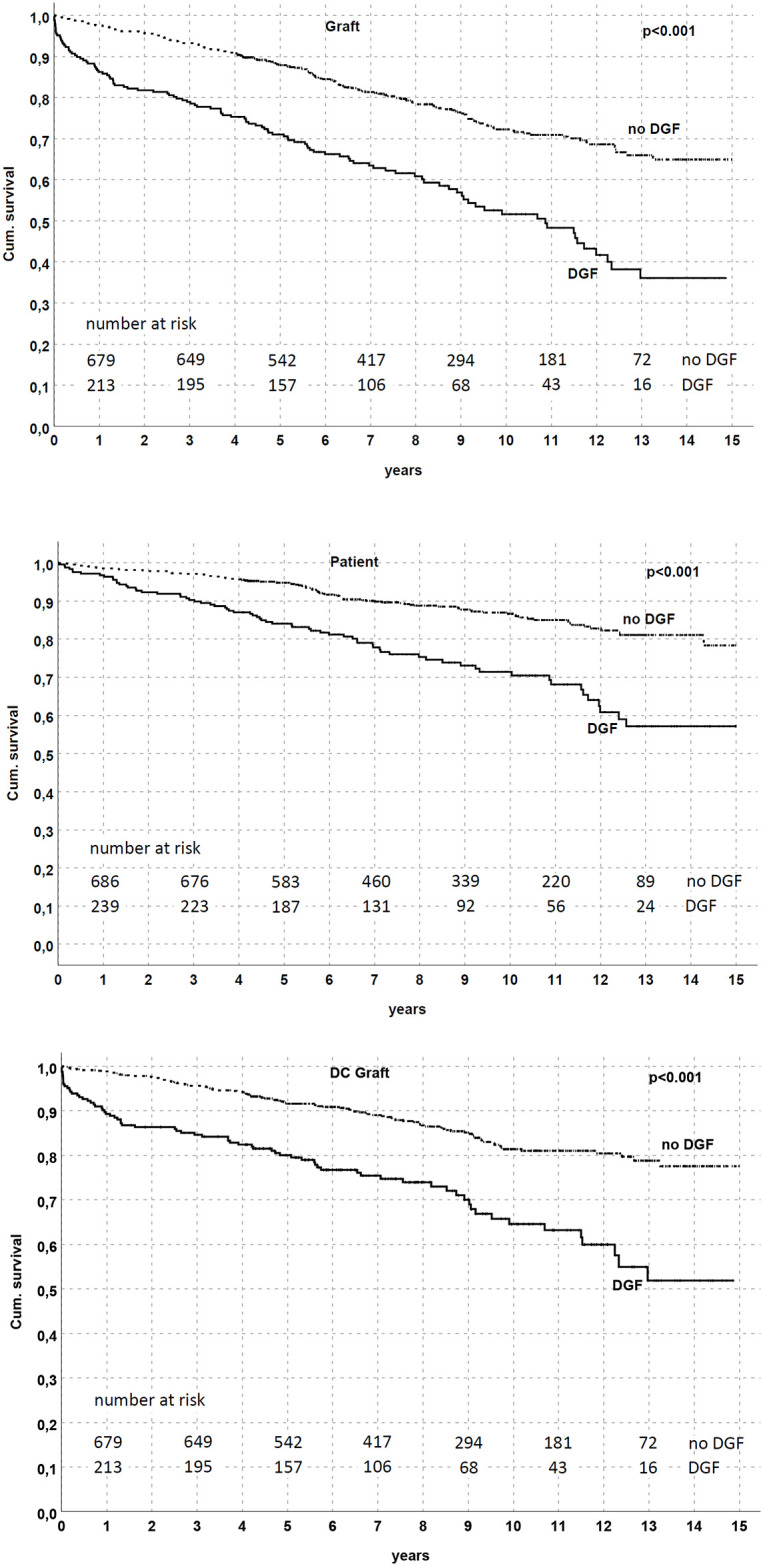
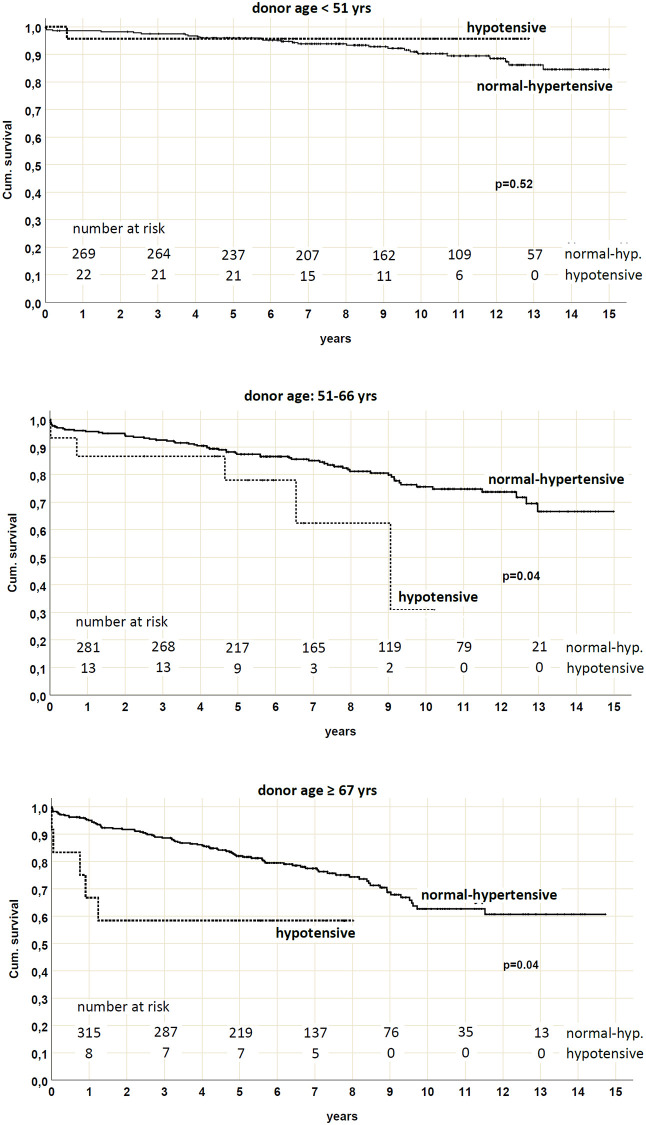
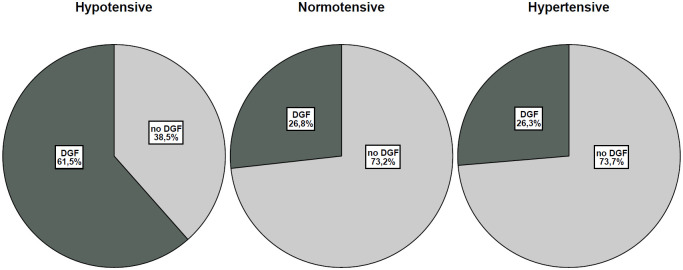
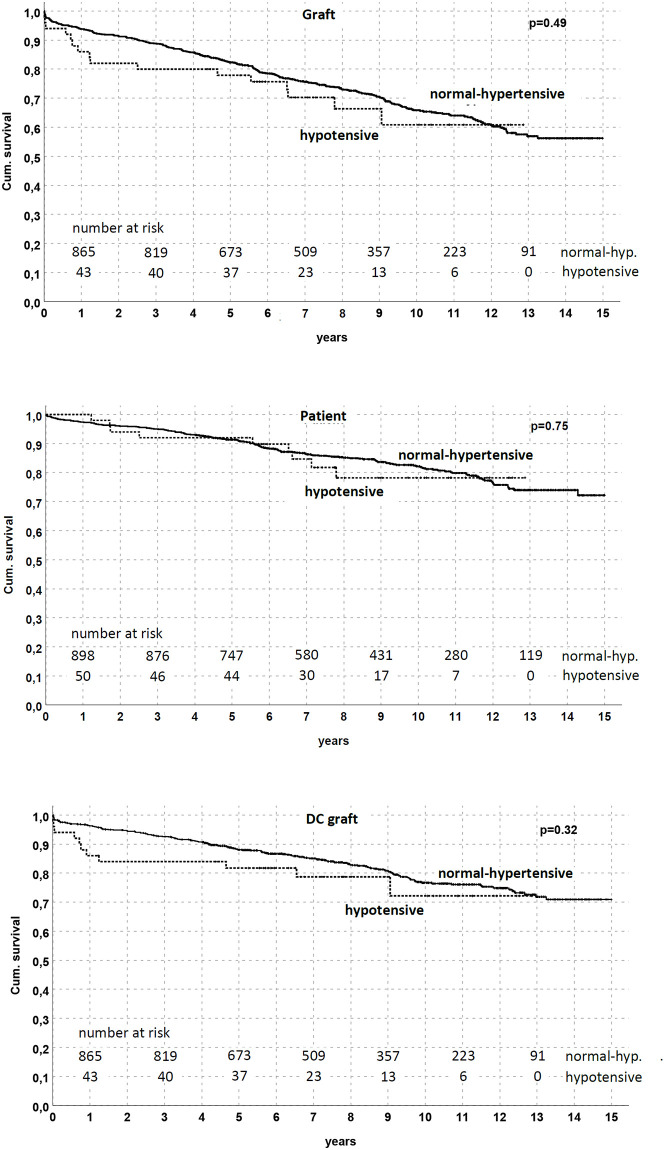
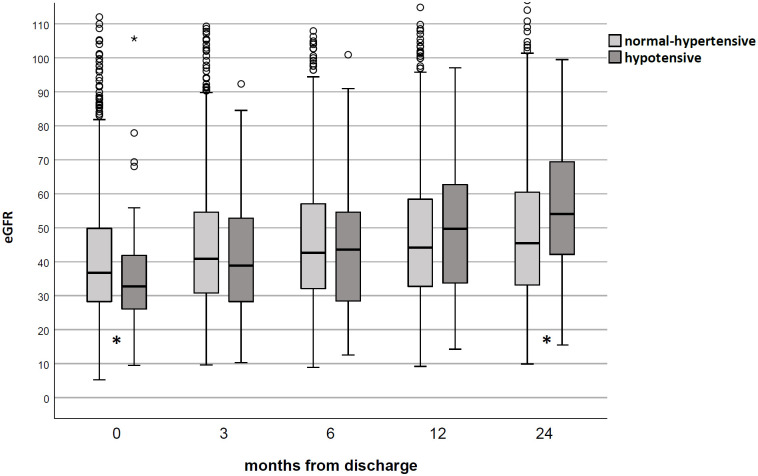
Univariate analysis showed that a pre-existing hypotension is associated to DGF occurrence (p<0.01; OR for KTs with MBP < 80 mmHg, 4.5; 95% confidence interval [CI], 2.7 to 7.5). Chronic hypotension remained a major predictive factor for DGF development in the logistic regression model adjusted for all DGF determinants. Adjunctive evaluations on paired grafts performed in two different recipients (one hypotensive and the other one normal-hypertensive) confirmed this assumption. Although graft survival was only associated with DGF but not with chronic hypotension in the overall population, stratification according to donor age revealed that death-censored graft survival was significantly lower in hypotensive patients who received a KT from >50 years old donor.
Our findings suggest that pre-existing recipient hypotension, and the subsequent hypotension-related DGF, could be considered a significant detrimental factor, especially when elderly donors are involved in the transplant procedure.
预先存在的慢性低血压影响了一部分接受肾移植的患者(KTs)。虽然有人假设它与延迟移植物功能(DGF)有关,但目前可用的数据仍然很少且不确定。
对 11 年来(2003-2013 年) 1127 例来自脑死亡供体的连续 KTs 进行了单中心回顾性观察研究,根据其移植前平均血压(MBP)分为低血压(MBP<80mmHg)或正常-高血压(MBP≥80mmHg,无论是否进行有效降压治疗)。
单因素分析显示,预先存在的低血压与 DGF 的发生有关(p<0.01;MBP<80mmHg 的 KTs 发生 DGF 的比值比,4.5;95%置信区间[CI],2.7 至 7.5)。在调整了所有 DGF 决定因素的逻辑回归模型中,慢性低血压仍然是 DGF 发展的主要预测因素。在两名不同受者中对配对移植物进行的附加评估(一名低血压,另一名正常-高血压)证实了这一假设。虽然在总体人群中,移植物存活率仅与 DGF 相关,而与慢性低血压无关,但根据供者年龄分层显示,接受>50 岁供者的 KT 的低血压患者的死亡风险校正后的移植物存活率明显较低。
我们的研究结果表明,预先存在的受者低血压以及随后的低血压相关 DGF 可能被视为一个重要的不利因素,尤其是在老年供者参与移植手术的情况下。