Department of Surgery, University Hospital Bonn, Bonn, Germany.
Department of Gastroenterology, University Hospital Bonn, Bonn, Germany.
Ann Transplant. 2021 Apr 6;26:e928907. doi: 10.12659/AOT.928907.
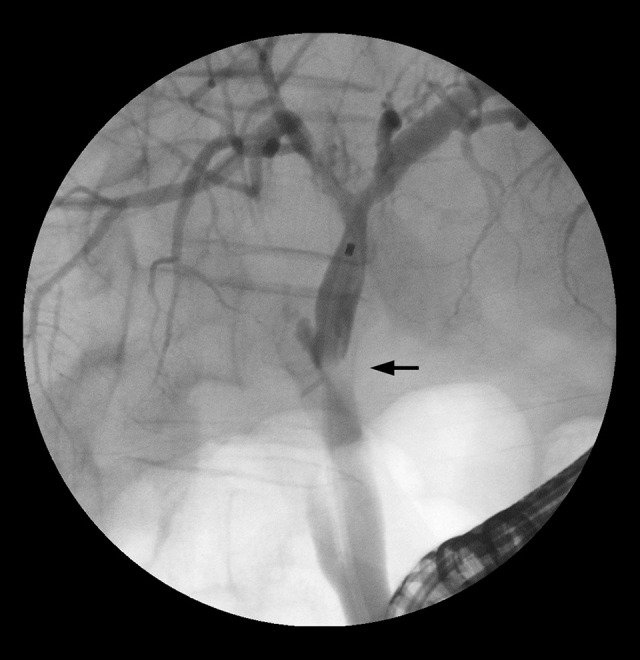
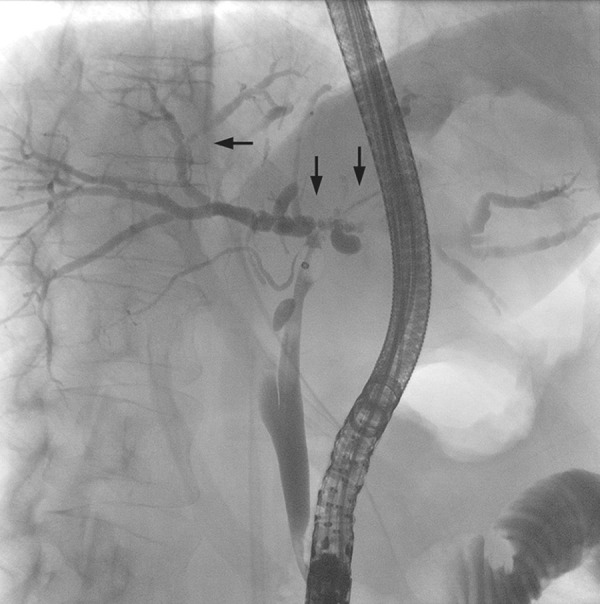
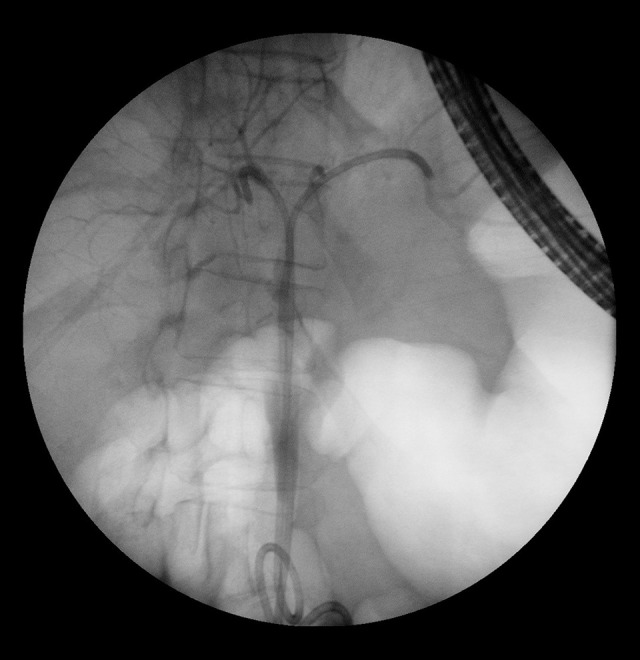
BACKGROUND Biliary complications are common causes of morbidity and mortality after liver transplantation. MATERIAL AND METHODS From 2013 to 2018, 102 whole-organ liver transplantations were conducted in our department. Patients were closely monitored for biliary complication development. In all suspected cases, patients underwent either endoscopic retrograde cholangiopancreatography or percutaneous transhepatic cholangial drainage. Patients' demographic characteristics, preexisting conditions, and perioperative characteristics, as well as morbidity and mortality, were analyzed. Risk factors for 1-year survival were calculated. RESULTS Of the 102 patients, 43 (42%) experienced biliary complications. In comparison with patients without biliary complications, patients with biliary complications exhibited the following risk factors: underlying liver disease (viral hepatitis; P=0.009), blood group A (P=0.005), and previous abdominal surgery (P=0.037). Neither perioperative characteristics, especially duration of cold ischemia (P=0.86), nor postoperative course differed between patients with and without biliary complications. Risk factors for mortality within 1 year were cirrhosis caused by entities other than viral hepatitis (P=0.017), cardiac comorbidities (P=0.019), re-transplantation (P=0.032), and reduced organ weight (P=0.002). Biliary complications, postoperative hemorrhage, primary nonfunction, and repeated surgery worsened outcome; moreover, serum bilirubin trough in the first 30 days after transplantation might be prognostic for mortality (P=0.043). CONCLUSIONS Biliary complications adversely affect outcome after liver transplantation. Neither frequency nor outcome of biliary complications was improved by intensified endoscopic evaluation. Patients on the waiting list for liver transplants should also be closely monitored for cardiac comorbidities.
背景 胆道并发症是肝移植后发病率和死亡率的常见原因。
材料与方法 自 2013 年至 2018 年,我科共进行了 102 例全肝移植。密切监测患者胆道并发症的发生情况。在所有疑似病例中,患者均行内镜逆行胰胆管造影或经皮经肝胆管引流。分析患者的人口统计学特征、术前情况、围手术期特征以及发病率和死亡率。计算 1 年生存率的危险因素。
结果 在 102 例患者中,43 例(42%)发生胆道并发症。与无胆道并发症的患者相比,有胆道并发症的患者存在以下危险因素:基础肝病(病毒性肝炎;P=0.009)、血型 A(P=0.005)和既往腹部手术史(P=0.037)。胆道并发症患者与无胆道并发症患者的围手术期特征,尤其是冷缺血时间(P=0.86),均无差异。1 年内死亡的危险因素为非病毒性肝炎所致肝硬化(P=0.017)、心脏合并症(P=0.019)、再次移植(P=0.032)和器官重量减轻(P=0.002)。胆道并发症、术后出血、原发性无功能和重复手术均使预后恶化;此外,移植后 30 天内血清胆红素谷值可能与死亡率相关(P=0.043)。
结论 胆道并发症对肝移植后结局有不良影响。强化内镜评估并未改善胆道并发症的发生频率和结局。肝移植等待名单上的患者也应密切监测心脏合并症。