Division of Endocrinology and Metabolism, Department of Internal Medicine III, Medical University of Vienna, Währinger Gürtel 18-20, 1090, Vienna, Austria.
Division of Gastroenterology and Hepatology, Department of Internal Medicine III, Nutritional Counselling, Medical University of Vienna, Währinger Gürtel 18-20, 1090, Vienna, Austria.
Obes Surg. 2021 Jul;31(7):3242-3250. doi: 10.1007/s11695-021-05380-3. Epub 2021 Apr 5.
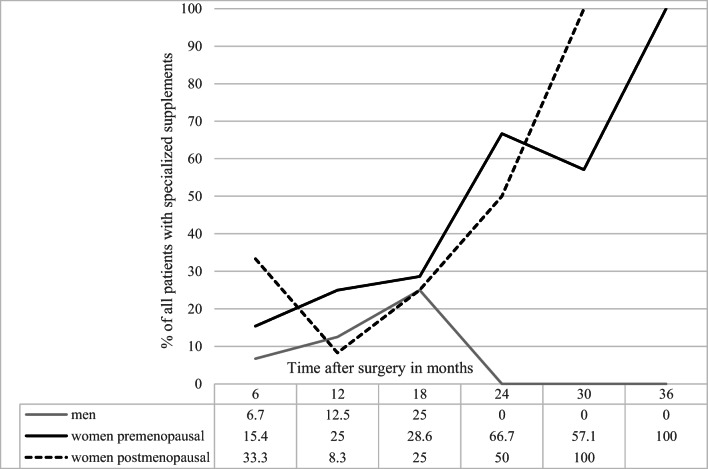
In our centre, specialized high dose multivitamin supplementation designed to meet the needs of patients after gastric bypass surgery is routinely recommended in the early postoperative period. The aim of the present study was to analyse whether iron supplementation prescribed in clinical practice is sufficient in both sexes and whether multivitamin supplementation standardized for women might potentially lead to iron overload in men.
MATERIALS/METHODS: This was a retrospective study covering the period up to 36 months after bariatric surgery. Three groups were compared (men, premenopausal and postmenopausal women). The iron status was evaluated employing serum ferritin concentrations.
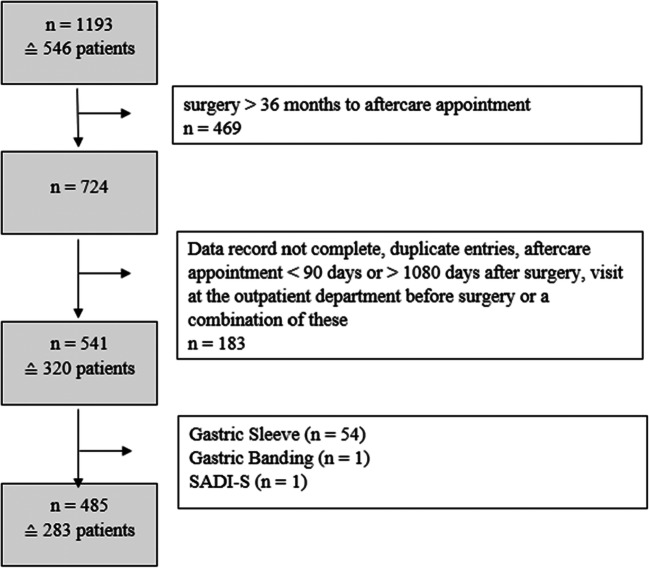
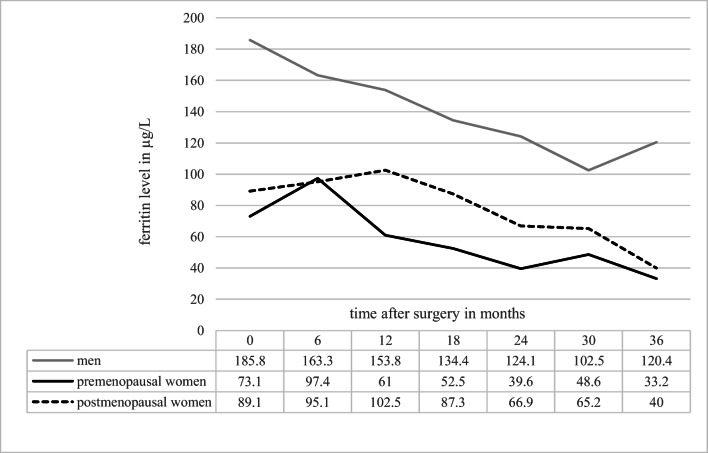
A total of 283 patients who had at least one follow-up visit between January 2015 and April 2018 at a specialized academic outpatient centre were included (71 men, 130 premenopausal women, 82 postmenopausal women). Thirty-six months after surgery, 33.3%, 68.4% and 54.5% of the men, pre- and postmenopausal women, respectively, were iron deficient. The preoperative prevalence of excess ferritin levels was 13.7% in premenopausal, 3.0% in postmenopausal women, 5.7% in men and declined in the following months.
Iron deficiency is very common after gastric bypass surgery, and even high dosages of multivitamin and mineral supplements might not be sufficient to prevent the development of iron deficiency. Men, pre- and postmenopausal women differ in their prevalence of iron deficiency which demands adapted iron dosage regimens based on the sex and the age. Iron overload is rare in all observed groups and highest in premenopausal women.
在我们中心,专门为胃旁路手术后患者设计的高剂量多种维生素补充剂在术后早期常规推荐。本研究旨在分析在临床实践中开具的铁补充剂是否在男女两性均充足,以及为女性量身定制的多种维生素补充剂是否可能导致男性铁过载。
材料/方法:这是一项回顾性研究,涵盖了胃旁路手术后的 36 个月。比较了三组(男性、绝经前和绝经后女性)。使用血清铁蛋白浓度评估铁状态。
共纳入 2015 年 1 月至 2018 年 4 月在专门的学术门诊中心至少有一次随访的 283 例患者(71 例男性、130 例绝经前女性、82 例绝经后女性)。术后 36 个月,分别有 33.3%、68.4%和 54.5%的男性、绝经前和绝经后女性缺铁。术前铁蛋白水平过高的患病率在绝经前女性为 13.7%、绝经后女性为 3.0%、男性为 5.7%,并在随后的几个月中下降。
胃旁路手术后铁缺乏非常常见,即使高剂量的多种维生素和矿物质补充剂也可能不足以预防缺铁的发生。男性、绝经前和绝经后女性的缺铁患病率存在差异,需要根据性别和年龄制定不同的铁剂量方案。在所有观察到的组中,铁过载都很少见,绝经前女性最高。