Department of Functional Neuroscience, Institute of Biomedical Science, Kansai Medical University, Osaka, Japan.
Department of Cellular and Functional Biology, Institute of Biomedical Science, Kansai Medical University, Osaka, Japan.
Nat Commun. 2021 Apr 6;12(1):2074. doi: 10.1038/s41467-021-22205-0.
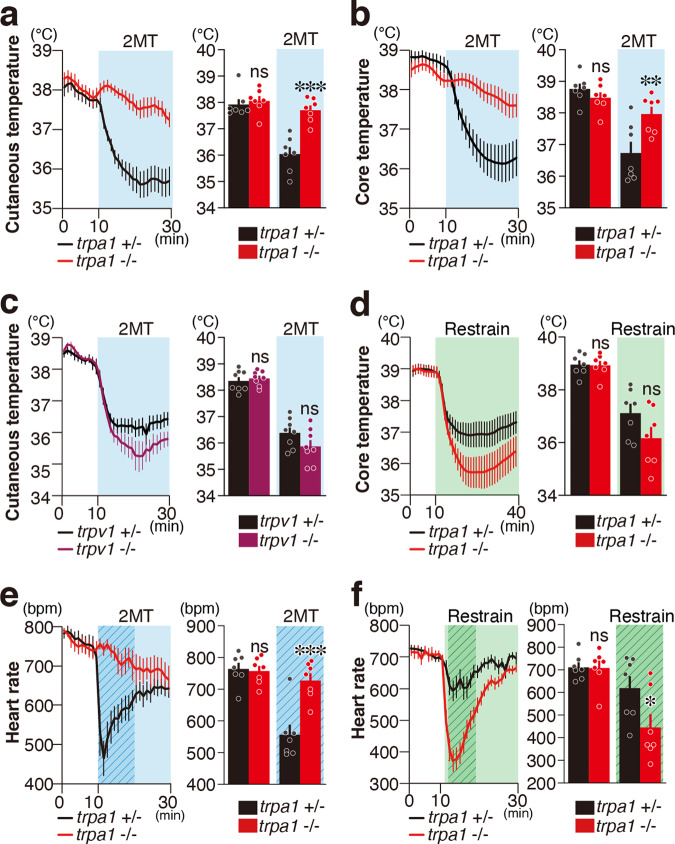
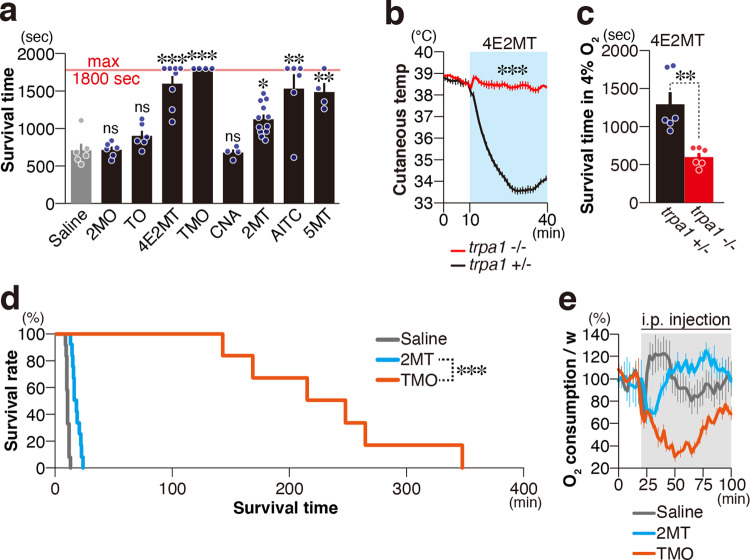
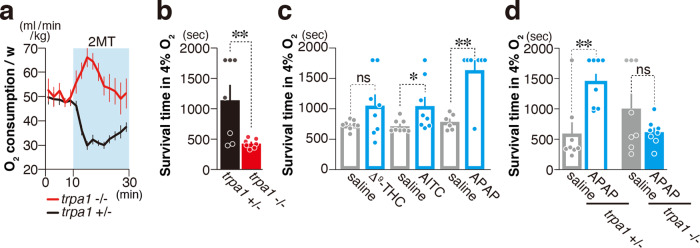
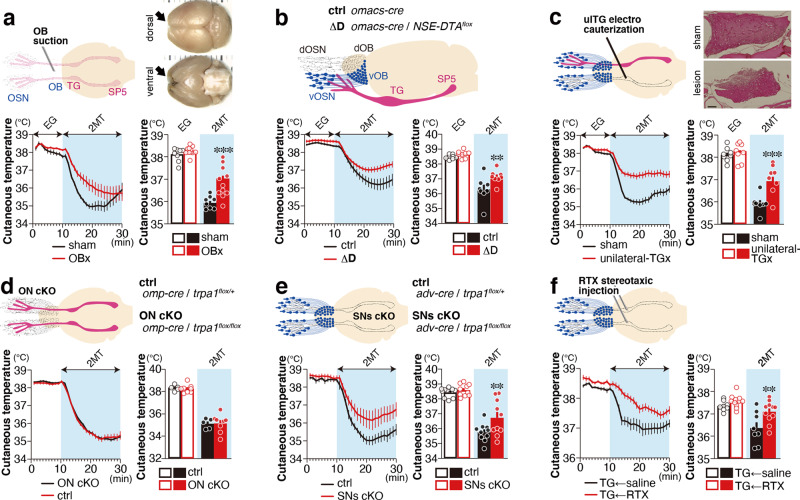
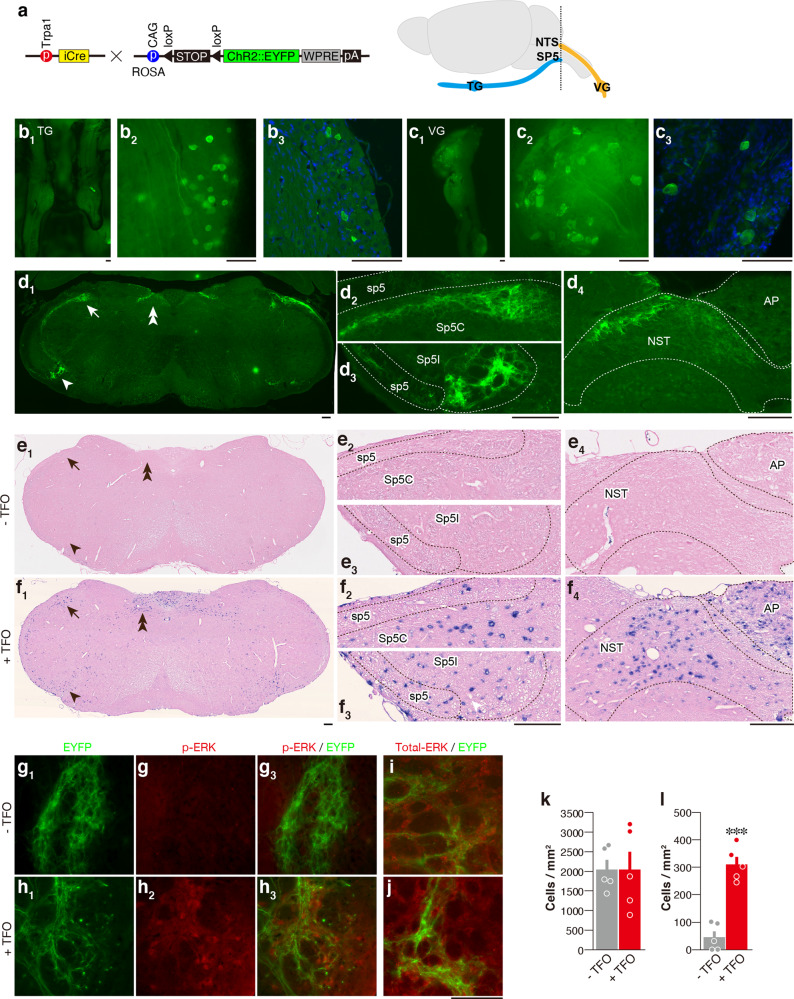
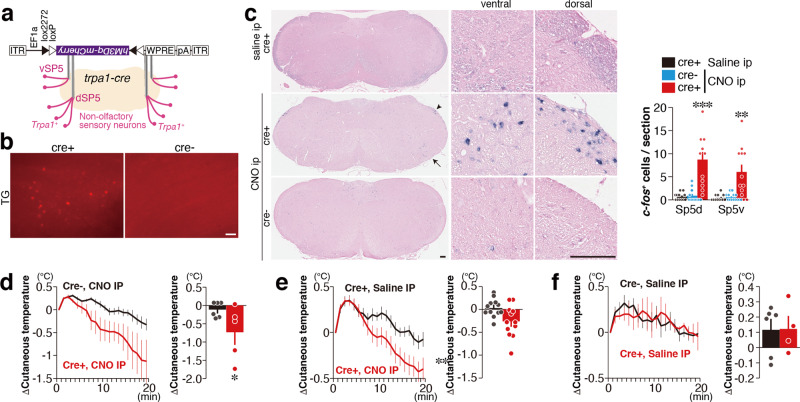
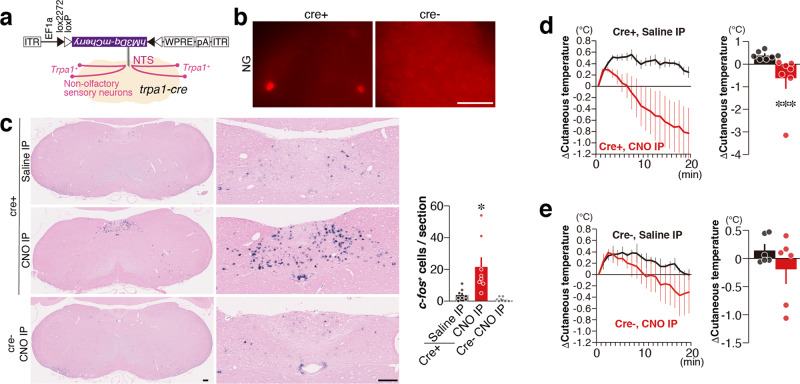
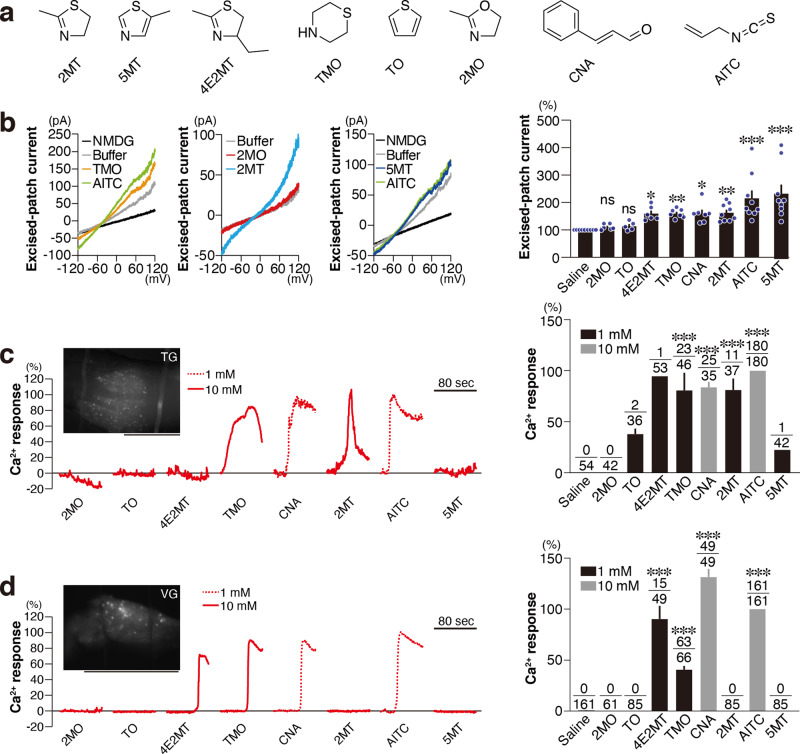
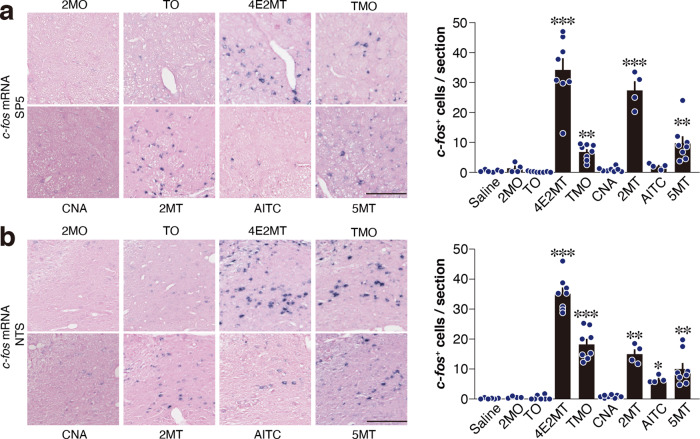
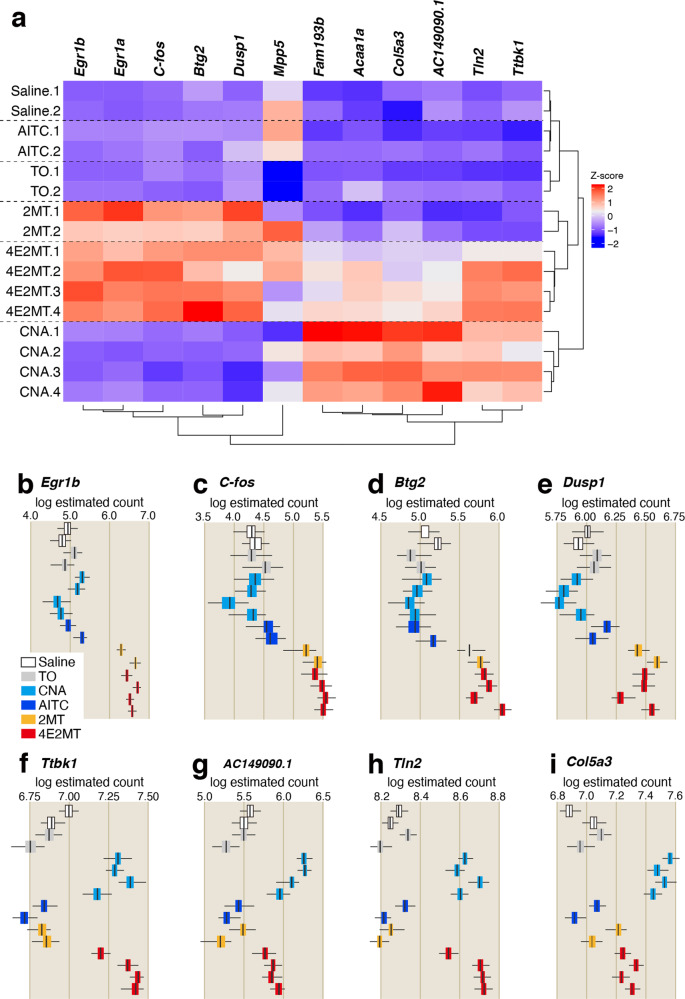
Thiazoline-related innate fear-eliciting compounds (tFOs) orchestrate hypothermia, hypometabolism, and anti-hypoxia, which enable survival in lethal hypoxic conditions. Here, we show that most of these effects are severely attenuated in transient receptor potential ankyrin 1 (Trpa1) knockout mice. TFO-induced hypothermia involves the Trpa1-mediated trigeminal/vagal pathways and non-Trpa1 olfactory pathway. TFOs activate Trpa1-positive sensory pathways projecting from trigeminal and vagal ganglia to the spinal trigeminal nucleus (Sp5) and nucleus of the solitary tract (NTS), and their artificial activation induces hypothermia. TFO presentation activates the NTS-Parabrachial nucleus pathway to induce hypothermia and hypometabolism; this activation was suppressed in Trpa1 knockout mice. TRPA1 activation is insufficient to trigger tFO-mediated anti-hypoxic effects; Sp5/NTS activation is also necessary. Accordingly, we find a novel molecule that enables mice to survive in a lethal hypoxic condition ten times longer than known tFOs. Combinations of appropriate tFOs and TRPA1 command intrinsic physiological responses relevant to survival fate.
噻唑啉相关的先天恐惧诱发化合物(tFOs)协调体温降低、代谢降低和抗缺氧,使动物能够在致命缺氧条件下存活。在这里,我们表明,这些效应中的大多数在瞬时受体电位锚蛋白 1(TRPA1)基因敲除小鼠中严重减弱。TFO 诱导的体温降低涉及 TRPA1 介导的三叉神经/迷走神经通路和非 TRPA1 嗅觉通路。TFOs 激活从三叉神经和迷走神经节投射到三叉神经脊核(Sp5)和孤束核(NTS)的 TRPA1 阳性感觉通路,其人工激活诱导体温降低。TFO 呈现激活 NTS-臂旁核通路以诱导体温降低和代谢降低;这种激活在 TRPA1 基因敲除小鼠中受到抑制。TRPA1 激活不足以引发 tFO 介导的抗缺氧作用;Sp5/NTS 激活也是必要的。因此,我们发现了一种新的分子,使小鼠能够在致命缺氧条件下存活的时间比已知的 tFOs 长十倍。适当的 tFOs 和 TRPA1 的组合可以调动与生存命运相关的内在生理反应。