Division of Cardiology, Department of Internal Medicine, Tongji Hospital, Tongji Medical College, Huazhong University of Science and Technology, Wuhan, China.
Division of Cardiology, Department of Internal Medicine, First People's Hospital of Shangqiu, Shangqiu, China.
Oxid Med Cell Longev. 2021 Mar 20;2021:6699054. doi: 10.1155/2021/6699054. eCollection 2021.
Inflammation and oxidative stress are involved in the initiation and progress of heart failure (HF). However, the role of the IL6/STAT3 pathway in the pressure overload-induced HF remains controversial.
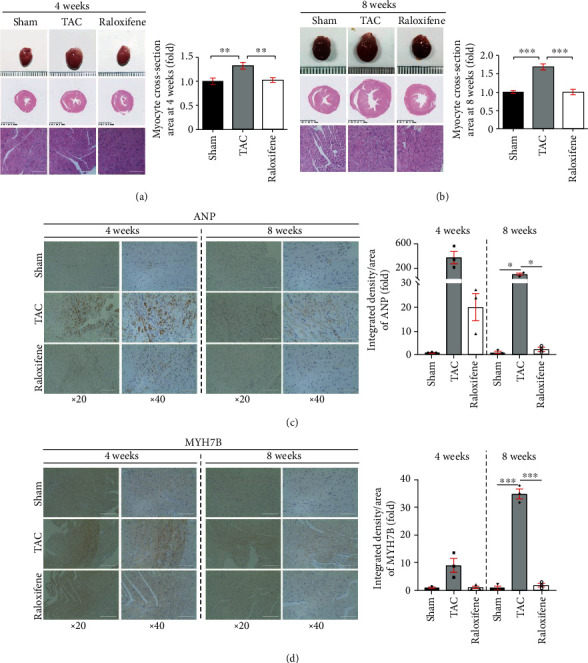
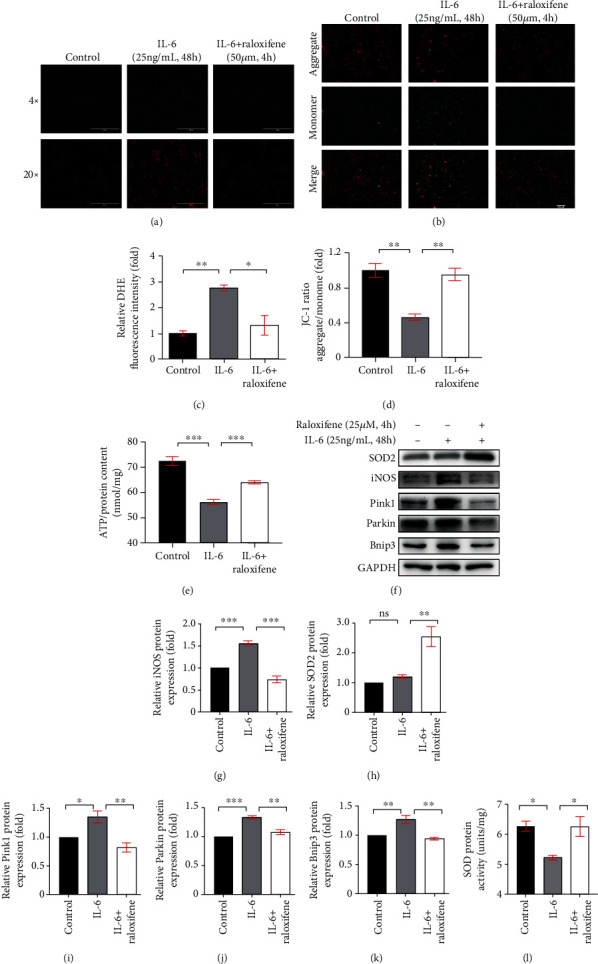
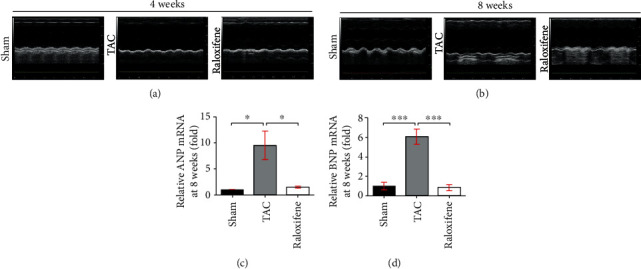
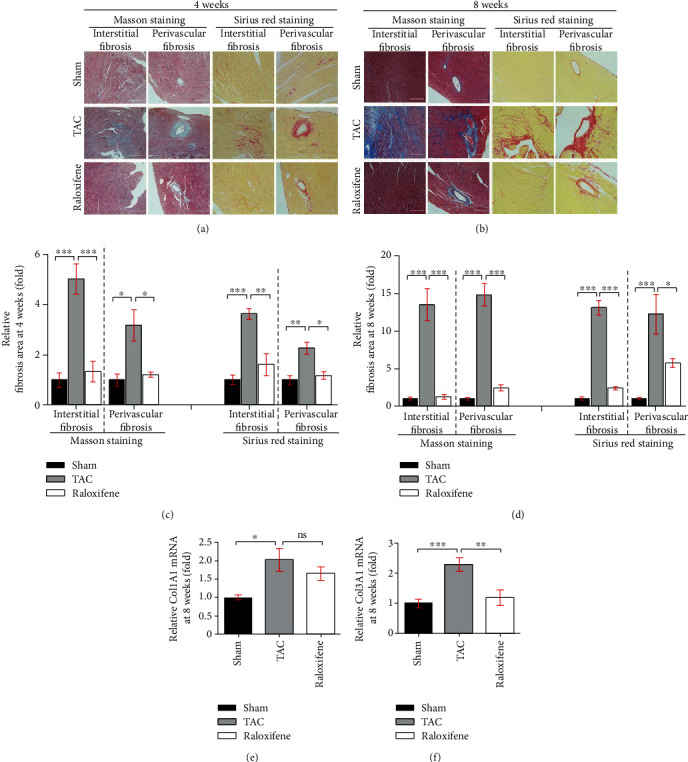
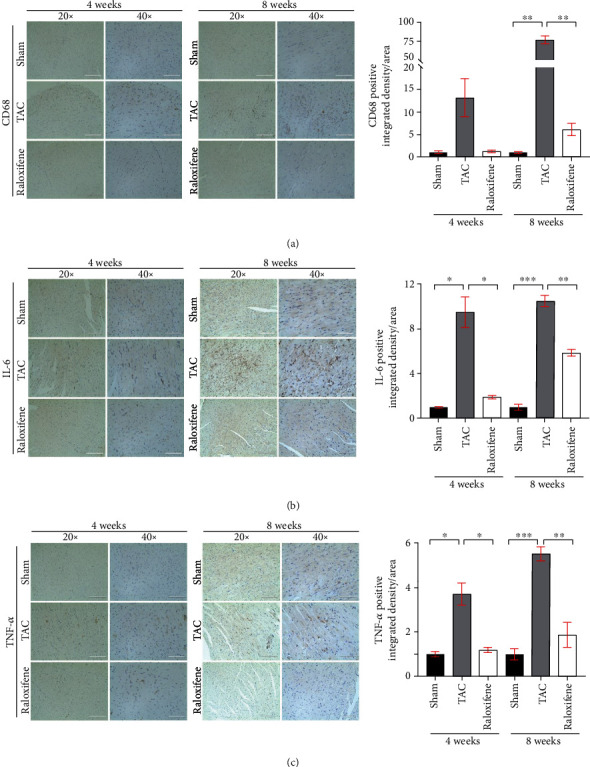
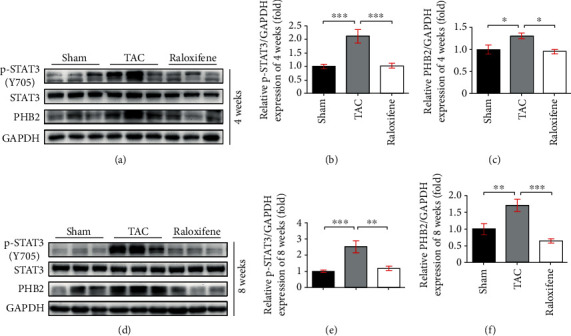
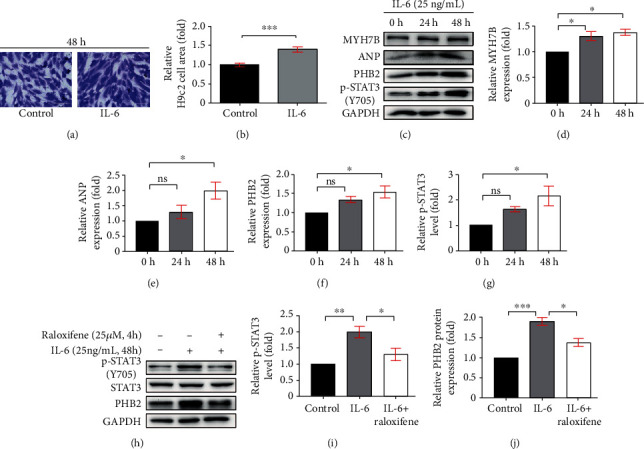
Transverse aortic constriction (TAC) was used to induce pressure overload-HF in C57BL/6J mice. 18 mice were randomized into three groups (Sham, TAC, and TAC+raloxifene, = 6, respectively). Echocardiographic and histological results showed that cardiac hypertrophy, fibrosis, and left ventricular dysfunction were manifested in mice after TAC treatment of eight weeks, with aggravation of macrophage infiltration and interleukin-6 (IL-6) and tumor necrosis factor-alpha (TNF-) expression in the myocardium. TAC (four and eight weeks) elevated the phosphorylation of signal transducer and activator of transcription 3 (p-STAT3) and prohibitin2 (PHB2) protein expression. Importantly, IL-6/gp130/STAT3 inhibition by raloxifene alleviated TAC-induced myocardial inflammation, cardiac remodeling, and dysfunction. , we demonstrated cellular hypertrophy with STAT3 activation and oxidative stress exacerbation could be elicited by IL-6 (25 ng/mL, 48 h) in H9c2 myoblasts. Sustained IL-6 stimulation increased intracellular reactive oxygen species, repressed mitochondrial membrane potential (MMP), decreased intracellular content of ATP, and led to decreased SOD activity, an increase in iNOS protein expression, and increased protein expression of Pink1, Parkin, and Bnip3 involving in mitophagy, all of which were reversed by raloxifene.
Inflammation and IL-6/STAT3 signaling were activated in TAC-induced HF in mice, while sustained IL-6 incubation elicited oxidative stress and mitophagy-related protein increase in H9c2 myoblasts, all of which were inhibited by raloxifene. These indicated IL-6/STAT3 signaling might be involved in the pathogenesis of myocardial hypertrophy and HF.
炎症和氧化应激参与心力衰竭(HF)的发生和发展。然而,IL6/STAT3 通路在压力超负荷诱导的 HF 中的作用仍存在争议。
采用横主动脉缩窄(TAC)法诱导 C57BL/6J 小鼠压力超负荷-HF。18 只小鼠随机分为三组(假手术组、TAC 组和 TAC+raloxifene 组,每组 6 只)。超声心动图和组织学结果显示,TAC 处理 8 周后,小鼠出现心肌肥厚、纤维化和左心室功能障碍,心肌内巨噬细胞浸润和白细胞介素-6(IL-6)和肿瘤坏死因子-α(TNF-)表达加重。TAC(4 周和 8 周)增加了信号转导和转录激活因子 3(p-STAT3)和抑制素 2(PHB2)蛋白的磷酸化。重要的是,raloxifene 抑制 IL-6/gp130/STAT3 可减轻 TAC 诱导的心肌炎症、心脏重构和功能障碍。在体外,我们证明了 IL-6(25ng/ml,48 小时)可引起 H9c2 成肌细胞的 STAT3 激活和氧化应激加剧,导致细胞肥大。持续的 IL-6 刺激增加了细胞内活性氧,抑制了线粒体膜电位(MMP),降低了细胞内 ATP 含量,并导致 SOD 活性降低、iNOS 蛋白表达增加以及参与线粒体自噬的 Pink1、Parkin 和 Bnip3 蛋白表达增加,所有这些都被 raloxifene 逆转。
在 TAC 诱导的 HF 小鼠中,炎症和 IL-6/STAT3 信号被激活,而持续的 IL-6 孵育可引起 H9c2 成肌细胞氧化应激和与自噬相关蛋白增加,raloxifene 可抑制这些反应。这些表明 IL-6/STAT3 信号可能参与心肌肥大和 HF 的发病机制。