Geriatric Neurological Department of the Second Medical Center, National Clinical Research Center for Geriatric Diseases, Chinese People's Liberation Army General Hospital, Beijing, China.
Clin Auton Res. 2021 Aug;31(4):529-542. doi: 10.1007/s10286-021-00801-w. Epub 2021 Apr 7.
Dyskinesia-hyperpyrexia syndrome (DHS) is a rare but life-threatening disease. The clinical manifestations of this syndrome overlap substantially with Parkinson hyperpyrexia syndrome and serotonin syndrome and are often confused by clinicians. The purpose of this review was to enable clinicians to recognize this syndrome and thereby reach a correct diagnosis and provide optimal treatments to improve prognosis in clinical practice.
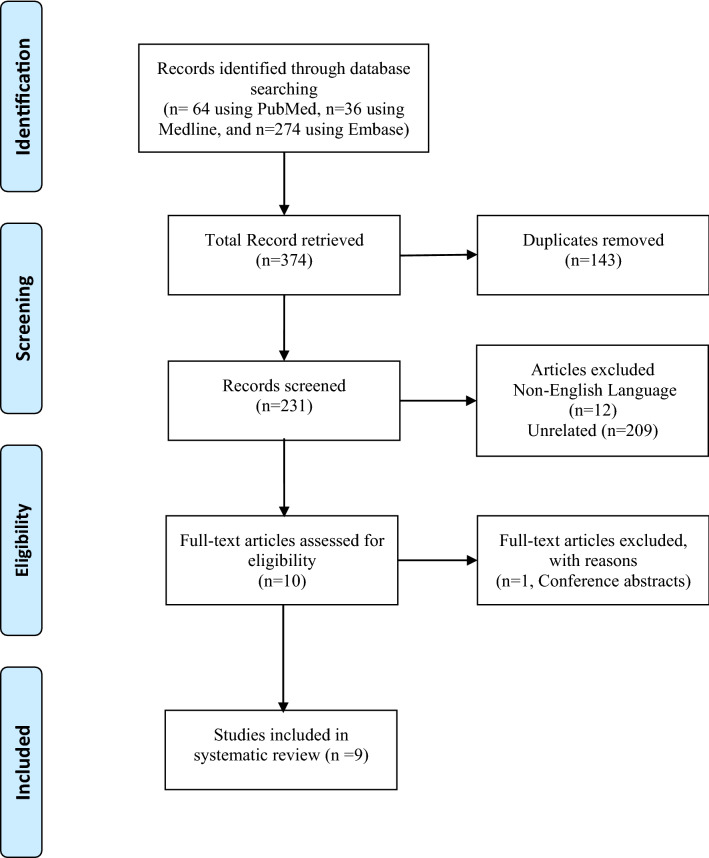
Using the methodology described in the Preferred Reporting Items for Systematic Reviews and Meta-Analyses (PRISMA) statement, we conducted a literature search of the PubMed, Embase, and MEDLINE databases using keywords in titles and abstracts of published literature. Quality assessment was performed using the modified Newcastle-Ottawa scale.
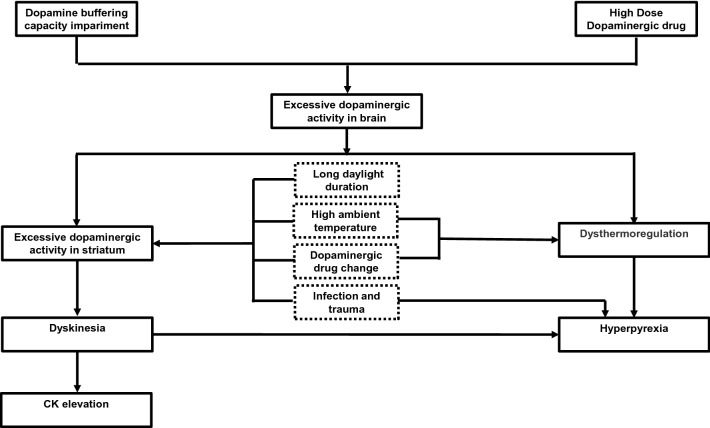
A total of 11 patients obtained from nine publications were included in this systematic review. All of the cases occurred in patients with advanced Parkinson's disease (PD) of long disease duration. High ambient temperature was the most common trigger of this syndrome. Hyperpyrexia and dyskinesias were present in all cases. The consciousness disturbances of this syndrome included confusion, hallucination, and lethargy or stupor. Autonomic dysfunction (except for hyperpyrexia) is uncommon in DHS, and only two patients presented with tachycardia. The treatment of this syndrome included supportive interventions (including rehydration, anti-pyretic and anti-infection treatments, and maintaining electrolyte balance), dopaminergic drug reduction and sedation. Two patients died due to DHS.
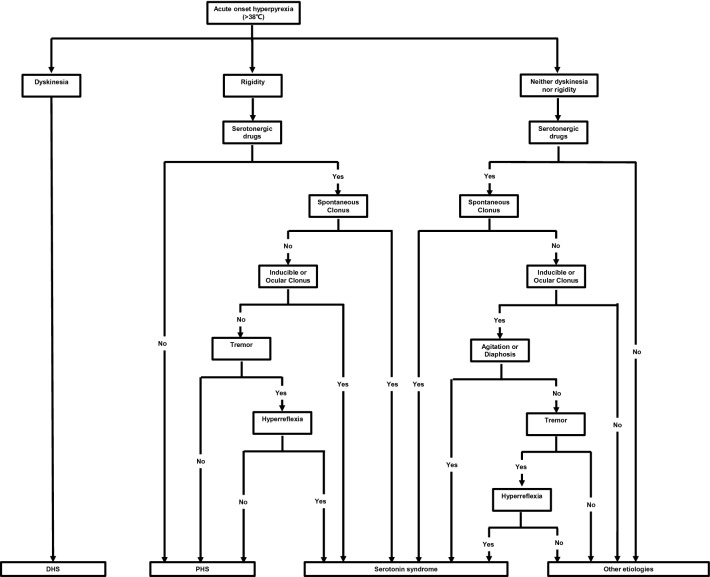
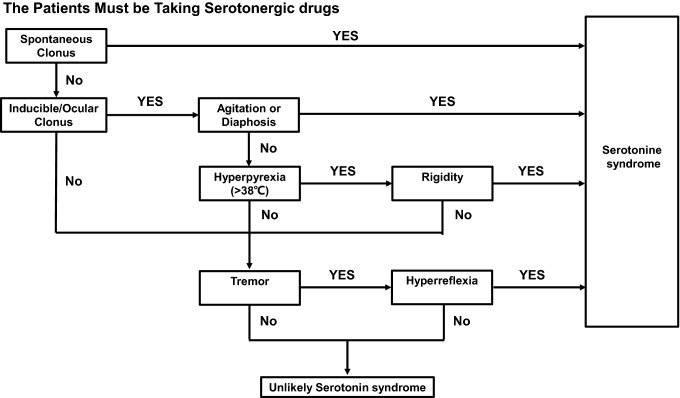
We summarized the triggers, clinical features, and treatments of all reported dyskinesia-hyperpyrexia syndrome cases, proposed guiding diagnostic criteria, and established a flow chart to guide diagnoses to quickly identify these three syndromes in clinical practice.
运动障碍-高热综合征(DHS)是一种罕见但危及生命的疾病。该综合征的临床表现与帕金森高热综合征和血清素综合征有很大的重叠,临床医生经常混淆这两种综合征。本综述的目的是使临床医生能够识别这种综合征,从而做出正确的诊断,并提供最佳的治疗方法,以改善临床实践中的预后。
使用系统评价和荟萃分析(PRISMA)声明中描述的方法,我们使用已发表文献的标题和摘要中的关键字,对 PubMed、Embase 和 MEDLINE 数据库进行了文献检索。使用改良的纽卡斯尔-渥太华量表进行质量评估。
本系统综述共纳入了来自 9 篇文献的 11 例患者。所有病例均发生在患有长期帕金森病(PD)的晚期患者中。高温环境是该综合征最常见的诱发因素。高热和运动障碍均存在于所有病例中。该综合征的意识障碍包括意识模糊、幻觉、嗜睡或昏迷。自主神经功能障碍(除高热外)在 DHS 中不常见,只有 2 例患者出现心动过速。该综合征的治疗包括支持性干预(包括补液、退热和抗感染治疗以及维持电解质平衡)、减少多巴胺能药物和镇静治疗。有 2 例患者因 DHS 死亡。
我们总结了所有报告的 DHS 病例的诱因、临床特征和治疗方法,提出了指导诊断标准,并建立了流程图以指导诊断,以便在临床实践中快速识别这三种综合征。