Chen Zheng, Wei Xiangyu, Wang Xueyi, Zheng Xuan, Chang Bowen, Shen Lin, Zhu Hanshuo, Yang Min, Li Shiting, Zheng Xuesheng
Department of Neurosurgery, XinHua Hospital, Shanghai JiaoTong University School of Medicine, 1665 KongJiang Rd, 200092, Shanghai, China.
The Center for Diagnosis and Treatment of Cranial Nerve Diseases of Shanghai JiaoTong University, 200092, Shanghai, China.
Cell Death Dis. 2021 Apr 7;12(4):377. doi: 10.1038/s41419-021-03646-3.
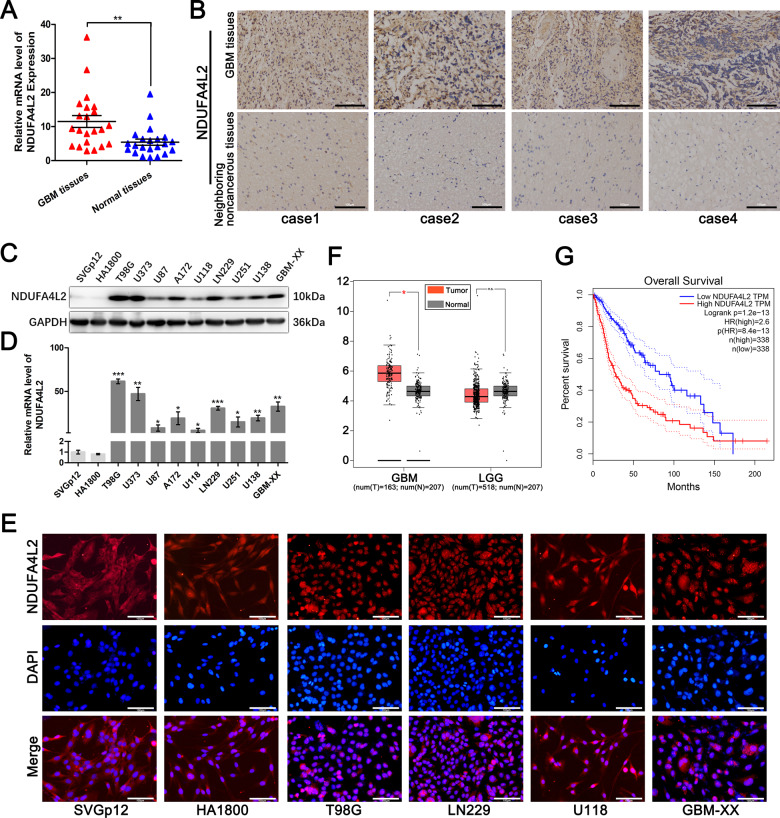
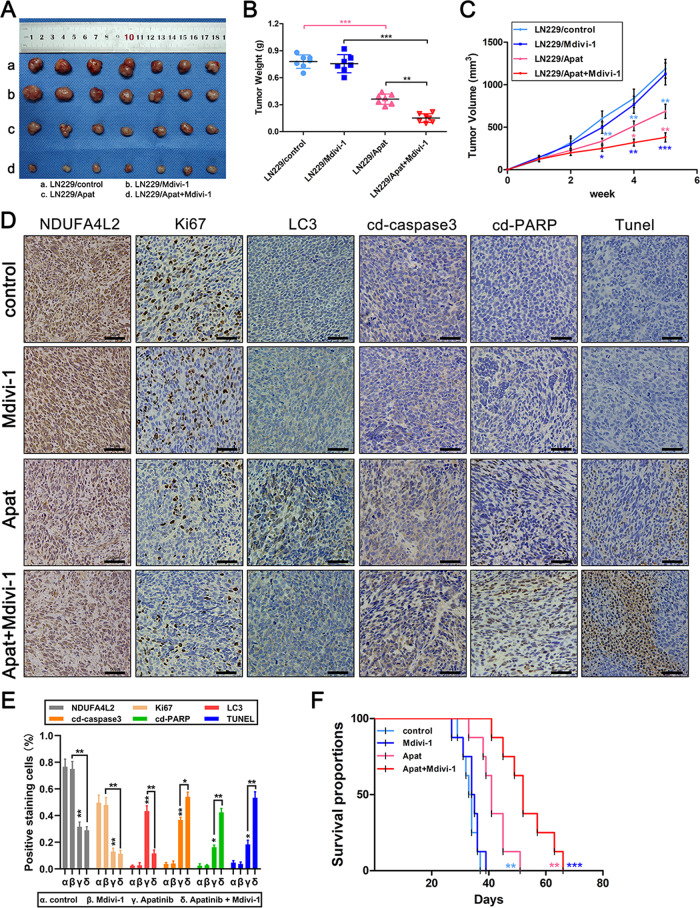
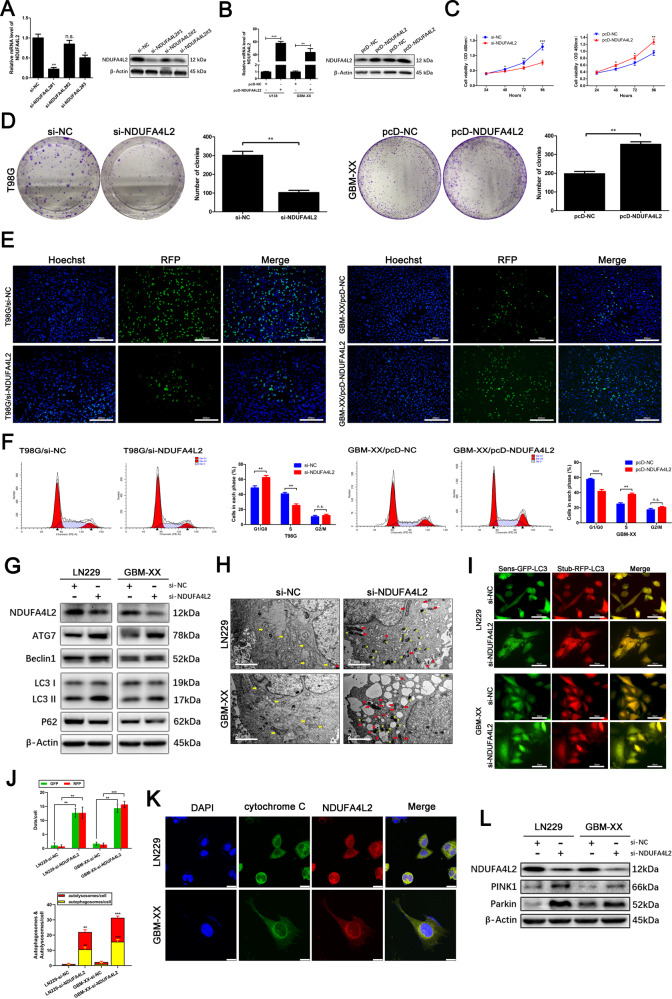
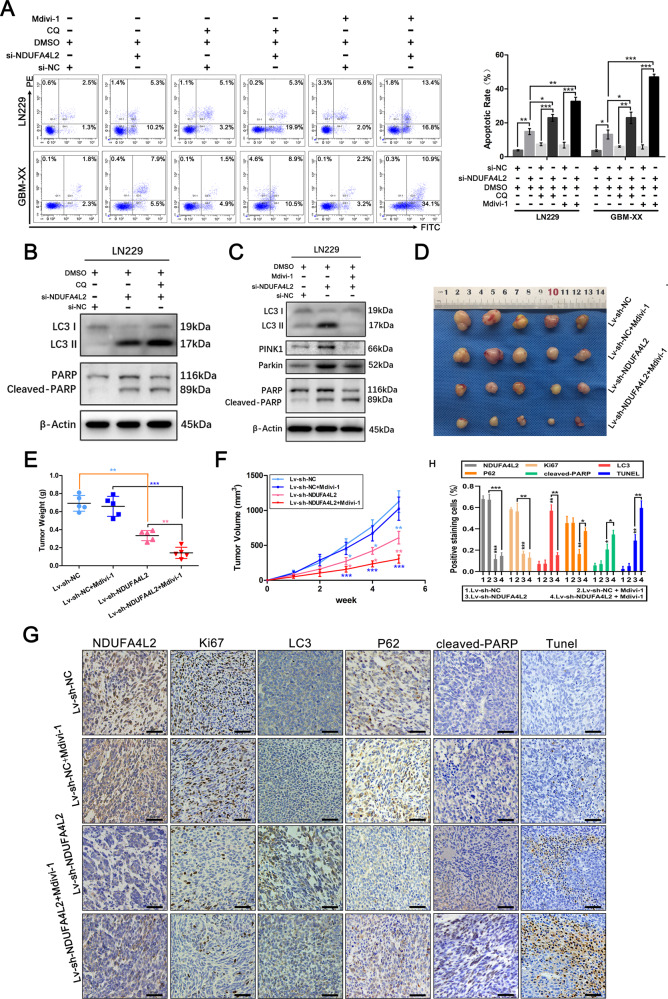
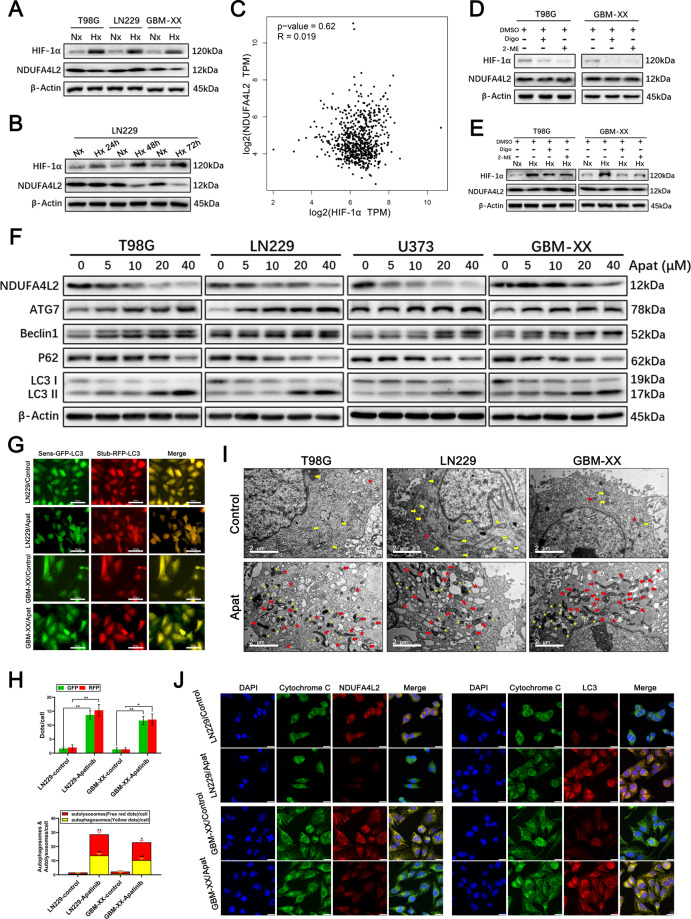
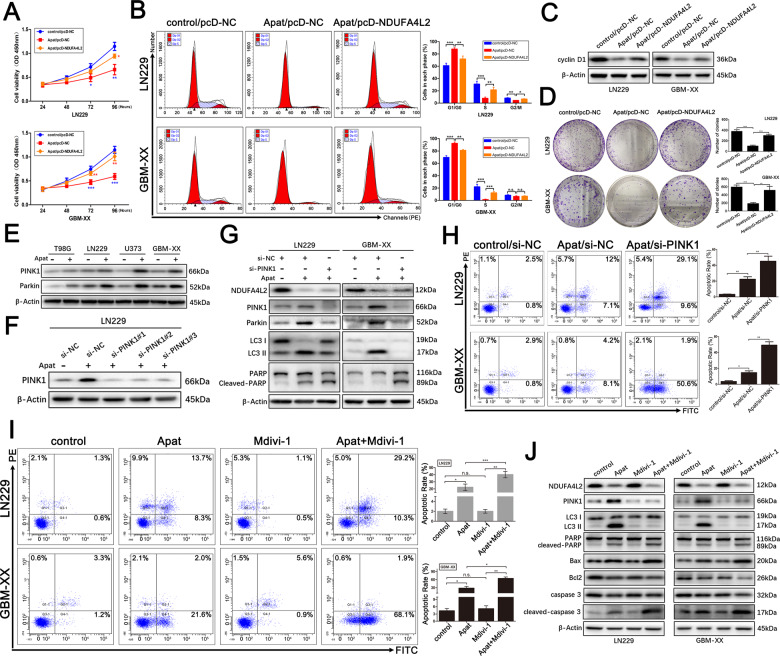
NADH dehydrogenase [ubiquinone] 1 alpha subcomplex, 4-like 2 (NDUFA4L2) is a subunit of Complex I of the mitochondrial respiratory chain, which is important in metabolic reprogramming and oxidative stress in multiple cancers. However, the biological role and molecular regulation of NDUFA4L2 in glioblastoma (GBM) are poorly understood. Here, we found that NDUFA4L2 was significantly upregulated in GBM; the elevated levels were correlated with reduced patient survival. Gene knockdown of NDUFA4L2 inhibited tumor cell proliferation and enhanced apoptosis, while tumor cells initiated protective mitophagy in vitro and in vivo. We used lentivirus to reduce expression levels of NDUFA4L2 protein in GBM cells exposed to mitophagy blockers, which led to a significant enhancement of tumor cell apoptosis in vitro and inhibited the development of xenografted tumors in vivo. In contrast to other tumor types, NDUFA4L2 expression in GBM may not be directly regulated by hypoxia-inducible factor (HIF)-1α, because HIF-1α inhibitors failed to inhibit NDUFA4L2 in GBM. Apatinib was able to effectively target NDUFA4L2 in GBM, presenting an alternative to the use of lentiviruses, which currently cannot be used in humans. Taken together, our data suggest the use of NDUFA4L2 as a potential therapeutic target in GBM and demonstrate a practical treatment approach.
NADH脱氢酶[泛醌]1α亚复合体,4样2(NDUFA4L2)是线粒体呼吸链复合体I的一个亚基,在多种癌症的代谢重编程和氧化应激中起重要作用。然而,人们对NDUFA4L2在胶质母细胞瘤(GBM)中的生物学作用和分子调控了解甚少。在这里,我们发现NDUFA4L2在GBM中显著上调;其水平升高与患者生存率降低相关。敲低NDUFA4L2基因可抑制肿瘤细胞增殖并增强凋亡,而肿瘤细胞在体外和体内启动保护性线粒体自噬。我们使用慢病毒降低暴露于线粒体自噬阻断剂的GBM细胞中NDUFA4L2蛋白的表达水平,这导致体外肿瘤细胞凋亡显著增强,并在体内抑制异种移植肿瘤的发展。与其他肿瘤类型不同,GBM中NDUFA4L2的表达可能不受缺氧诱导因子(HIF)-1α的直接调控,因为HIF-1α抑制剂未能抑制GBM中的NDUFA4L2。阿帕替尼能够有效靶向GBM中的NDUFA4L2,为目前不能用于人类的慢病毒提供了一种替代方法。综上所述,我们的数据表明将NDUFA4L2用作GBM的潜在治疗靶点,并证明了一种切实可行的治疗方法。