State Key Laboratory of Bioreactor Engineering, Shanghai Key Laboratory of New Drug Design, East China University of Science and Technology, 130 Mei Long Road, Shanghai, 200237, China.
Department of Ophthalmology, Ninth People's Hospital, Shanghai Jiao Tong University School of Medicine, Shanghai, 200001, China.
Cell Death Dis. 2021 Apr 7;12(4):380. doi: 10.1038/s41419-021-03653-4.
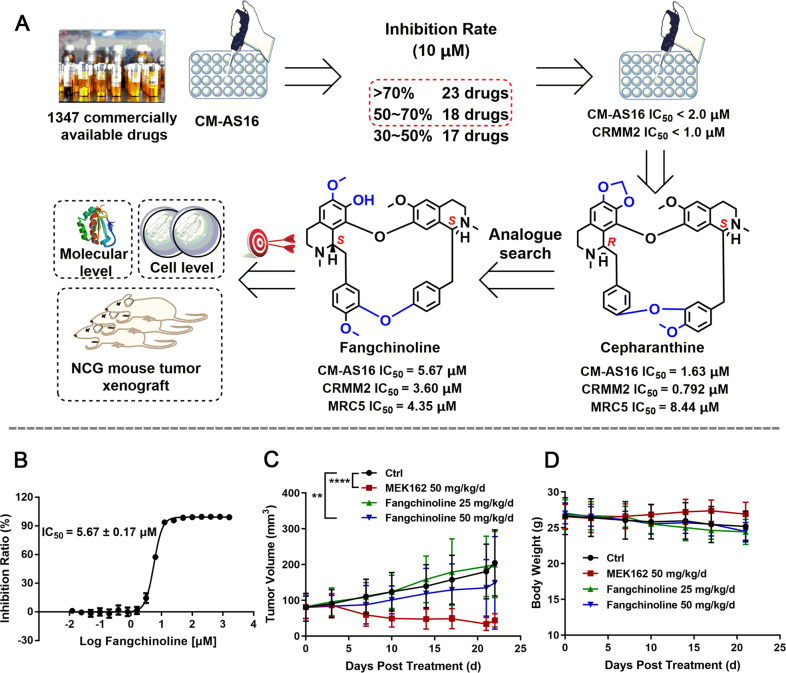
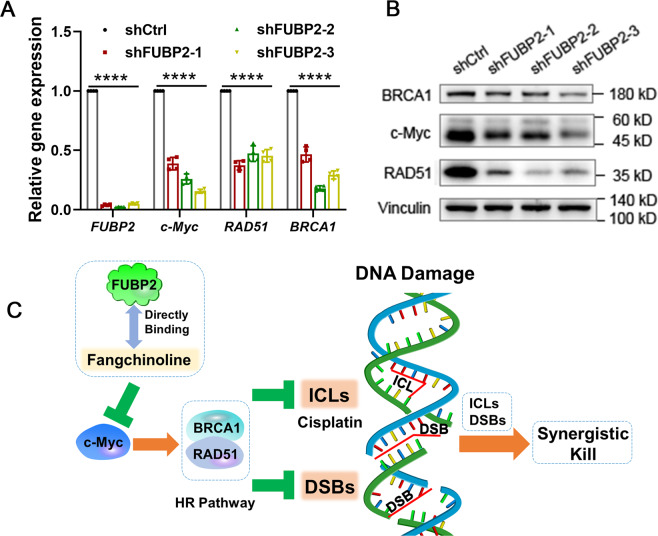
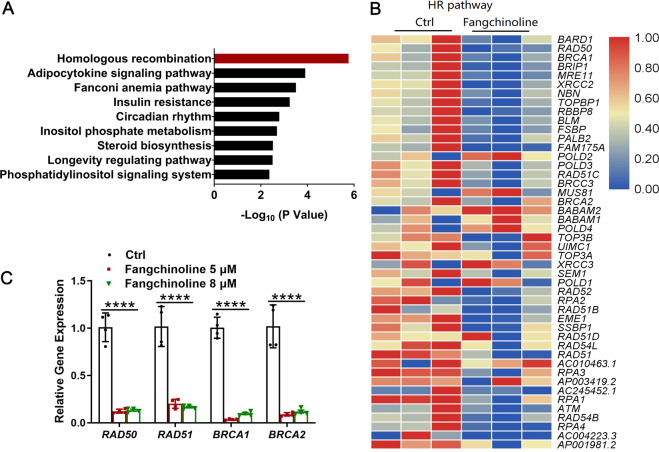
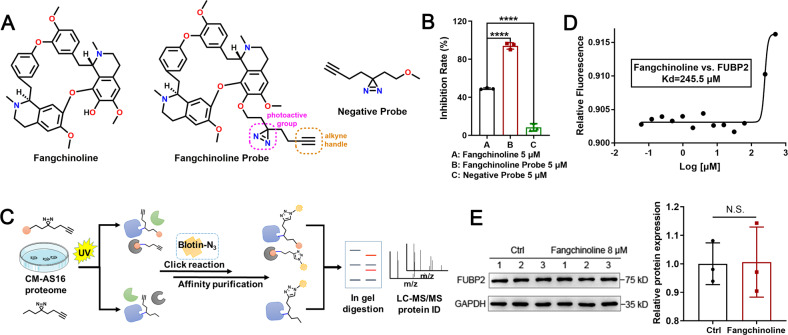
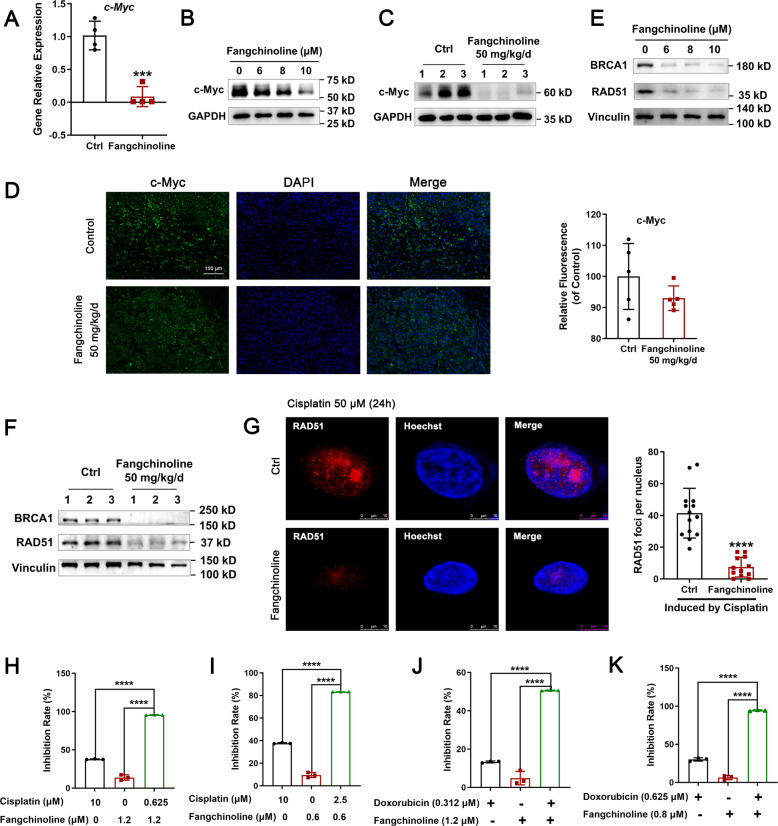
Conjunctival melanoma (CM) is a rare and fatal ocular tumour with poor prognosis. There is an urgent need of effective therapeutic drugs against CM. Here, we reported the discovery of a novel potential therapeutic target for CM. Through phenotypic screening of our in-house library, fangchinoline was discovered to significantly inhibit the growth of CM cells including CM-AS16, CRMM1, CRMM2 and CM2005.1. Further mechanistic experiments indicated that fangchinoline suppressed the homologous recombination (HR)-directed DNA repair by binding with far upstream element binding protein 2 (FUBP2) and downregulating the expression of HR factors BRCA1 and RAD51. In vitro and in vivo antitumour experiments revealed that fangchinoline increased the efficacy of cisplatin by blocking HR factors and reduced the drug dose and toxicity. In conclusion, our work provides a promising therapeutic strategy for the treatment of CM that is worthy of extensive preclinical investigation.
结膜黑色素瘤 (CM) 是一种罕见且致命的眼部肿瘤,预后不良。目前迫切需要针对 CM 的有效治疗药物。在这里,我们报道了一种 CM 的新型潜在治疗靶点的发现。通过对我们内部文库的表型筛选,发现防己诺林碱可显著抑制 CM 细胞(包括 CM-AS16、CRMM1、CRMM2 和 CM2005.1)的生长。进一步的机制实验表明,防己诺林碱通过与远上游元件结合蛋白 2 (FUBP2) 结合并下调同源重组 (HR) 定向 DNA 修复因子 BRCA1 和 RAD51 的表达来抑制 HR。体外和体内抗肿瘤实验表明,防己诺林碱通过阻断 HR 因子增加顺铂的疗效,减少药物剂量和毒性。总之,我们的工作为 CM 的治疗提供了一种有前途的治疗策略,值得广泛的临床前研究。