Ma Qiong, Sun Jin, Wang Huan, Zhou Chengpei, Li Chenyu, Wu Yonghong, Wen Yanhua, Zhang Xiaoyu, Ren Xingguang, Guo Zheng, Gong Li, Zhang Wei
Department of Pathology Tangdu Hospital Air Force Medical University Xi'an China.
Orthopedic Oncology Institute Department of Orthopedic Surgery Tangdu Hospital Air Force Medical University Xi'an China.
MedComm (2020). 2023 May 9;4(3):e257. doi: 10.1002/mco2.257. eCollection 2023 Jun.
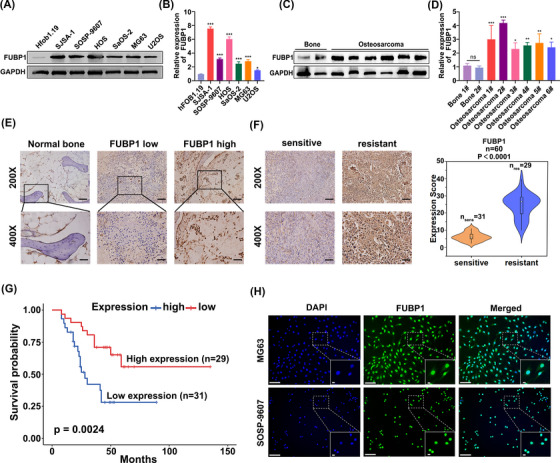
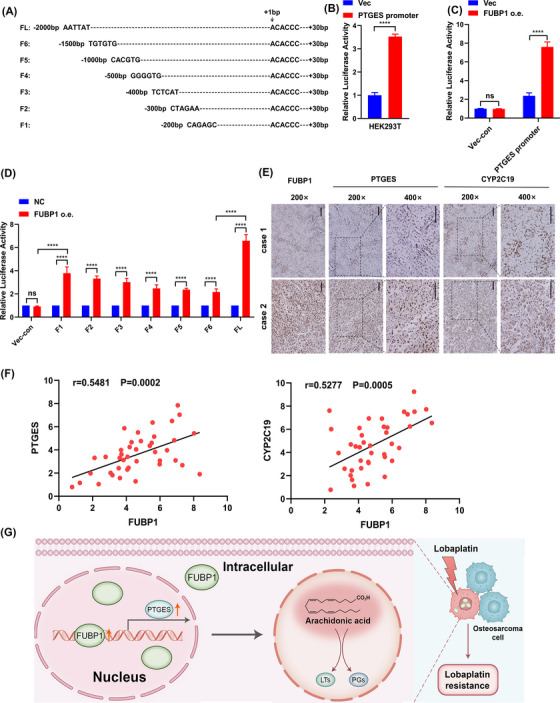
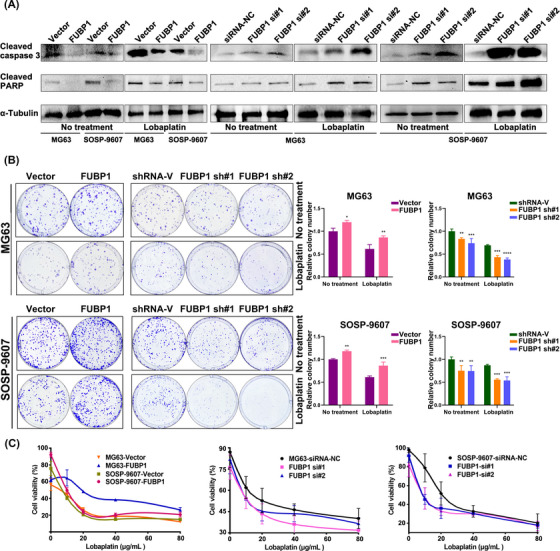
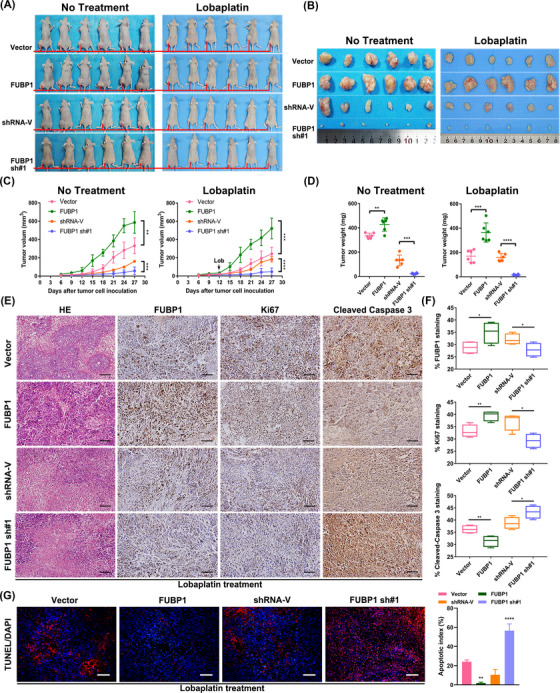
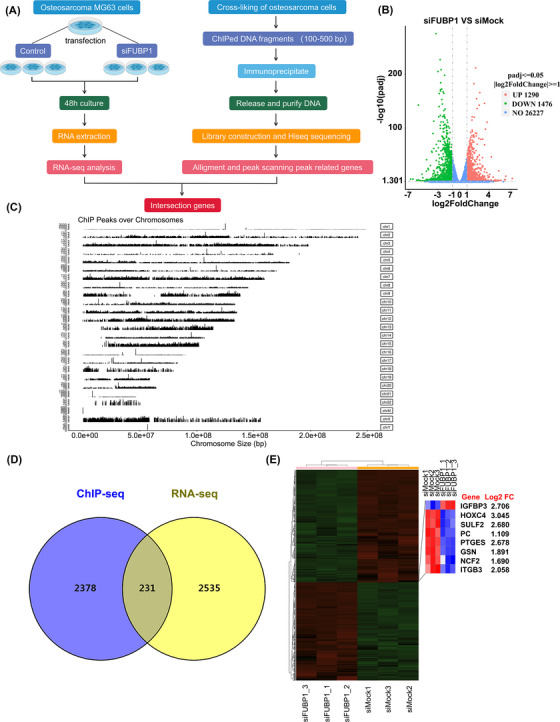
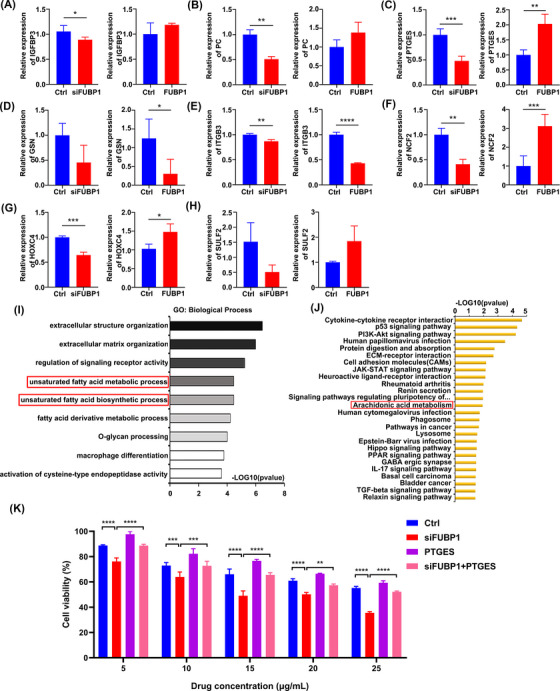
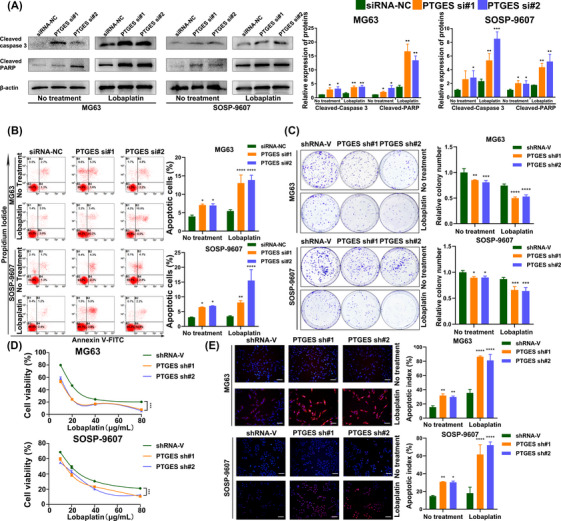
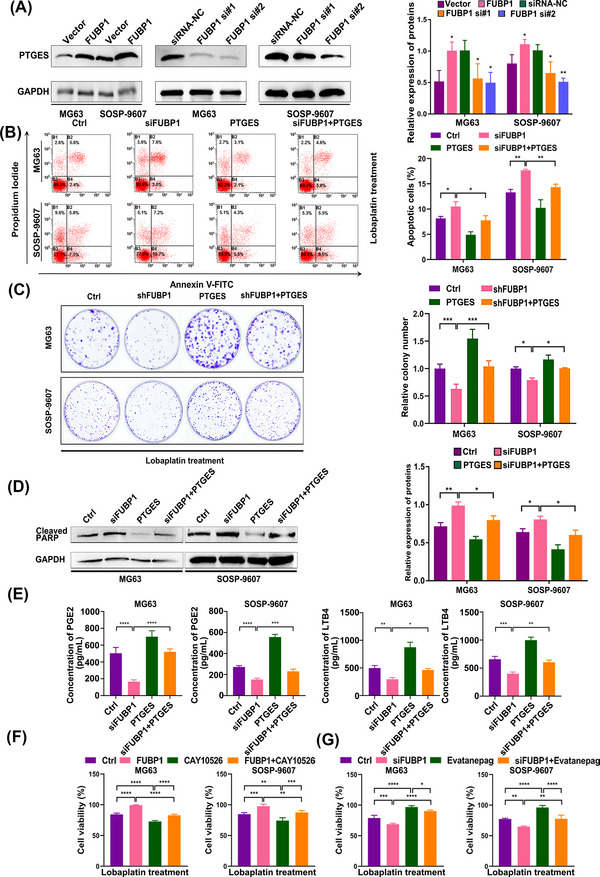
Drug resistance is a major obstacle in cancer treatment and recurrence prevention and leads to poor outcomes in patients suffering from osteosarcoma. Clarification of the mechanism of drug resistance and exploration of effective strategies to overcome this obstacle could lead to clinical benefits for these patients. The expression of far upstream element-binding protein 1 (FUBP1) was found to be markedly elevated in osteosarcoma cell lines and clinical specimens compared with osteoblast cells and normal bone specimens. High expression of FUBP1 was correlated with a more aggressive phenotype and a poor prognosis in osteosarcoma patients. We found that overexpression of FUBP1 confers lobaplatin resistance, whereas the inhibition of FUBP1 sensitizes osteosarcoma cells to lobaplatin-induced cytotoxicity both in vivo and in vitro. Chromatin immunoprecipitation-seq and RNA-seq were performed to explore the potential mechanism. It was revealed that FUBP1 could regulate the transcription of prostaglandin E synthase (PTGES) and subsequently activate the arachidonic acid (AA) metabolic pathway, which leads to resistance to lobaplatin. Our investigation provides evidence that FUBP1 is a potential therapeutic target for osteosarcoma patients. Targeting FUBP1, its downstream target PTGES and the AA metabolic pathway may be promising strategies for sensitizing chemoresistant osteosarcoma cells to lobaplatin.
耐药性是癌症治疗和预防复发的主要障碍,会导致骨肉瘤患者预后不良。阐明耐药机制并探索克服这一障碍的有效策略可能会给这些患者带来临床益处。与成骨细胞和正常骨标本相比,在骨肉瘤细胞系和临床标本中发现远上游元件结合蛋白1(FUBP1)的表达显著升高。FUBP1的高表达与骨肉瘤患者更具侵袭性的表型和不良预后相关。我们发现FUBP1的过表达赋予了洛铂耐药性,而抑制FUBP1可使骨肉瘤细胞在体内和体外对洛铂诱导的细胞毒性敏感。进行了染色质免疫沉淀测序和RNA测序以探索潜在机制。结果显示,FUBP1可调节前列腺素E合酶(PTGES)的转录,随后激活花生四烯酸(AA)代谢途径,从而导致对洛铂耐药。我们的研究提供了证据表明FUBP1是骨肉瘤患者的潜在治疗靶点。靶向FUBP1、其下游靶点PTGES和AA代谢途径可能是使化疗耐药的骨肉瘤细胞对洛铂敏感的有前景的策略。