Institute of Biomedical Sciences, Center of Health Sciences, Federal University of Rio de Janeiro (UFRJ), Rio de Janeiro, Brazil.
Fluminense Federal Institute (IFF), Rio de Janeiro, Brazil.
Front Immunol. 2021 Mar 22;12:651740. doi: 10.3389/fimmu.2021.651740. eCollection 2021.
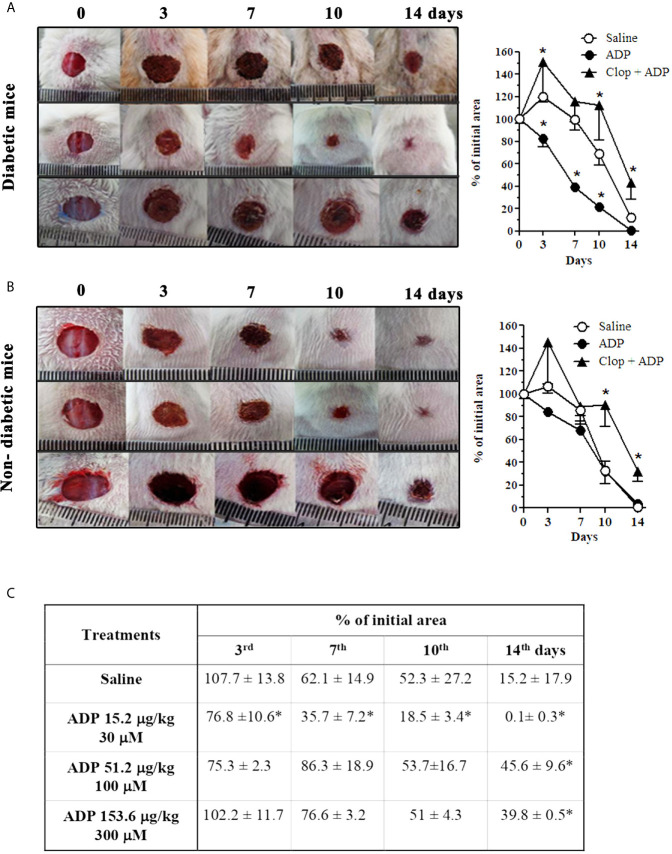
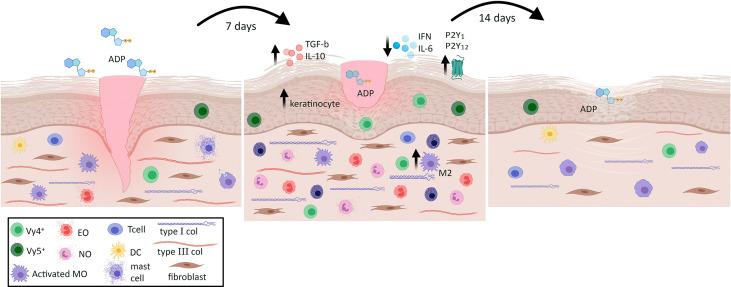
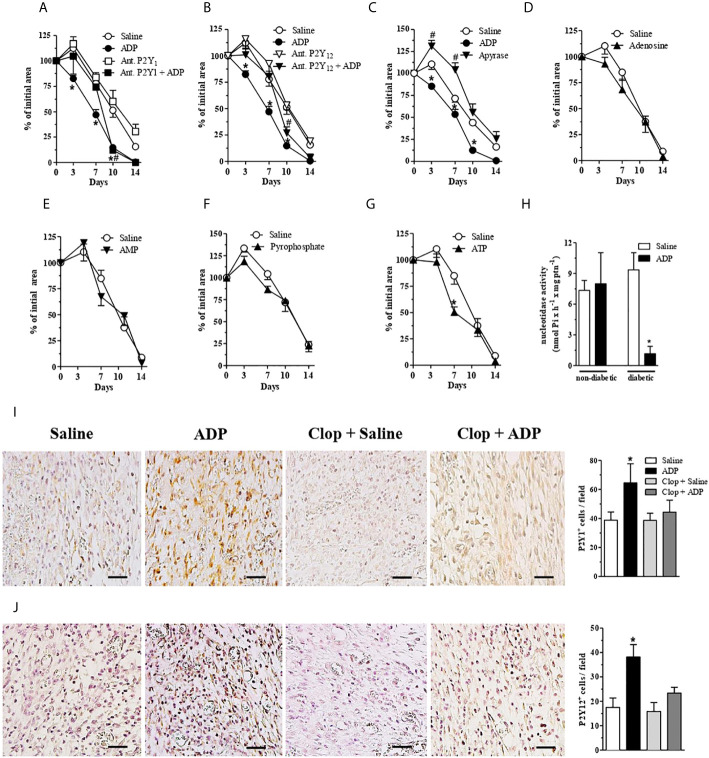
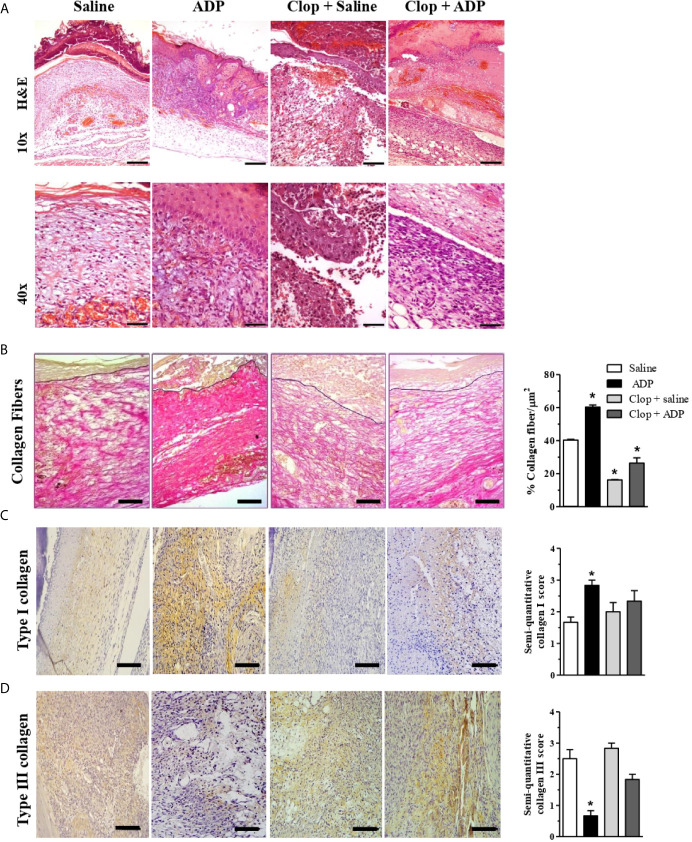
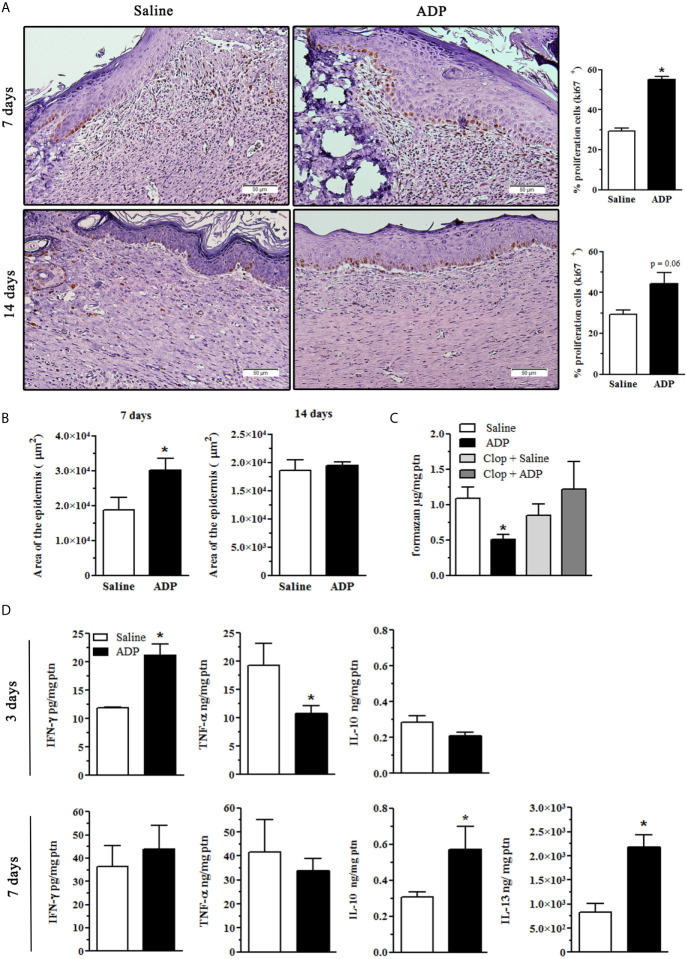
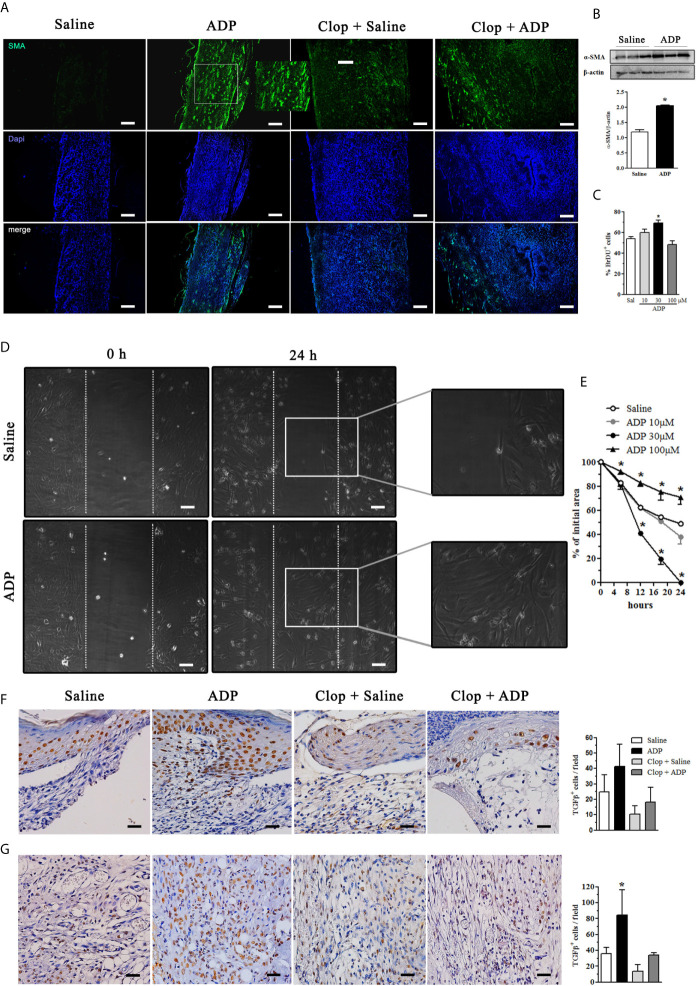
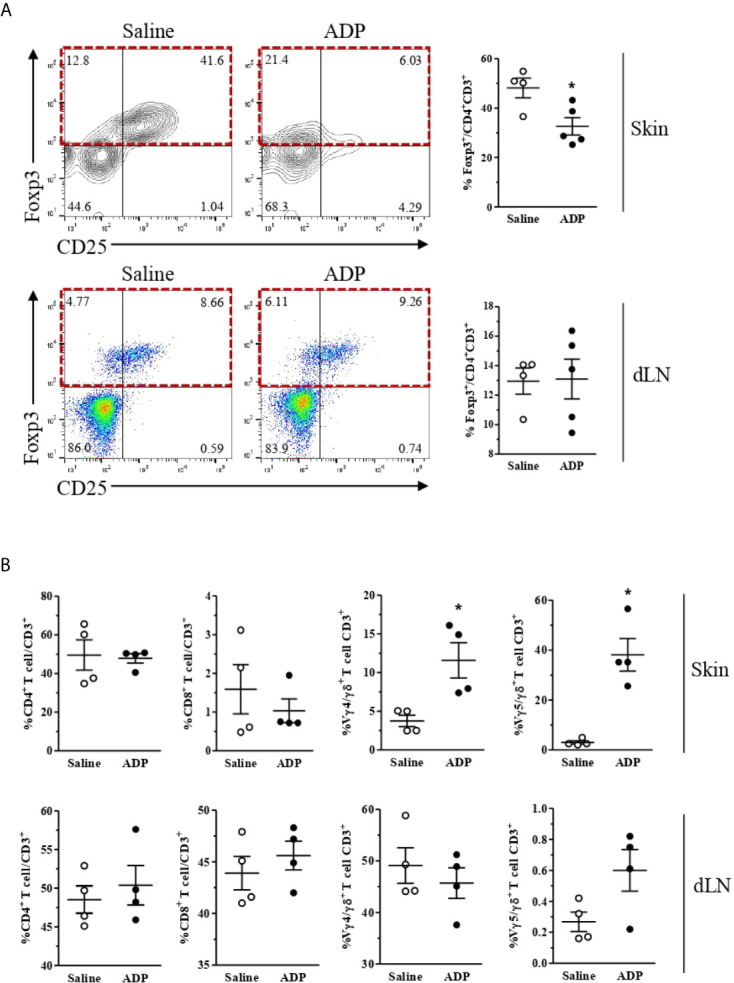
Chronic wounds are a public health problem worldwide, especially those related to diabetes. Besides being an enormous burden to patients, it challenges wound care professionals and causes a great financial cost to health system. Considering the absence of effective treatments for chronic wounds, our aim was to better understand the pathophysiology of tissue repair in diabetes in order to find alternative strategies to accelerate wound healing. Nucleotides have been described as extracellular signaling molecules in different inflammatory processes, including tissue repair. Adenosine-5'-diphosphate (ADP) plays important roles in vascular and cellular response and is immediately released after tissue injury, mainly from platelets. However, despite the well described effect on platelet aggregation during inflammation and injury, little is known about the role of ADP on the multiple steps of tissue repair, particularly in skin wounds. Therefore, we used the full-thickness excisional wound model to evaluate the effect of local ADP application in wounds of diabetic mice. ADP accelerated cutaneous wound healing, improved new tissue formation, and increased both collagen deposition and transforming growth factor-β (TGF-β) production in the wound. These effects were mediated by P2Y receptor activation since they were inhibited by Clopidogrel (Clop) treatment, a P2Y receptor antagonist. Furthermore, P2Y receptor antagonist also blocked ADP-induced wound closure until day 7, suggesting its involvement early in repair process. Interestingly, ADP treatment increased the expression of P2Y and P2Y receptors in the wound. In parallel, ADP reduced reactive oxygen species (ROS) formation and tumor necrosis factor-α (TNF-α) levels, while increased IL-13 levels in the skin. Also, ADP increased the counts of neutrophils, eosinophils, mast cells, and gamma delta (γδ) T cells (Vγ4 and Vγ5 cells subtypes of γδ T cells), although reduced regulatory T (Tregs) cells in the lesion. In accordance, ADP increased fibroblast proliferation and migration, myofibroblast differentiation, and keratinocyte proliferation. In conclusion, we provide strong evidence that ADP acts as a pro-resolution mediator in diabetes-associated skin wounds and is a promising intervention target for this worldwide problem.
慢性伤口是一个全球性的公共卫生问题,特别是与糖尿病相关的伤口。除了给患者带来巨大负担外,还对伤口护理专业人员构成挑战,并给卫生系统带来巨大的经济成本。鉴于目前缺乏针对慢性伤口的有效治疗方法,我们的目标是更好地了解糖尿病组织修复的病理生理学,以便找到加速伤口愈合的替代策略。核苷酸已被描述为不同炎症过程中的细胞外信号分子,包括组织修复。二磷酸腺苷 (ADP) 在血管和细胞反应中发挥重要作用,在组织损伤后立即释放,主要来自血小板。然而,尽管在炎症和损伤过程中对血小板聚集的作用已有很好的描述,但对于 ADP 在组织修复的多个步骤中的作用,特别是在皮肤伤口中的作用知之甚少。因此,我们使用全层切除伤口模型来评估局部 ADP 应用于糖尿病小鼠伤口的效果。ADP 加速了皮肤伤口的愈合,改善了新组织的形成,并增加了伤口中的胶原沉积和转化生长因子-β(TGF-β)的产生。这些作用是通过 P2Y 受体的激活介导的,因为它们被 P2Y 受体拮抗剂氯吡格雷(Clop)的治疗所抑制。此外,P2Y 受体拮抗剂也阻断了 ADP 诱导的伤口闭合,直到第 7 天,这表明它在修复过程的早期就参与其中。有趣的是,ADP 治疗增加了伤口中 P2Y 和 P2Y 受体的表达。同时,ADP 减少了皮肤中活性氧 (ROS) 的形成和肿瘤坏死因子-α(TNF-α)的水平,同时增加了白细胞介素-13(IL-13)的水平。此外,ADP 增加了中性粒细胞、嗜酸性粒细胞、肥大细胞和γδ(γδ)T 细胞(γδ T 细胞的 Vγ4 和 Vγ5 细胞亚型)的计数,而病变中的调节性 T(Treg)细胞减少。相应地,ADP 增加了成纤维细胞的增殖和迁移、肌成纤维细胞的分化和角质形成细胞的增殖。总之,我们提供了强有力的证据表明 ADP 在糖尿病相关皮肤伤口中作为促解决介质发挥作用,是解决这一全球性问题的有希望的干预靶点。