Feng Guang, Huang Jihong, Xu Yue, Li Junqing, Zang Runguo
Key Laboratory of Biodiversity Conservation of the National Forestry and Grassland Administration, Key Laboratory of Forest Ecology and Environment of the National Forestry and Grassland Administration, Research Institute of Forest Ecology, Environment and Protection, Chinese Academy of Forestry, Beijing, China.
Co-Innovation Center for Sustainable Forestry in Southern China, Nanjing Forestry University, Nanjing, China.
Front Plant Sci. 2021 Mar 22;12:622043. doi: 10.3389/fpls.2021.622043. eCollection 2021.
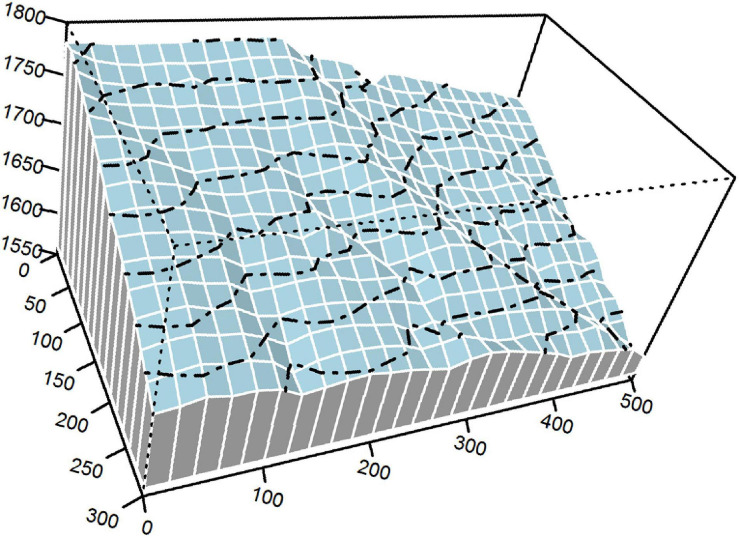
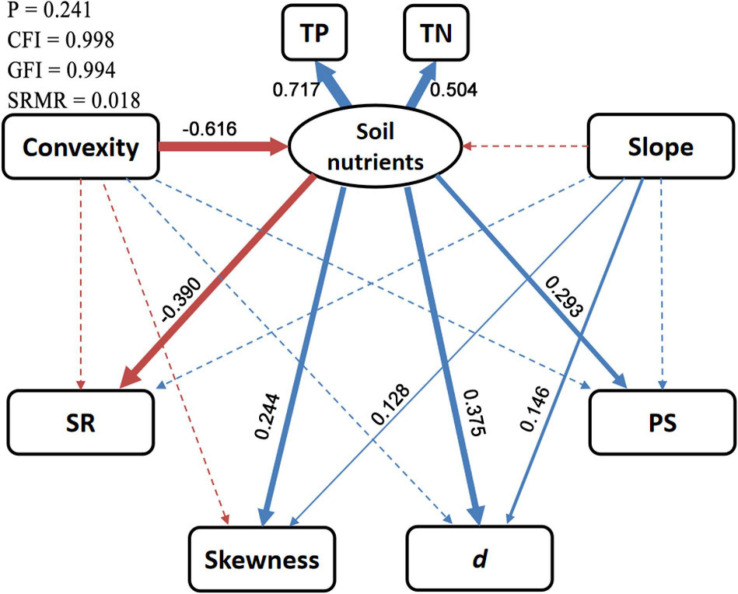
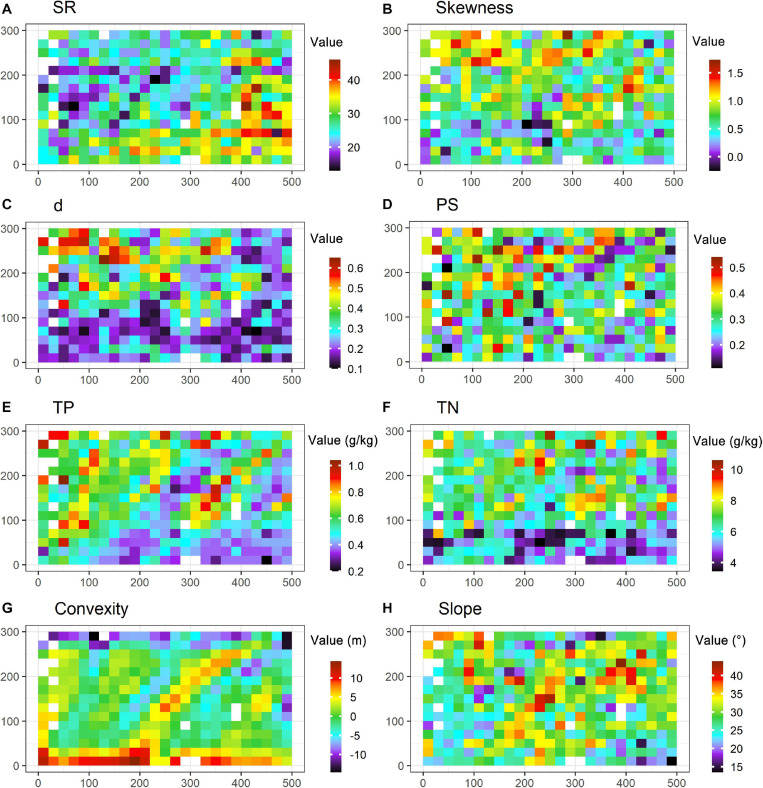
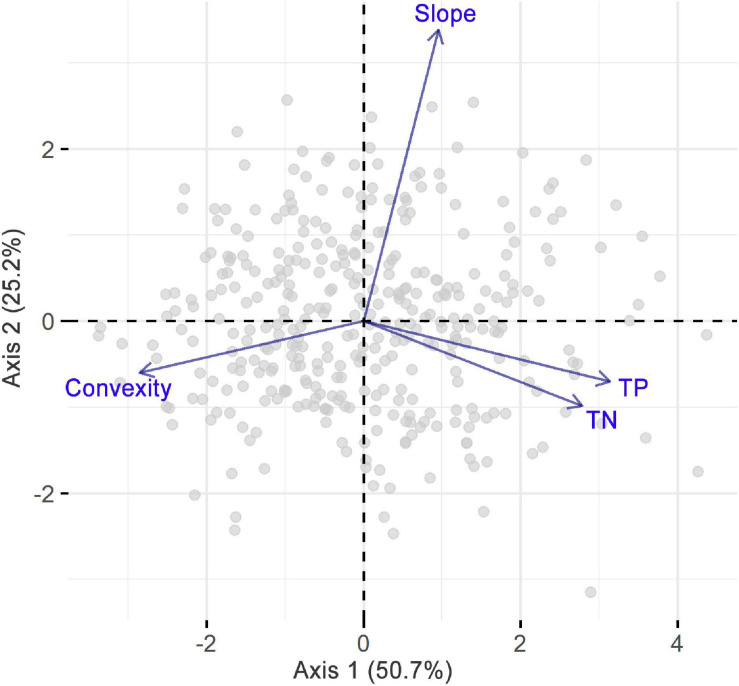
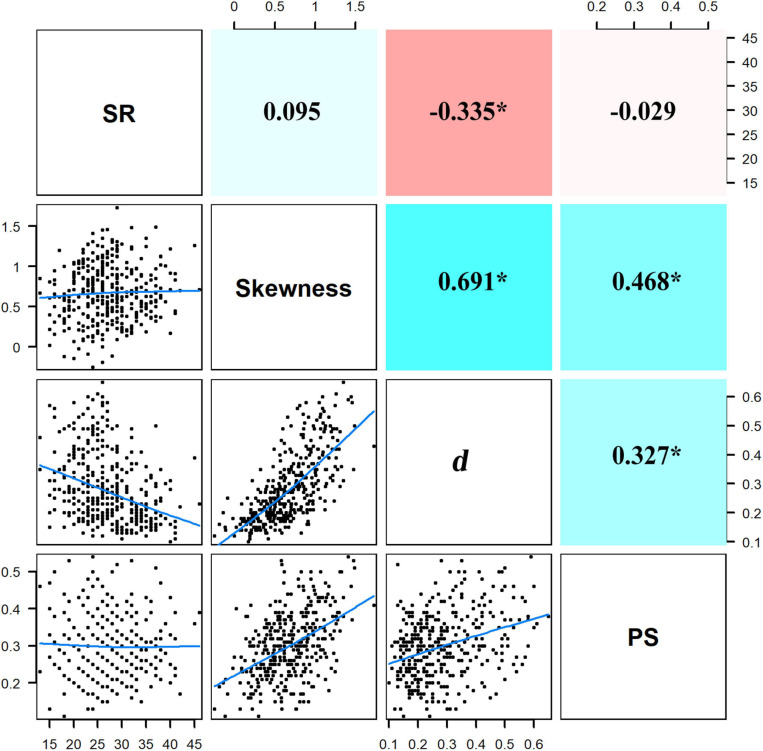
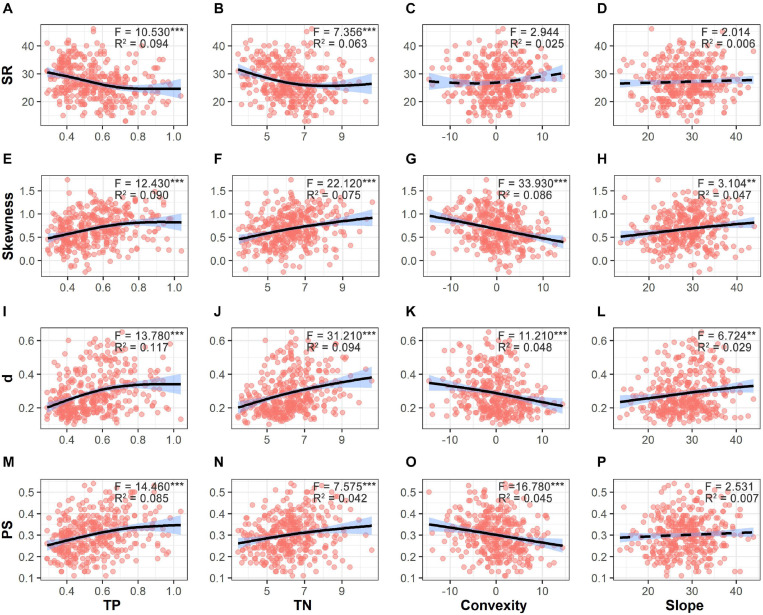
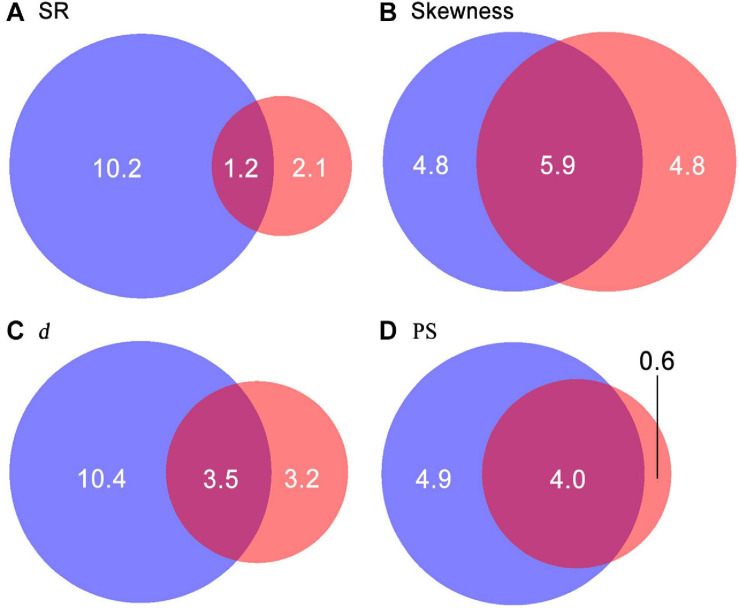
As a transitional vegetation type between evergreen broadleaved forest and deciduous broadleaved forest, evergreen-deciduous broadleaved mixed forest is composed of diverse plant species. This distinctive forest is generally distributed in mountainous areas with complex landforms and heterogeneous microenvironments. However, little is known about the roles of environmental conditions in driving the species diversity patterns of this forest. Here, based on a 15-ha plot in central China, we aimed to understand how and to what extent topographical characteristics and soil nutrients regulate the number and relative abundance of tree species in this forest. We measured environmental factors (terrain convexity, slope, soil total nitrogen, and phosphorus concentrations) and species diversity (species abundance distribution and species richness) in 20 m × 20 m subplots. Species abundance distribution was characterized by skewness, Berger-Parker index, and the proportion of singletons. The generalized additive model was used to examine the variations in diversity patterns caused by environmental factors. The structural equation model was used to assess whether and how topographical characteristics regulate species diversity via soil nutrients. We found that soil nutrients had significant negative effects on species richness and positive effects on all metrics of species abundance distribution. Convexity had significant positive effects on species richness and negative effects on all metrics of species abundance distribution, but these effects were mostly mediated by soil nutrients. Slope had significant negative effects on skewness and the Berger-Parker index, and these effects were almost independent of soil nutrients. Soil nutrients and topographical characteristics together accounted for 9.5-17.1% of variations in diversity patterns and, respectively, accounted for 8.9-13.9% and 3.3-10.7% of the variations. We concluded that soil nutrients were more important than topographical factors in regulating species diversity. Increased soil nutrient concentration led to decreased taxonomic diversity and increased species dominance and rarity. Convexity could be a better proxy for soil nutrients than slope. Moreover, these abiotic factors played limited roles in regulating diversity patterns, and it is possible that the observed patterns are also driven by some biotic and abiotic factors not considered here.
作为常绿阔叶林和落叶阔叶林之间的一种过渡植被类型,常绿落叶阔叶混交林由多种植物物种组成。这种独特的森林通常分布在地形复杂、微环境异质的山区。然而,关于环境条件在驱动这片森林物种多样性格局方面所起的作用,我们了解得还很少。在此,基于中国中部一块15公顷的样地,我们旨在了解地形特征和土壤养分如何以及在何种程度上调节这片森林中树种的数量和相对丰度。我们在20米×20米的子样地中测量了环境因子(地形凸度、坡度、土壤全氮和磷浓度)和物种多样性(物种丰度分布和物种丰富度)。物种丰度分布以偏度、伯杰 - 帕克指数和单种属比例来表征。采用广义相加模型来检验由环境因子引起的多样性格局变化。使用结构方程模型来评估地形特征是否以及如何通过土壤养分调节物种多样性。我们发现土壤养分对物种丰富度有显著负面影响,对物种丰度分布的所有指标有正面影响。凸度对物种丰富度有显著正面影响,对物种丰度分布的所有指标有负面影响,但这些影响大多由土壤养分介导。坡度对偏度和伯杰 - 帕克指数有显著负面影响,且这些影响几乎独立于土壤养分。土壤养分和地形特征共同解释了多样性格局变化的9.5 - 17.1%,分别解释了8.9 - 13.9%和3.3 - 10.7%的变化。我们得出结论,在调节物种多样性方面,土壤养分比地形因子更重要。土壤养分浓度增加导致分类多样性降低,物种优势度和稀有度增加。凸度比坡度更能代表土壤养分。此外,这些非生物因子在调节多样性格局方面作用有限,观察到的格局也可能由一些未在此考虑的生物和非生物因子驱动。