Zhou Li, Huang Litang, Xu Qiuli, Lv Yanling, Wang Zimu, Zhan Ping, Han Hedong, Shao Yang, Lin Dang, Lv Tangfeng, Song Yong
Department of Respiratory and Critical Care Medicine, Affiliated Jinling Hospital, Medical School of Nanjing University, Nanjing, China.
Department of Respiratory and Critical Care Medicine, Affiliated Jinling Hospital, School of Medicine, Southeast University, Nanjing, China.
Front Oncol. 2021 Mar 22;11:596542. doi: 10.3389/fonc.2021.596542. eCollection 2021.
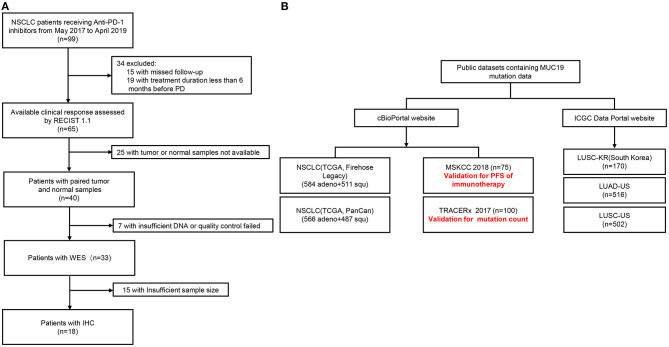
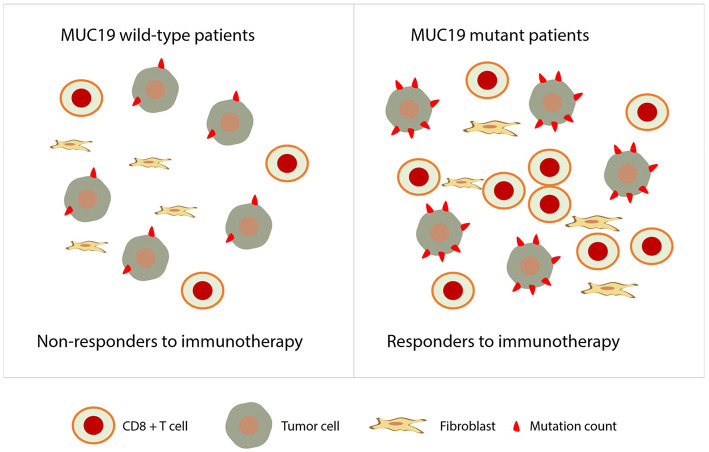
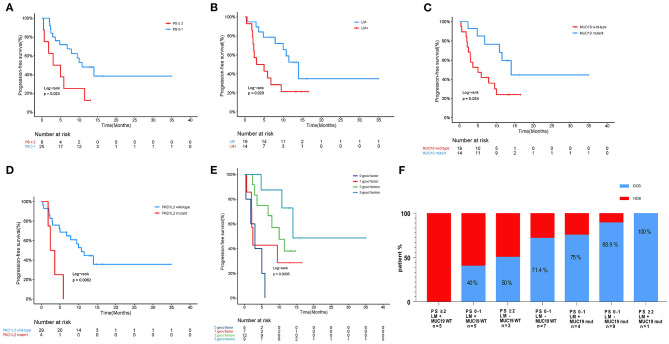
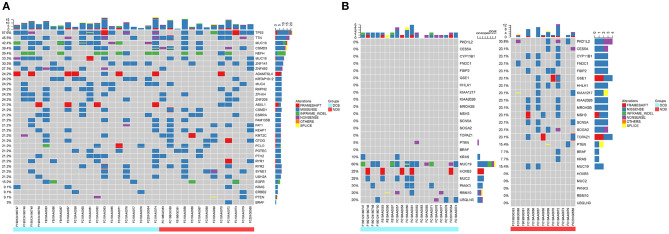
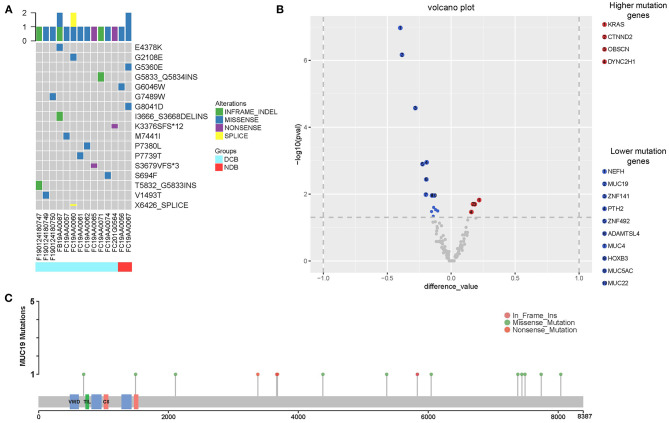
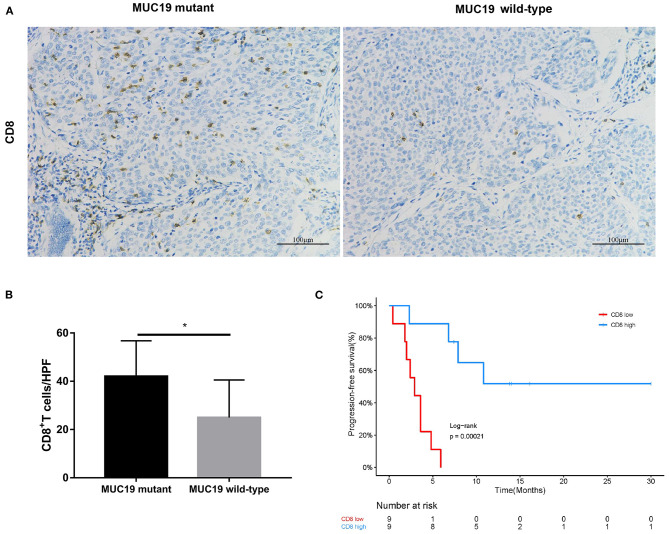
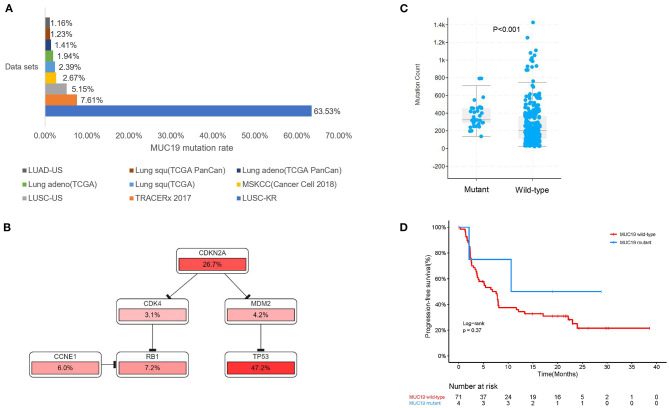
Although anti-PD-1 inhibitors exhibit impressive clinical results in non-small cell lung cancer (NSCLC) cases, a substantial percentage of patients do not respond to this treatment. Moreover, the current recommended biomarkers are not perfect. Therefore, it is essential to discover novel molecular determinants of responses to anti-PD-1 inhibitors. We performed Whole Exome Sequencing (WES) in a cohort of 33 Chinese NSCLC patients. Patients were classified into the durable clinical benefit (DCB) and no durable benefit (NDB) groups. Infiltrating CD8 cells in the tumor microenvironment (TME) were investigated by immunohistochemistry. We also used public datasets to validate our results. In our cohort, good clinical responses to anti-PD-1 inhibitors were more pronounced in younger patients with lower Eastern Cooperative Oncology Group (ECOG) scores and only extra-pulmonary metastasis. More importantly, we identified a novel mutation, which was significantly enriched in DCB patients ( = 0.015), and mutated patients had a longer progression-free survival (PFS) (hazard ratio = 0.3, 95% CI 0.1-0.9; = 0.026). Immunohistochemistry results indicated that the mutation was associated with increased infiltration by CD8 T cells in the TME ( = 0.0313). When combining mutation with ECOG scores and intra-pulmonary metastasis status, patients with more positive predictors had longer PFS ( = 0.003). Furthermore, mutation was involved in immune responses and associated with a longer PFS in the Memorial Sloan-Kettering Cancer Center (MSKCC) cohort. Collectively, we identified that mutations were involved in immune responses, and NSCLC tumors harboring mutated exhibited good responses to anti-PD-1 inhibitors.
尽管抗程序性死亡蛋白1(PD-1)抑制剂在非小细胞肺癌(NSCLC)病例中显示出令人瞩目的临床效果,但仍有相当比例的患者对这种治疗无反应。此外,目前推荐的生物标志物并不完美。因此,发现抗PD-1抑制剂反应的新分子决定因素至关重要。我们对33例中国NSCLC患者进行了全外显子组测序(WES)。患者被分为持久临床获益(DCB)组和无持久获益(NDB)组。通过免疫组织化学研究肿瘤微环境(TME)中浸润的CD8细胞。我们还使用公开数据集来验证我们的结果。在我们的队列中,抗PD-1抑制剂的良好临床反应在年龄较小、东部肿瘤协作组(ECOG)评分较低且仅伴有肺外转移的患者中更为明显。更重要的是,我们鉴定出一种新的突变,该突变在DCB患者中显著富集(P = 0.015),并且发生突变的患者无进展生存期(PFS)更长(风险比 = 0.3,95%置信区间0.1 - 0.9;P = 0.026)。免疫组织化学结果表明,该突变与TME中CD8 T细胞浸润增加相关(P = 0.0313)。当将该突变与ECOG评分和肺内转移状态相结合时,预测指标更阳性的患者PFS更长(P = 0.003)。此外,该突变在纪念斯隆凯特琳癌症中心(MSKCC)队列中参与免疫反应并与更长的PFS相关。总体而言,我们确定该突变参与免疫反应,携带该突变的NSCLC肿瘤对抗PD-1抑制剂表现出良好反应。