Finetti Francesca, Cassioli Chiara, Cianfanelli Valentina, Zevolini Fabrizia, Onnis Anna, Gesualdo Monica, Brunetti Jlenia, Cecconi Francesco, Baldari Cosima T
Department of Life Sciences, University of Siena, Siena, Italy.
Cell Stress and Survival Unit, Center for Autophagy, Recycling and Disease (CARD), Danish Cancer Society Research Center, Copenhagen, Denmark.
Front Cell Dev Biol. 2021 Mar 22;9:634003. doi: 10.3389/fcell.2021.634003. eCollection 2021.
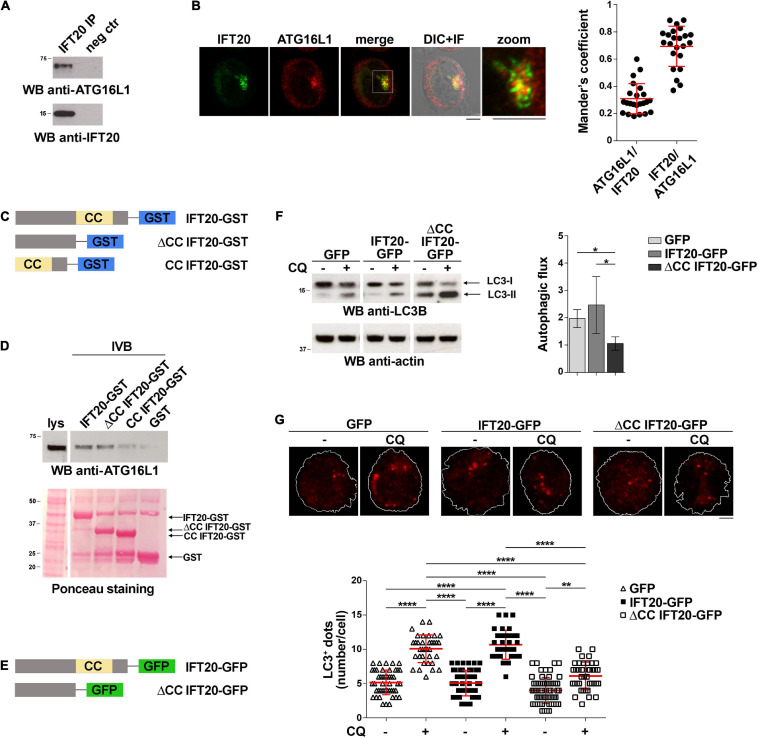
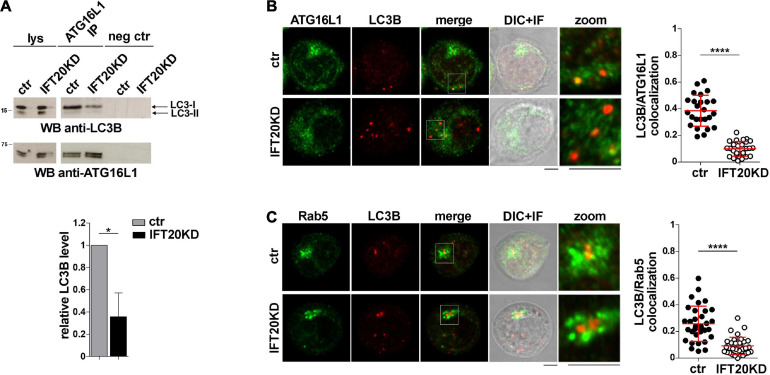
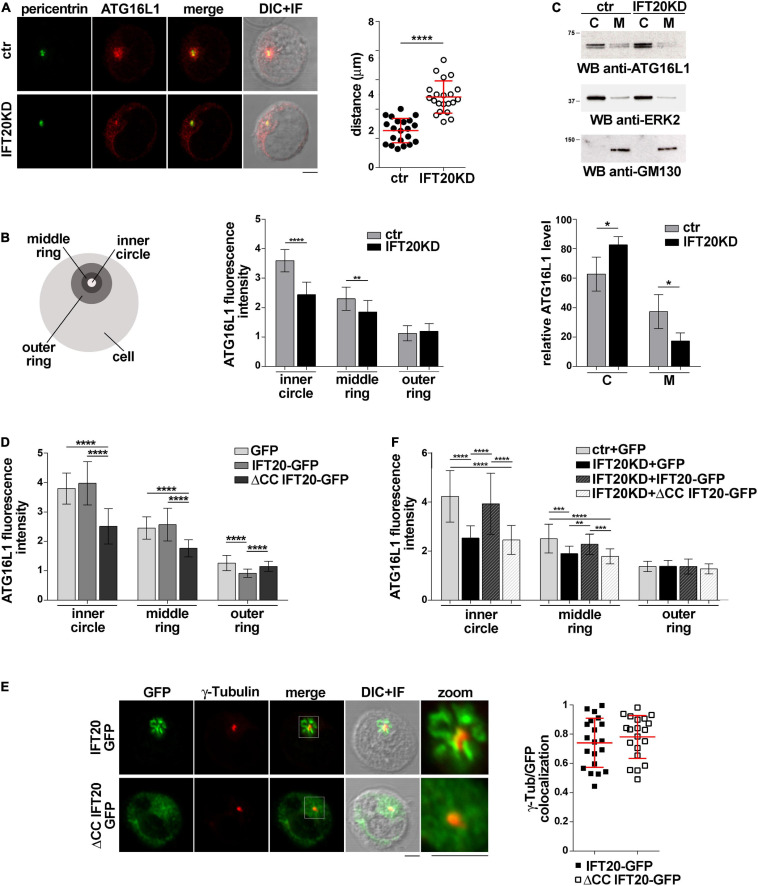
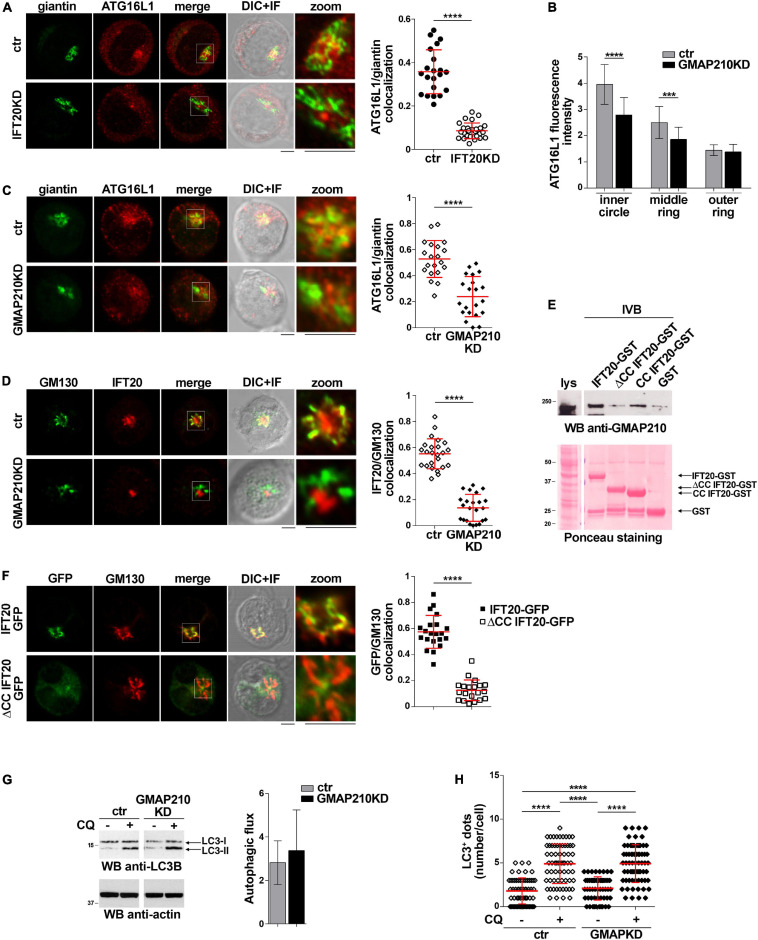
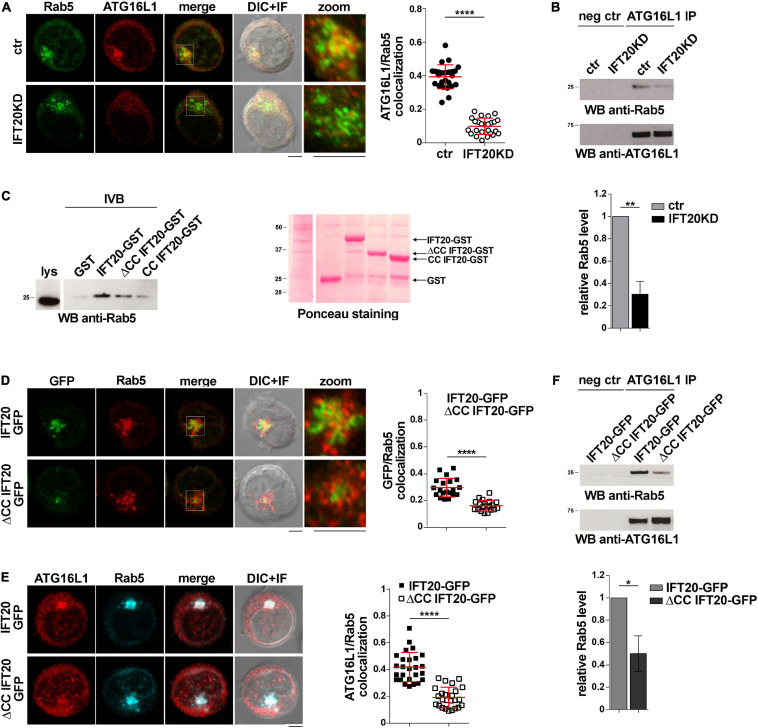
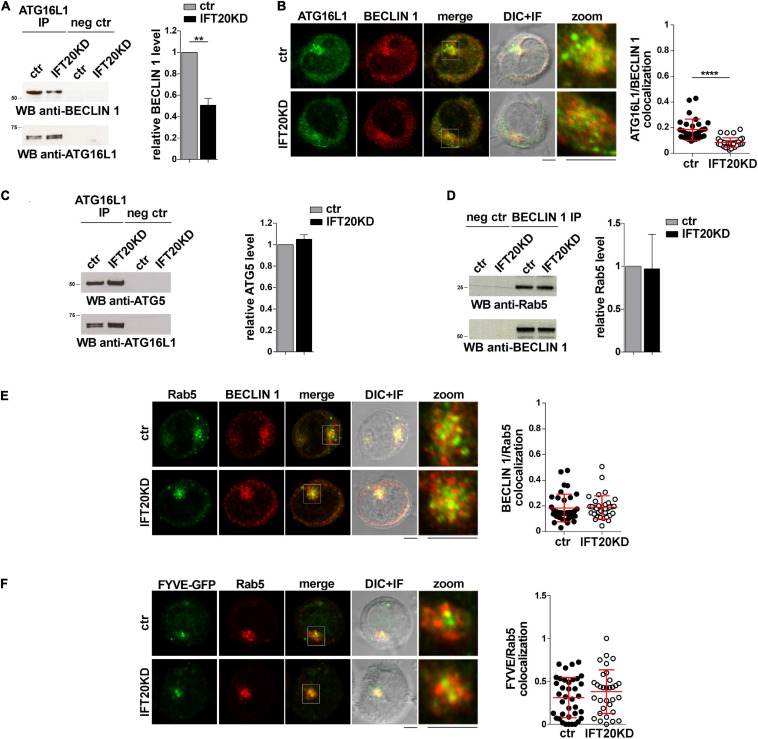
Lymphocyte homeostasis, activation and differentiation crucially rely on basal autophagy. The fine-tuning of this process depends on autophagy-related (ATG) proteins and their interaction with the trafficking machinery that orchestrates the membrane rearrangements leading to autophagosome biogenesis. The underlying mechanisms are as yet not fully understood. The intraflagellar transport (IFT) system, known for its role in cargo transport along the axonemal microtubules of the primary cilium, has emerged as a regulator of autophagy in ciliated cells. Growing evidence indicates that ciliogenesis proteins participate in cilia-independent processes, including autophagy, in the non-ciliated T cell. Here we investigate the mechanism by which IFT20, an integral component of the IFT system, regulates basal T cell autophagy. We show that IFT20 interacts with the core autophagy protein ATG16L1 and that its CC domain is essential for its pro-autophagic activity. We demonstrate that IFT20 is required for the association of ATG16L1 with the Golgi complex and early endosomes, both of which have been identified as membrane sources for phagophore elongation. This involves the ability of IFT20 to interact with proteins that are resident at these subcellular localizations, namely the golgin GMAP210 at the Golgi apparatus and Rab5 at early endosomes. GMAP210 depletion, while leading to a dispersion of ATG16L1 from the Golgi, did not affect basal autophagy. Conversely, IFT20 was found to recruit ATG16L1 to early endosomes tagged for autophagosome formation by the BECLIN 1/VPS34/Rab5 complex, which resulted in the local accumulation of LC3. Hence IFT20 participates in autophagosome biogenesis under basal conditions by regulating the localization of ATG16L1 at early endosomes to promote autophagosome biogenesis. These data identify IFT20 as a new regulator of an early step of basal autophagy in T cells.
淋巴细胞的稳态、激活和分化关键依赖于基础自噬。这一过程的精细调节取决于自噬相关(ATG)蛋白及其与调控膜重排以导致自噬体生物发生的运输机制的相互作用。其潜在机制尚未完全明确。鞭毛内运输(IFT)系统因其在沿初级纤毛的轴丝微管进行货物运输中的作用而闻名,现已成为纤毛细胞中自噬的调节因子。越来越多的证据表明,纤毛生成蛋白参与非纤毛T细胞中不依赖纤毛的过程,包括自噬。在此,我们研究IFT系统的一个组成部分IFT20调节基础T细胞自噬的机制。我们发现IFT20与核心自噬蛋白ATG16L1相互作用,并且其CC结构域对其促自噬活性至关重要。我们证明,ATG16L1与高尔基体复合体和早期内体的结合需要IFT20,这两者均已被确定为吞噬泡延伸的膜来源。这涉及IFT20与驻留在这些亚细胞定位的蛋白质相互作用的能力,即高尔基体上的高尔基体蛋白GMAP210和早期内体上的Rab5。GMAP210的缺失虽然导致ATG16L1从高尔基体分散,但不影响基础自噬。相反,我们发现IFT20将ATG16L1招募到由BECLIN 1/VPS34/Rab5复合体标记用于自噬体形成的早期内体,这导致LC3的局部积累。因此,IFT20通过调节ATG16L1在早期内体的定位来促进自噬体生物发生,从而参与基础条件下的自噬体生物发生。这些数据确定IFT20是T细胞基础自噬早期步骤的新调节因子。