Centre for Genetic Engineering and Biotechnology, Ave. 31 e/158 y 190, Playa. PO Box: 6162, Havana, Cuba.
Centre for Research and Biological Evaluations, Institute of Pharmacy and Food, University of Havana, Ave. 23 e/ 214 y 222, La Lisa. PO Box: 430, Havana, Cuba.
Curr Neuropharmacol. 2021;19(12):2250-2275. doi: 10.2174/1570159X19666210408123807.
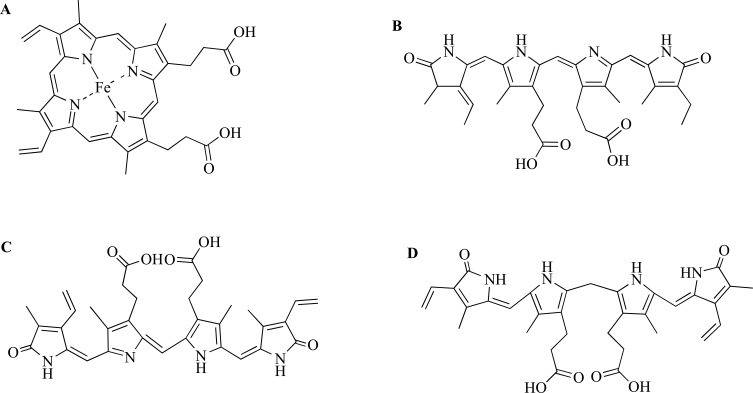
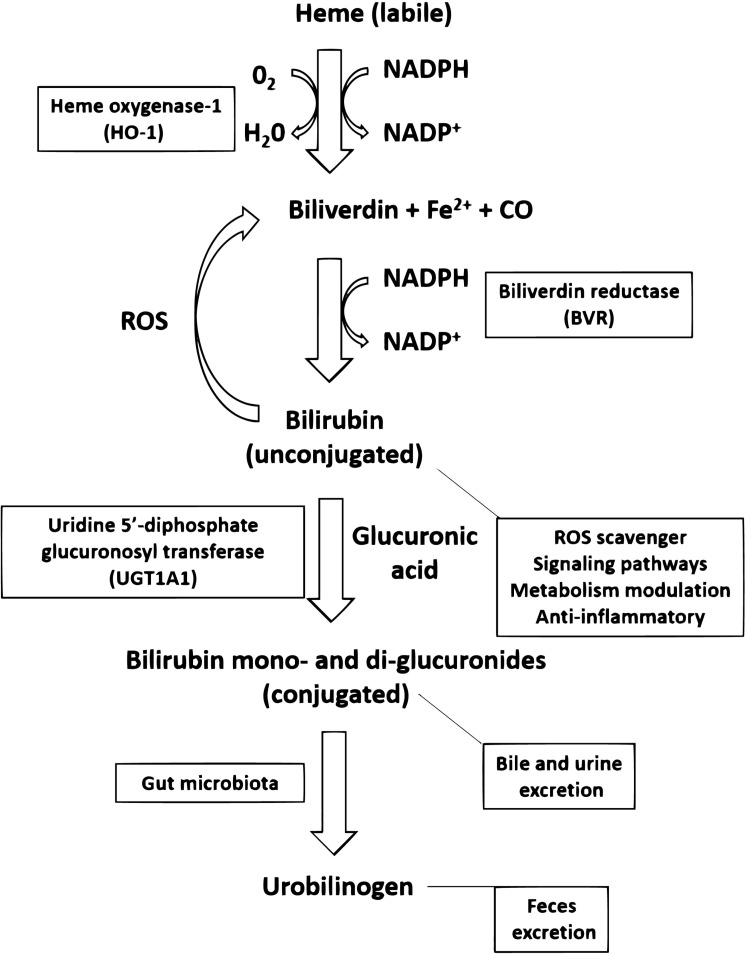
The edible cyanobacterium Spirulina platensis and its chief biliprotein C-Phycocyanin have shown protective activity in animal models of diverse human health diseases, often reflecting antioxidant and anti-inflammatory effects. The beneficial effects of C-Phycocyanin seem likely to be primarily attributable to its covalently attached chromophore Phycocyanobilin (PCB). Within cells, biliverdin is generated from free heme and it is subsequently reduced to bilirubin. Although bilirubin can function as an oxidant scavenger, its potent antioxidant activity reflects its ability to inactivate some isoforms of NADPH oxidase. Free bilirubin can also function as an agonist for the aryl hydrocarbon receptor (AhR); this may explain its ability to promote protective Treg activity in cellular and rodent models of inflammatory disease. AhR agonists also promote transcription of the gene coding for Nrf-2, and hence can up-regulate phase 2 induction of antioxidant enzymes, such as HO-1. Hence, it is proposed that C-Phycocyanin/PCB chiefly exert their protective effects via inhibition of NADPH oxidase activity, as well as by AhR agonism that both induces Treg activity and up-regulates phase 2 induction. This simple model may explain their potent antioxidant/antiinflammatory effects. Additionally, PCB might mimic biliverdin in activating anti-inflammatory signaling mediated by biliverdin reductase. This essay reviews recent research in which CPhycocyanin and/or PCB, administered orally, parenterally, or intranasally, have achieved marked protective effects in rodent and cell culture models of Ischemic Stroke and Multiple Sclerosis, and suggests that these agents may likewise be protective for Alzheimer's disease, Parkinson's disease, and in COVID-19 and its neurological complications.
可食用蓝藻螺旋藻及其主要的藻胆蛋白 C-藻蓝蛋白已在多种人类健康疾病的动物模型中显示出保护活性,通常反映出抗氧化和抗炎作用。C-藻蓝蛋白的有益作用似乎主要归因于其共价连接的生色团藻蓝胆素(PCB)。在细胞内,胆红素由游离血红素生成,随后被还原为胆红素。虽然胆红素可以作为氧化剂清除剂发挥作用,但它的强抗氧化活性反映了它能够使一些 NADPH 氧化酶同工型失活的能力。游离胆红素还可以作为芳烃受体(AhR)的激动剂;这可以解释其在炎症性疾病的细胞和啮齿动物模型中促进保护性 Treg 活性的能力。AhR 激动剂还促进编码 Nrf-2 的基因的转录,因此可以上调抗氧化酶如 HO-1 的相 2 诱导。因此,有人提出 C-藻蓝蛋白/PCB 主要通过抑制 NADPH 氧化酶活性以及通过 AhR 激动剂发挥其保护作用,AhR 激动剂既诱导 Treg 活性,又上调相 2 诱导。这个简单的模型可以解释它们强大的抗氧化/抗炎作用。此外,PCB 可能模拟胆红素在激活胆红素还原酶介导的抗炎信号转导中的作用。本文综述了最近的研究,其中口服、肠胃外或鼻内给予 C-藻蓝蛋白和/或 PCB 已在缺血性中风和多发性硬化症的啮齿动物和细胞培养模型中取得显著的保护作用,并表明这些药物也可能对阿尔茨海默病、帕金森病以及 COVID-19 及其神经并发症具有保护作用。