Department of Gastroenterology and Hepatology, Kasturba Medical College, Mangalore, Manipal Academy of Higher Education, Manipal, 575 003, India.
Department of Gastroenterology and Hepatology, Kasturba Medical College, Manipal, Manipal Academy of Higher Education, Manipal, 576 104, India.
Indian J Gastroenterol. 2021 Apr;40(2):183-188. doi: 10.1007/s12664-021-01155-x. Epub 2021 Apr 8.
Clinical features are of modest benefit in determining the etiology of dyspepsia. Dyspeptic patients with alarm features are suspected to have malignancy; but the proportions of patients and true cutoff values of various quantitative parameters in predicting malignancy are explored to a lesser extent.
This is a prospective observational study of consecutive patients undergoing esophagogastroduodenoscopy (EGD) for dyspeptic symptoms. Patients' alarm features and clinical details were recorded in a predesigned questionnaire. The diagnostic accuracy of alarm features in predicting malignancy was studied.
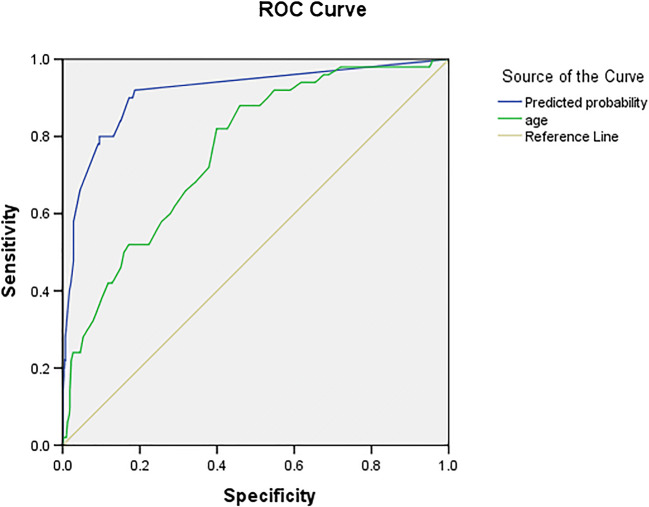
Nine hundred patients, 678 (75.3%) males, with a mean (standard deviation [SD]) age of 44.6 (13.54) years were enrolled. Commonest indication for EGD was epigastric pain in 614 (68.2%) patients. Dyspepsia was functional in 311 (34.6%) patients. EGD revealed benign lesions in 340 (37.8%) and malignancy in 50 (5.5%) patients. Among the malignant lesions, gastric malignancy was present in 28 (56%) and esophageal malignancy in 20 (40%) patients. Alarm features were present in 206 (22.9%), out of which malignant lesions were seen in 46 (22.3%) patients. Altogether, the alarm features had a sensitivity of 92% and specificity of 81.2% for predicting malignancy. The sensitivity and specificity for weight loss were 76% and 90.8%, while that of abdominal mass were 10% and 99.9% respectively. Based on receiver operating characteristic curve, the optimal age for screening of malignancy was 46.5 years in this population.
Patients of age group 40 to 49 years with dyspeptic alarm symptoms (predominant weight loss) need prompt endoscopy to screen for malignancy. The alarm features are inexpensive screening tools, found to be useful in India, and should be utilized in countries with similar healthcare conditions and disease epidemiology.
临床特征在确定消化不良的病因方面作用有限。有报警症状的消化不良患者被怀疑患有恶性肿瘤;但对于各种定量参数在预测恶性肿瘤方面的患者比例和真实截断值的研究较少。
这是一项连续消化不良患者行食管胃十二指肠镜(EGD)检查的前瞻性观察性研究。患者的报警症状和临床详细信息记录在预先设计的问卷中。研究了报警症状在预测恶性肿瘤中的诊断准确性。
共纳入 900 例患者,其中 678 例(75.3%)为男性,平均(标准差[SD])年龄为 44.6(13.54)岁。最常见的 EGD 指征是上腹痛 614 例(68.2%)。功能性消化不良 311 例(34.6%)。EGD 发现良性病变 340 例(37.8%)和恶性病变 50 例(5.5%)。在恶性病变中,胃恶性肿瘤 28 例(56%),食管恶性肿瘤 20 例(40%)。206 例(22.9%)患者存在报警症状,其中 46 例(22.3%)患者存在恶性病变。总的来说,报警症状对预测恶性肿瘤的敏感性为 92%,特异性为 81.2%。体重减轻的敏感性和特异性分别为 76%和 90.8%,而腹部肿块的敏感性和特异性分别为 10%和 99.9%。根据受试者工作特征曲线,该人群筛查恶性肿瘤的最佳年龄为 46.5 岁。
年龄在 40 至 49 岁之间、有消化不良报警症状(主要为体重减轻)的患者需要及时进行内镜检查以筛查恶性肿瘤。报警症状是一种廉价的筛查工具,在印度被证明是有用的,并且应该在具有类似医疗保健条件和疾病流行情况的国家中使用。