Departamento de Bioestatística, Biologia Vegetal, Parasitologia e Zoologia, Instituto de Biociências de Botucatu, Universidade Estadual Paulista, Botucatu, São Paulo, Brazil.
Instituto de Biotecnologia, Universidade Estadual Paulista, Botucatu, São Paulo, Brazil.
PLoS One. 2021 Apr 8;16(4):e0246215. doi: 10.1371/journal.pone.0246215. eCollection 2021.
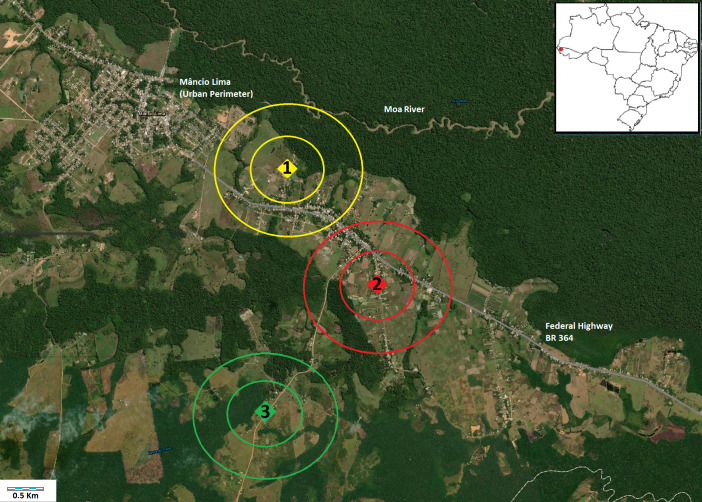
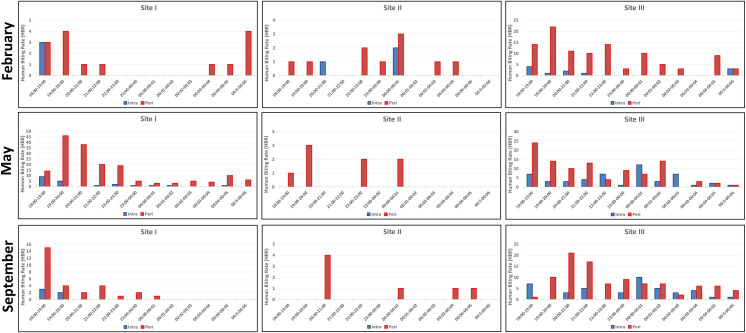
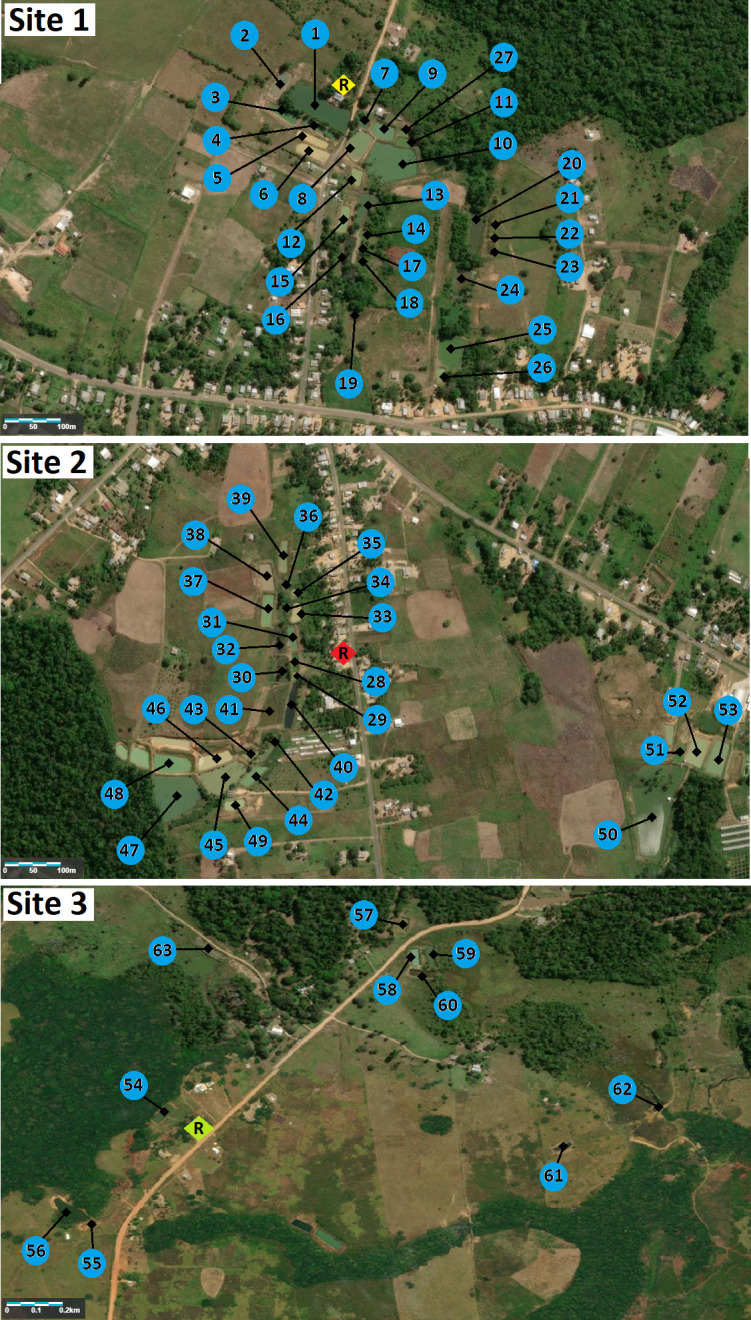
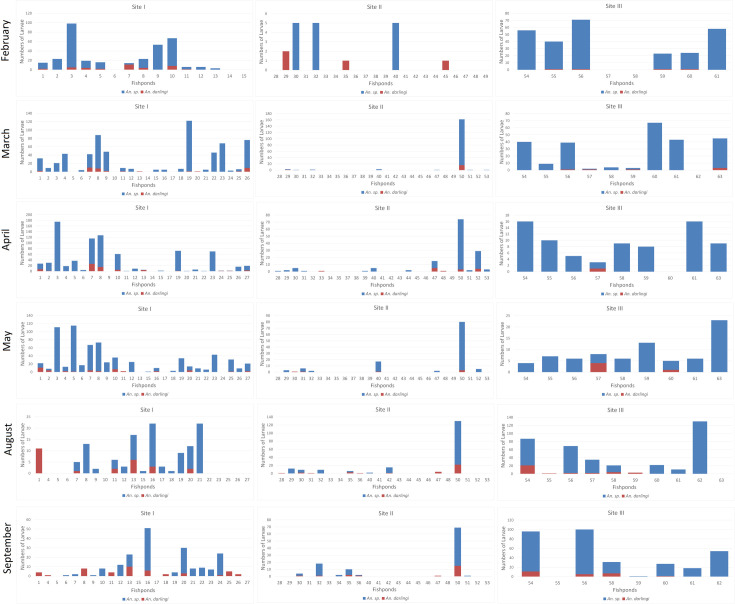
Vale do Rio Juruá in western Acre, Brazil, is a persistent malaria transmission hotspot partly due to fish farming development that was encouraged to improve local standards of living. Fish ponds can be productive breeding sites for Amazonian malaria vector species, including Nyssorhynchus darlingi, which, combined with high human density and mobility, add to the local malaria burden.This study reports entomological profile of immature and adult Ny. darlingi at three sites in Mâncio Lima, Acre, during the rainy and dry season (February to September, 2017). From 63 fishponds, 10,859 larvae were collected, including 5,512 first-instar Anophelinae larvae and 4,927 second, third and fourth-instars, of which 8.5% (n = 420) were Ny. darlingi. This species was most abundant in not-abandoned fishponds and in the presence of emerging aquatic vegetation. Seasonal analysis of immatures in urban landscapes found no significant difference in the numbers of Ny. darlingi, corresponding to equivalent population density during the rainy to dry transition period. However, in the rural landscape, significantly higher numbers of Ny. darlingi larvae were collected in August (IRR = 5.80, p = 0.037) and September (IRR = 6.62, p = 0.023) (dry season), compared to February (rainy season), suggesting important role of fishponds for vector population maintenance during the seasonal transition in this landscape type. Adult sampling detected mainly Ny. darlingi (~93%), with similar outdoor feeding behavior, but different abundance according to landscape profile: urban site 1 showed higher peaks of human biting rate in May (46 bites/person/hour), than February (4) and September (15), while rural site 3 shows similar HBR during the same sampling period (22, 24 and 21, respectively). This study contributes to a better understanding of the larvae biology of the main malaria vector in the Vale do Rio Juruá region and, ultimately will support vector control efforts.
巴西西部阿克里州的茹鲁阿河谷是一个持续存在的疟疾传播热点地区,部分原因是鼓励发展水产养殖以改善当地生活水平。鱼塘可能是亚马逊地区疟疾传播媒介物种的繁殖地,包括 Nyssorhynchus darlingi,再加上高密度的人和流动性,增加了当地的疟疾负担。本研究报告了 2017 年 2 月至 9 月(雨季和旱季)期间在阿克里州曼西尼奥利马的三个地点未成熟和成年 Ny. darlingi 的昆虫学特征。从 63 个鱼塘中采集了 10,859 条幼虫,包括 5,512 条第一龄期按蚊幼虫和 4,927 条第二、三、四龄期幼虫,其中 8.5%(n = 420)为 Ny. darlingi。该物种在未废弃的鱼塘和出现水生植被的地方最为丰富。城市景观中幼体的季节性分析发现,在雨季到旱季过渡期间,Ny. darlingi 的数量没有显著差异,对应的种群密度相当。然而,在农村景观中,8 月(IRR = 5.80,p = 0.037)和 9 月(IRR = 6.62,p = 0.023)(旱季)采集的 Ny. darlingi 幼虫数量明显高于 2 月(雨季),表明在这种景观类型中,鱼塘在季节性过渡期间对蚊媒种群的维持起着重要作用。成虫采样主要检测到 Ny. darlingi(~93%),具有相似的户外摄食行为,但根据景观特征的不同而丰度不同:城市点 1 在 5 月(46 次/人/小时)的人咬率高于 2 月(4 次)和 9 月(15 次),而农村点 3 在同一采样期间显示出相似的 HBR(分别为 22、24 和 21)。本研究有助于更好地了解茹鲁阿河谷地区主要疟疾传播媒介的幼虫生物学,并最终将支持蚊媒控制工作。