
基于个体的社交网络特征及民族起源与酒精使用的关系:一项对瑞典年轻人同伴相似性、社交关系及并存饮酒习惯的同群网络研究
Social network characteristics and alcohol use by ethnic origin: An ego-based network study on peer similarity, social relationships, and co-existing drinking habits among young Swedes.
机构信息
CHESS, Department of Public Health Sciences, Stockholm University, Stockholm, Sweden.
Department of Sociology, Stockholm University, Stockholm, Sweden.
出版信息
PLoS One. 2021 Apr 8;16(4):e0249120. doi: 10.1371/journal.pone.0249120. eCollection 2021.
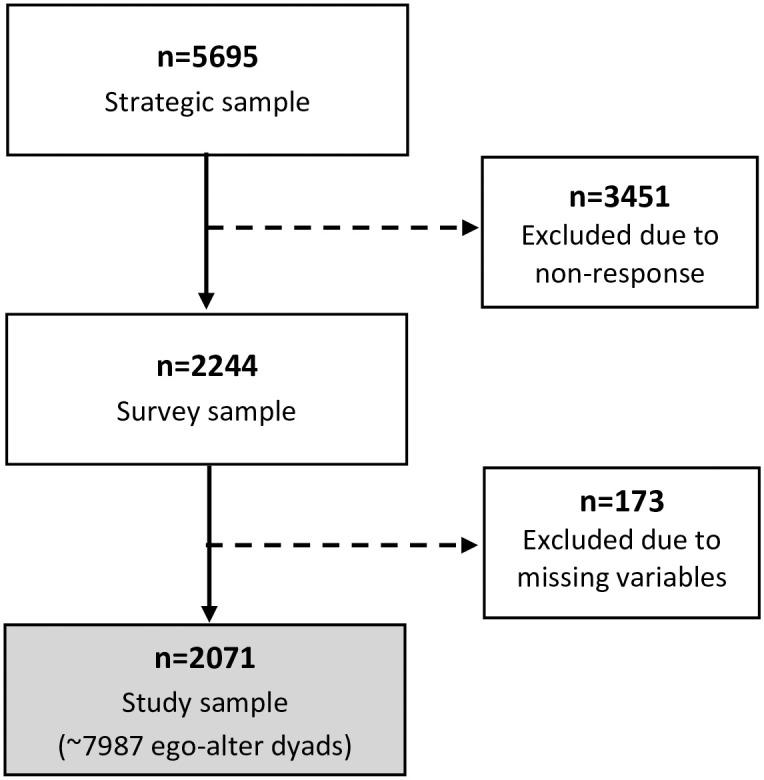
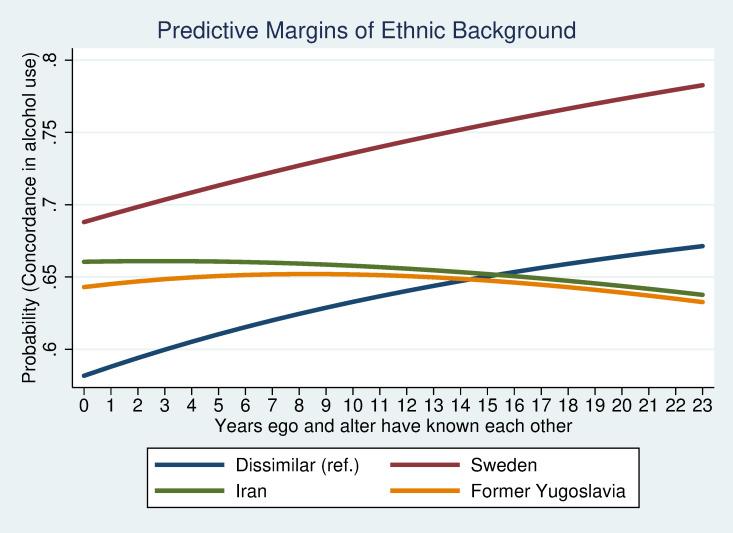
The study explores how social network determinants relate to the prevalence and frequency of alcohol use among peer dyads. It is studied how similar alcohol habits co-exist among persons (egos) and their peers (alters) when socio-demographic similarity (e.g., in ethnic origin), network composition and other socio-cultural aspects were considered. Data was ego-based responses derived from a Swedish national survey with a cohort of 23-year olds. The analytical sample included 7987 ego-alter pairs, which corresponds to 2071 individuals (egos). A so-called dyadic design was applied i.e., all components of the analysis refer to ego-alter pairs (dyads). Multilevel multinomial-models were used to analyse similarity in alcohol habits in relation to ego-alter similarity in ethnic background, religious beliefs, age, sex, risk-taking, educational level, closure in network, duration, and type of relationship, as well as interactions between ethnicity and central network characteristics. Ego-alter similarity in terms of ethnic origin, age and sex was associated with ego-alter similarity in alcohol use. That both ego and alters were non-religious and were members of closed networks also had an impact on similarity in alcohol habits. It was concluded that network similarity might be an explanation for the co-existence of alcohol use among members of peer networks.
本研究探讨了社会网络决定因素与同伴对之间饮酒的流行和频率之间的关系。研究了在考虑社会人口统计学相似性(例如,种族起源)、网络构成和其他社会文化方面时,个体(自我)及其同伴(他人)之间相似的饮酒习惯如何共存。数据来自一项针对瑞典 23 岁人群的全国性调查,基于自我报告的响应。分析样本包括 7987 对自我-他人对,对应于 2071 个人(自我)。应用了所谓的对偶设计,即分析的所有组成部分都涉及自我-他人对(对偶)。使用多级多项模型分析与种族背景、宗教信仰、年龄、性别、冒险行为、教育水平、网络封闭性、持续时间和关系类型的自我-他人相似性以及种族与网络中心特征之间的相互作用对酒精使用习惯的相似性。种族出身、年龄和性别的自我-他人相似性与酒精使用的自我-他人相似性有关。自我和他人都没有宗教信仰,并且是封闭网络的成员,这也对酒精习惯的相似性产生了影响。结论是,网络相似性可能是同伴网络成员之间饮酒共存的一个解释。


 Zotero 插件