Wellcome-MRC Cambridge Stem Cell Institute, Jeffrey Cheah Biomedical Centre, University of Cambridge, Cambridge CB2 0AW, UK; Living Systems Institute, University of Exeter, Exeter EX4 4QD, UK.
Wellcome-MRC Cambridge Stem Cell Institute, Jeffrey Cheah Biomedical Centre, University of Cambridge, Cambridge CB2 0AW, UK; Living Systems Institute, University of Exeter, Exeter EX4 4QD, UK.
Cell Stem Cell. 2021 Jun 3;28(6):1040-1056.e6. doi: 10.1016/j.stem.2021.02.025. Epub 2021 Apr 7.
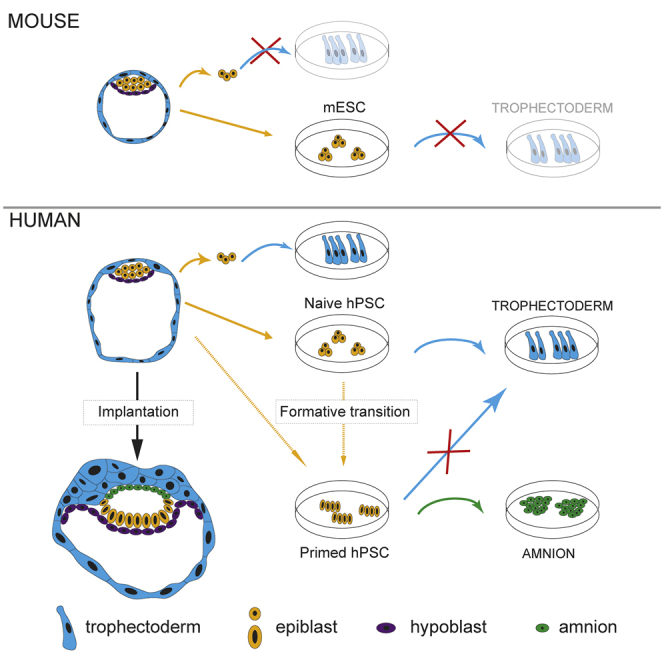
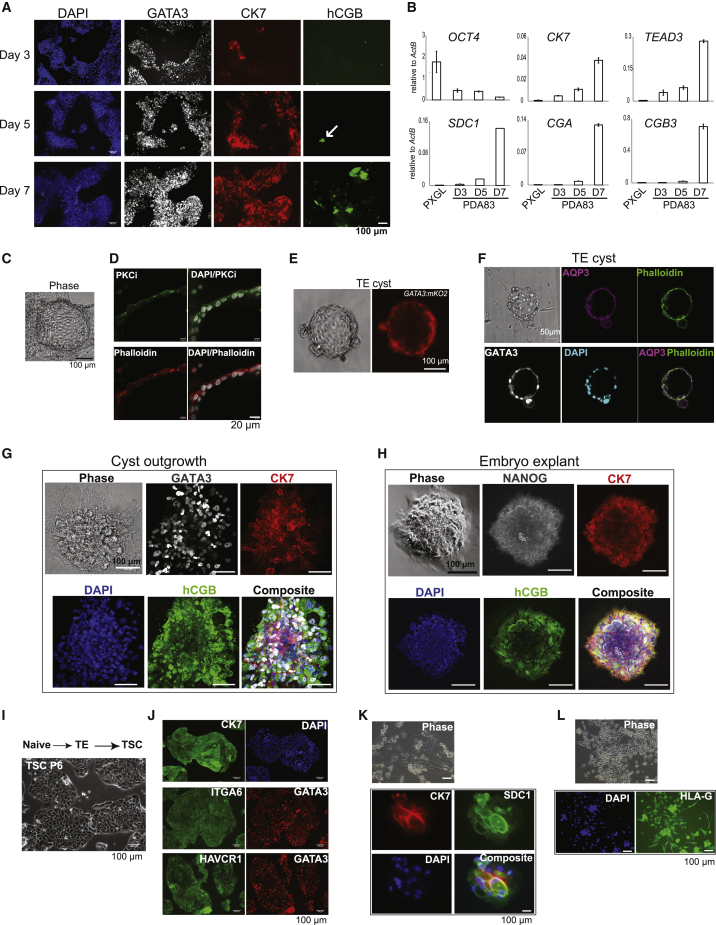
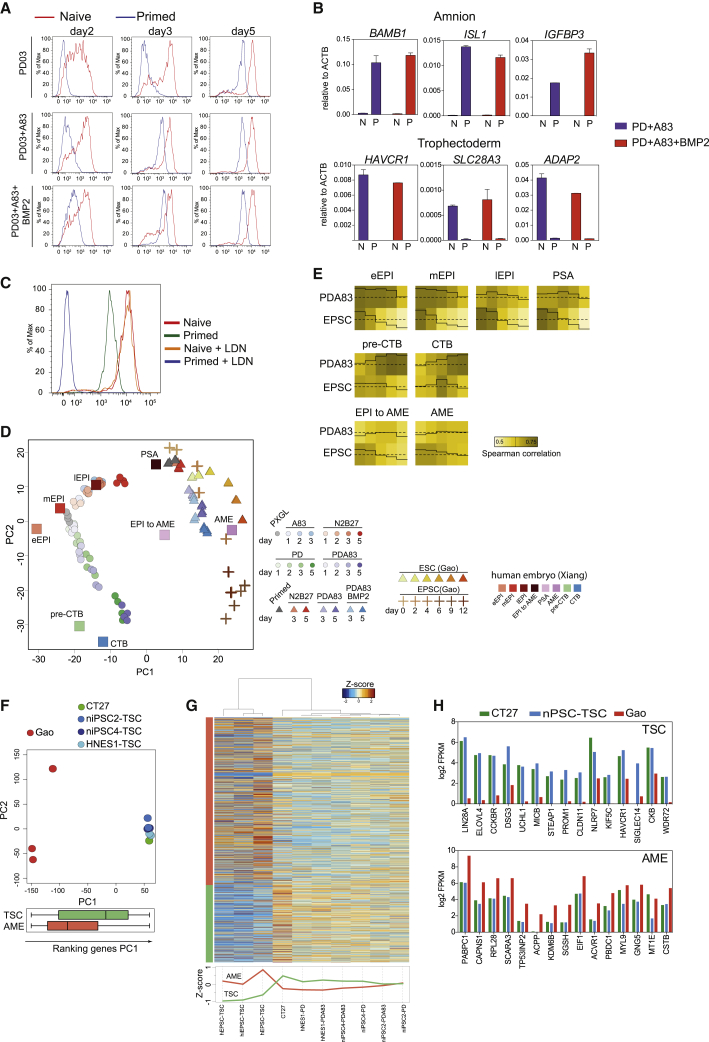
Classic embryological experiments have established that the early mouse embryo develops via sequential lineage bifurcations. The first segregated lineage is the trophectoderm, essential for blastocyst formation. Mouse naive epiblast and derivative embryonic stem cells are restricted accordingly from producing trophectoderm. Here we show, in contrast, that human naive embryonic stem cells readily make blastocyst trophectoderm and descendant trophoblast cell types. Trophectoderm was induced rapidly and efficiently by inhibition of ERK/mitogen-activated protein kinase (MAPK) and Nodal signaling. Transcriptome comparison with the human embryo substantiated direct formation of trophectoderm with subsequent differentiation into syncytiotrophoblast, cytotrophoblast, and downstream trophoblast stem cells. During pluripotency progression lineage potential switches from trophectoderm to amnion. Live-cell tracking revealed that epiblast cells in the human blastocyst are also able to produce trophectoderm. Thus, the paradigm of developmental specification coupled to lineage restriction does not apply to humans. Instead, epiblast plasticity and the potential for blastocyst regeneration are retained until implantation.
经典的胚胎学实验已经证实,早期小鼠胚胎通过连续的谱系分支发育。第一个分离的谱系是滋养外胚层,对囊胚形成至关重要。相应地,小鼠原始上皮内胚层和衍生的胚胎干细胞被限制产生滋养外胚层。相比之下,我们发现人类原始胚胎干细胞很容易产生囊胚滋养外胚层和衍生的滋养层细胞类型。通过抑制 ERK/丝裂原活化蛋白激酶 (MAPK) 和 Nodal 信号,快速有效地诱导滋养外胚层。与人类胚胎的转录组比较证实了滋养外胚层的直接形成,随后分化为合胞滋养层、细胞滋养层和下游滋养层干细胞。在多能性进展过程中,谱系潜能从滋养外胚层转变为羊膜。活细胞追踪显示,人类囊胚中的内胚层细胞也能够产生滋养外胚层。因此,发育规范与谱系限制的范式不适用于人类。相反,胚胎外胚层的可塑性和囊胚再生的潜力一直保留到着床。