Division of Maternal-Fetal Medicine, Department of Obstetrics and Gynecology, Mayo Clinic College of Medicine, Rochester, MN (Drs Rose, Wyatt, Narang, Lorenz, and Szymanski); Division of Maternal-Fetal Medicine, Department of Gynecology and Obstetrics and Division of Surgical Critical Care, Department of Surgery, Johns Hopkins Hospital, Johns Hopkins University School of Medicine, Baltimore, MD (Dr Vaught).
Division of Maternal-Fetal Medicine, Department of Obstetrics and Gynecology, Mayo Clinic College of Medicine, Rochester, MN (Drs Rose, Wyatt, Narang, Lorenz, and Szymanski); Division of Maternal-Fetal Medicine, Department of Gynecology and Obstetrics and Division of Surgical Critical Care, Department of Surgery, Johns Hopkins Hospital, Johns Hopkins University School of Medicine, Baltimore, MD (Dr Vaught).
Am J Obstet Gynecol MFM. 2021 Jul;3(4):100373. doi: 10.1016/j.ajogmf.2021.100373. Epub 2021 Apr 6.
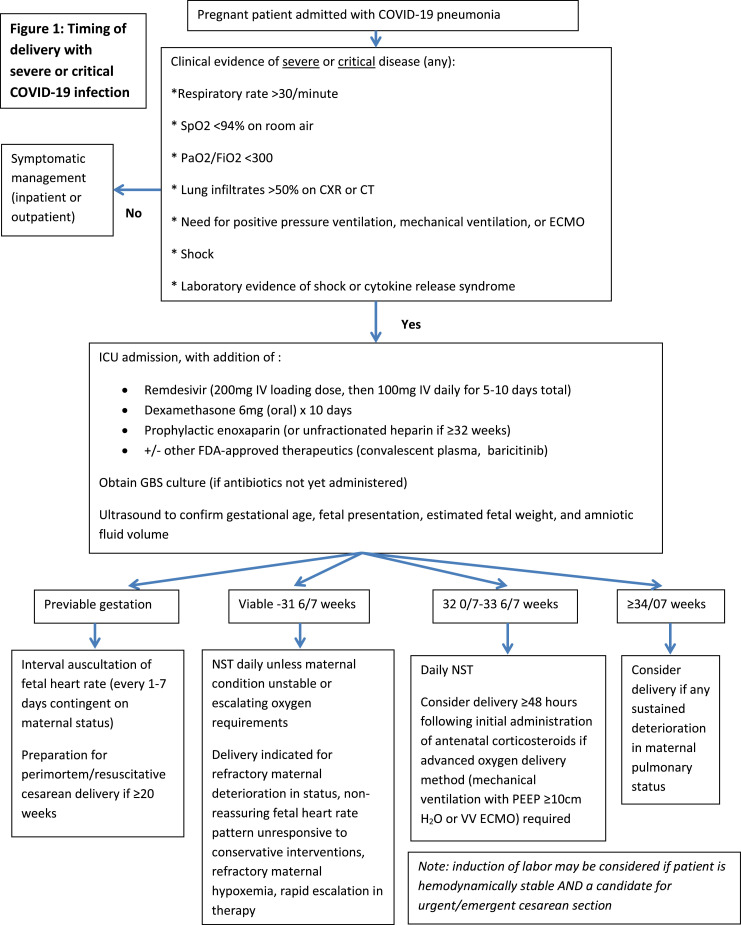
Approximately 4% of pregnant patients with coronavirus disease 2019 require intensive care unit admission. Given the practical implications of advanced ventilatory and circulatory support techniques, urgent or emergent delivery for nonreassuring fetal status frequently presents a logistical impossibility. This article proposes a protocol for obstetrical management of patients in these situations, emphasizing coordinated preparation among obstetrical, anesthesiology, and intensivist teams for planned preterm delivery at gestational ages when neonatal outcomes are likely to be favorable.
约 4%的 COVID-19 孕妇需要入住重症监护病房。鉴于高级通气和循环支持技术的实际影响,对于胎儿情况不稳定的孕妇,紧急或即刻分娩往往不切实际。本文提出了一种针对这些情况的产科管理方案,强调产科、麻醉科和重症监护团队之间的协调准备,以便在可能有利于新生儿结局的孕龄计划行早产分娩。