NHC Key Laboratory of AIDS Immunology (China Medical University), National Clinical Research Center for Laboratory Medicine, The First Affiliated Hospital of China Medical University, No 155, Nanjing North Street, Heping District, Shenyang, 110001, Liaoning Province, China.
Key Laboratory of AIDS Immunology, Chinese Academy of Medical Sciences, Shenyang, 110001, China.
BMC Immunol. 2021 Apr 9;22(1):25. doi: 10.1186/s12865-021-00417-9.
T cell immunoglobulin and mucin domain-containing-3 (Tim-3) is a negative regulator expressed on T cells, and is also expressed on natural killer (NK) cells. The function of Tim-3 chiefly restricts IFNγ-production in T cells, however, the impact of Tim-3 on NK cell function has not been clearly elucidated.
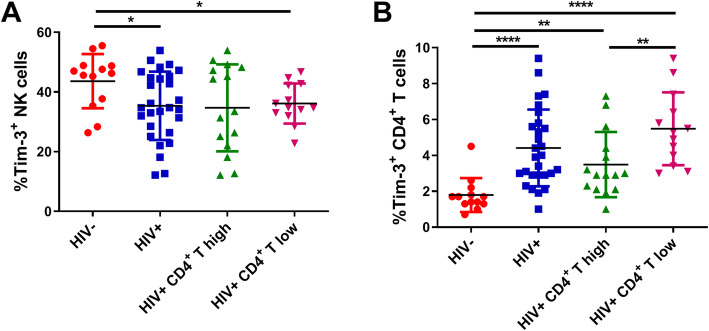
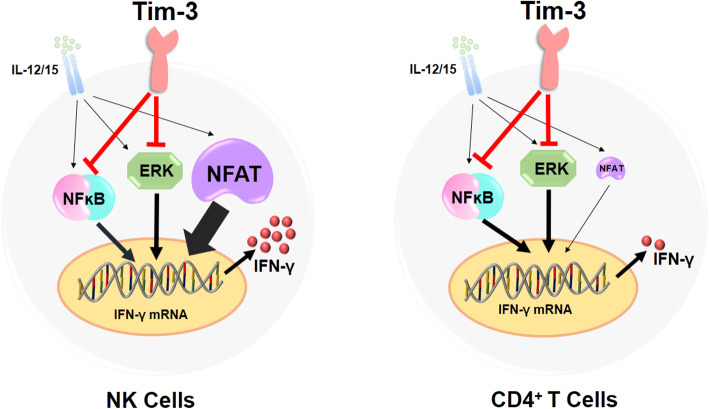
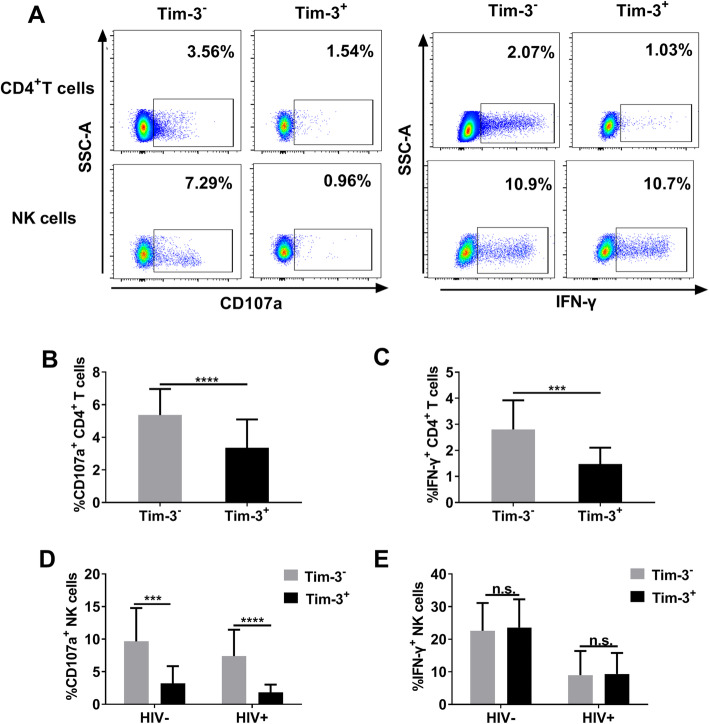
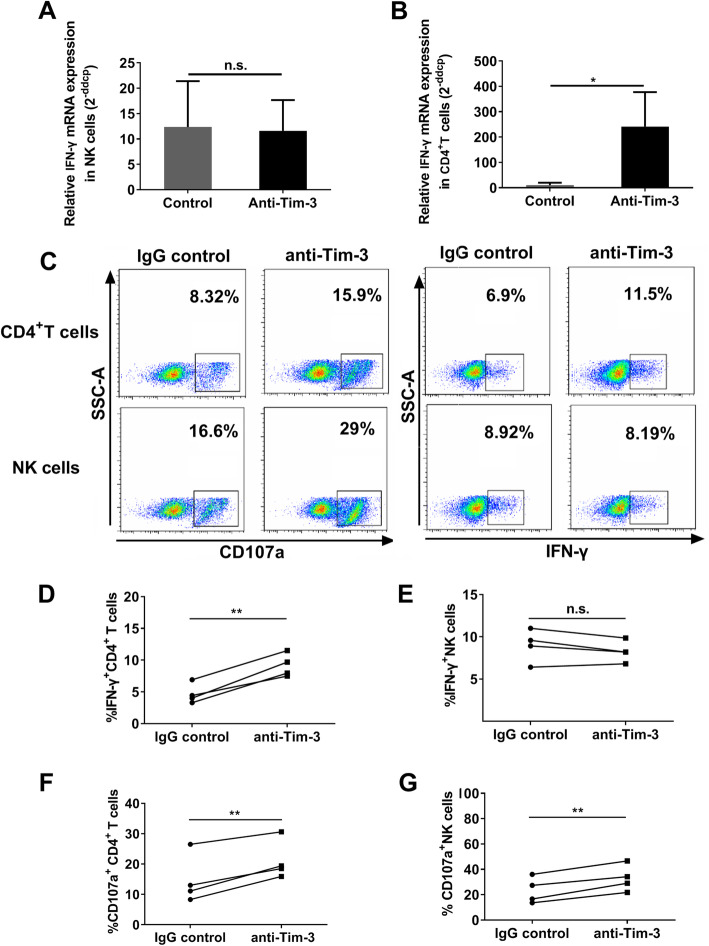
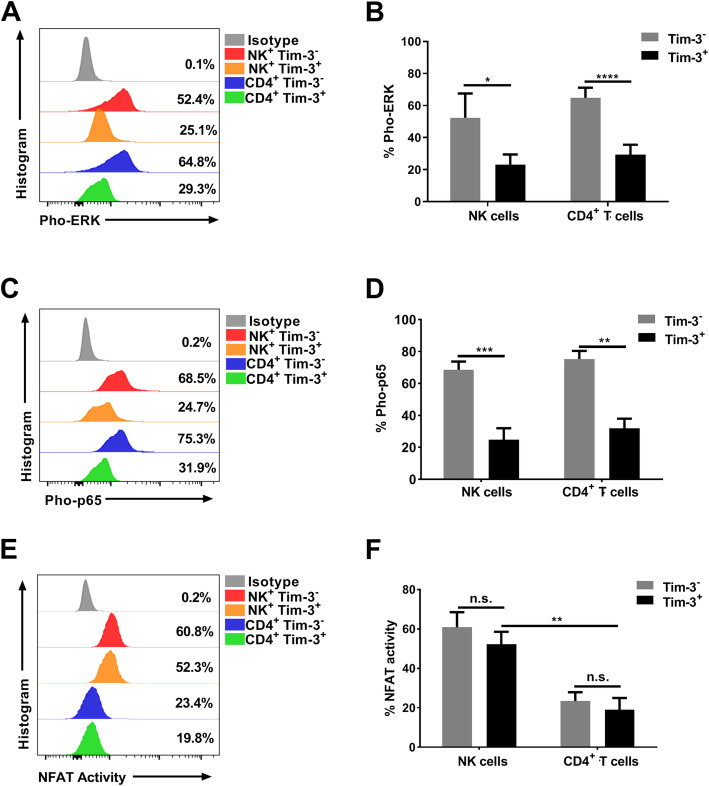
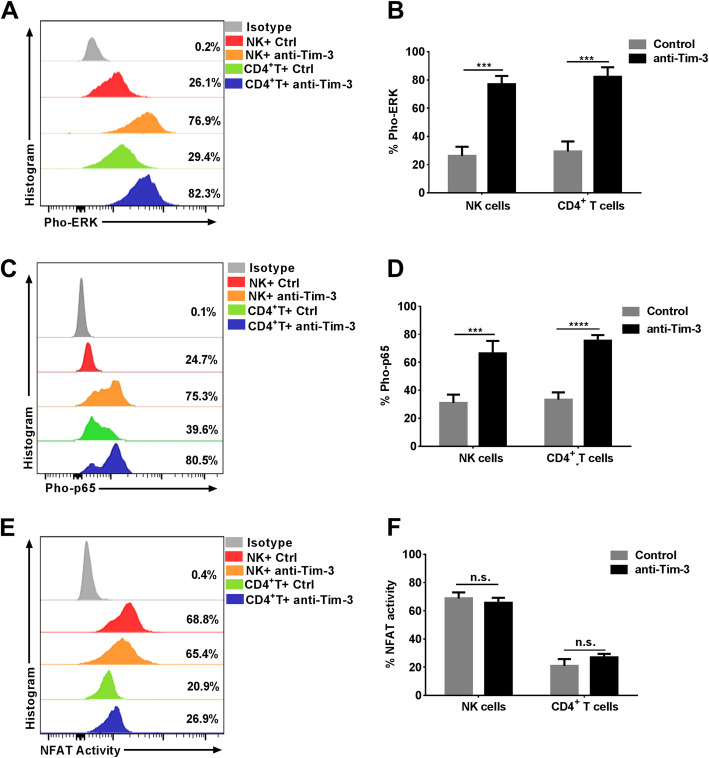
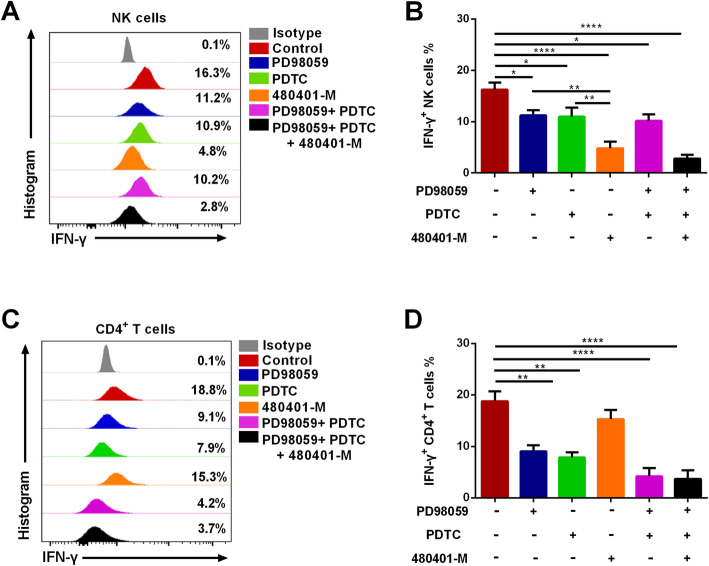
In this study, we demonstrated down-regulation of Tim-3 expression on NK cells while Tim-3 is upregulated on CD4 T cells during HIV infection. Functional assays indicated that Tim-3 mediates suppression of CD107a degranulation in NK cells and CD4 T cells, while it fails to inhibit the production of IFN-γ by NK cells. Analyses of downstream pathways using an antibody to block Tim-3 function demonstrated that Tim-3 can inhibit ERK and NFκB p65 signaling; however, it failed to suppress the NFAT pathway. Further, we found that the NFAT activity in NK cells was much higher than that in CD4 T cells, indicating that NFAT pathway is important for promotion of IFN-γ production by NK cells.
Thus, our data show that the expression of Tim-3 on NK cells is insufficient to inhibit IFN-γ production. Collectively, our findings demonstrate a potential mechanism of Tim-3 regulation of NK cells and a target for HIV infection immunotherapy.
T 细胞免疫球蛋白和粘蛋白结构域 3(Tim-3)是 T 细胞上表达的一种负调节剂,也在自然杀伤(NK)细胞上表达。Tim-3 的主要功能是限制 T 细胞中 IFNγ的产生,然而,Tim-3 对 NK 细胞功能的影响尚未明确阐明。
在这项研究中,我们发现在 HIV 感染过程中,NK 细胞上的 Tim-3 表达下调,而 CD4 T 细胞上的 Tim-3 表达上调。功能分析表明,Tim-3 介导 NK 细胞和 CD4 T 细胞中 CD107a 脱颗粒的抑制,但不能抑制 NK 细胞 IFN-γ的产生。使用阻断 Tim-3 功能的抗体分析下游通路表明,Tim-3 可以抑制 ERK 和 NFκB p65 信号通路;然而,它不能抑制 NFAT 通路。此外,我们发现 NK 细胞中的 NFAT 活性远高于 CD4 T 细胞,表明 NFAT 通路对于促进 NK 细胞 IFN-γ的产生很重要。
因此,我们的数据表明,NK 细胞上 Tim-3 的表达不足以抑制 IFN-γ的产生。总之,我们的研究结果表明了 Tim-3 调节 NK 细胞的潜在机制,为 HIV 感染的免疫治疗提供了一个新的靶点。