Centre for Global Child Health, Hospital for Sick Children, Toronto, Ontario, Canada.
Division of Women and Child Health, Aga Khan University, Karachi, Pakistan.
BMJ Glob Health. 2021 Apr;6(4). doi: 10.1136/bmjgh-2020-004897.
Low/middle-income countries (LMICs) face triple burden of malnutrition associated with infectious diseases, and non-communicable diseases. This review aims to synthesise the available data on the delivery, coverage, and effectiveness of the nutrition programmes for conflict affected women and children living in LMICs.
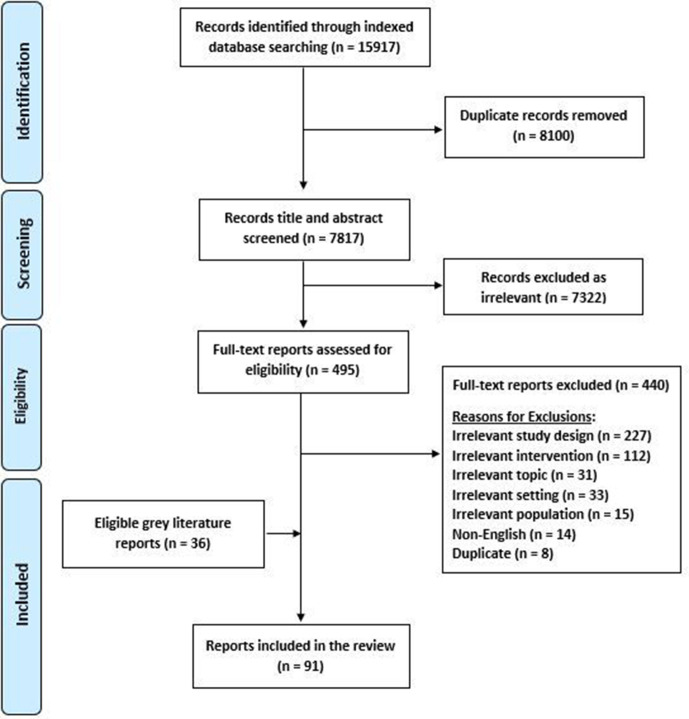
We searched MEDLINE, Embase, CINAHL, and PsycINFO databases and grey literature using terms related to conflict, population, and nutrition. We searched studies on women and children receiving nutrition-specific interventions during or within five years of a conflict in LMICs. We extracted information on population, intervention, and delivery characteristics, as well as delivery barriers and facilitators. Data on intervention coverage and effectiveness were tabulated, but no meta-analysis was conducted.
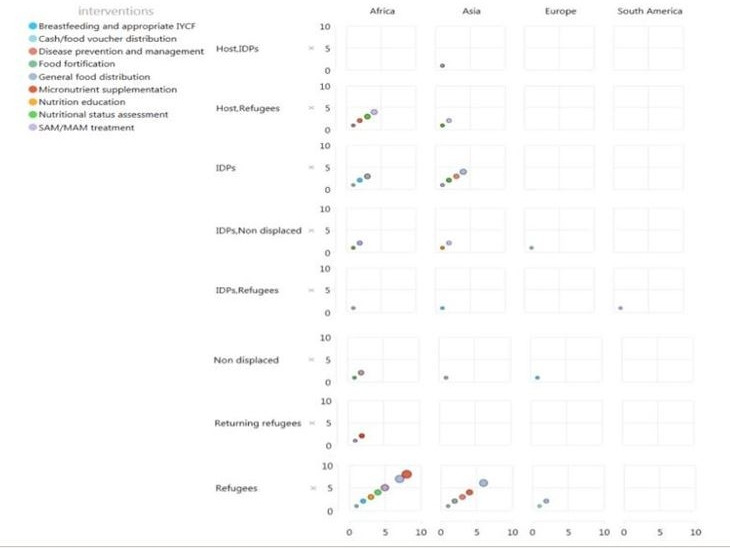
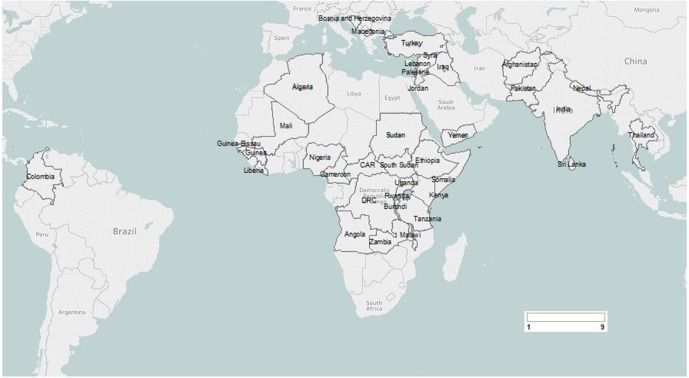
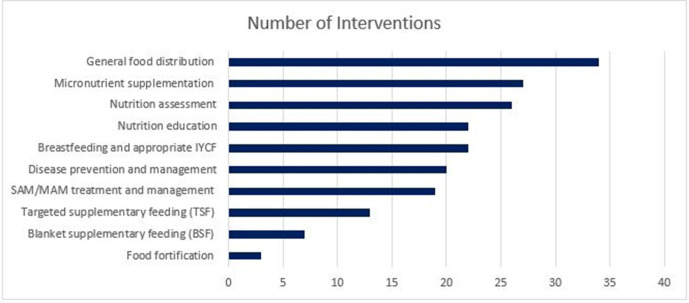
Ninety-one pubblications met our inclusion criteria. Nearly half of the publications (n=43) included population of sub-Saharan Africa (n=31) followed by Middle East and North African region. Most publications (n=58) reported on interventions targeting children under 5 years of age, and pregnant and lactating women (n=27). General food distribution (n=34), micronutrient supplementation (n=27) and nutrition assessment (n=26) were the most frequently reported interventions, with most reporting on intervention delivery to refugee populations in camp settings (n=63) and using community-based approaches. Only eight studies reported on coverage and effectiveness of intervention. Key delivery facilitators included community advocacy and social mobilisation, effective monitoring and the integration of nutrition, and other sectoral interventions and services, and barriers included insufficient resources, nutritional commodity shortages, security concerns, poor reporting, limited cooperation, and difficulty accessing and following-up of beneficiaries.
Despite the focus on nutrition in conflict settings, our review highlights important information gaps. Moreover, there is very little information on coverage or effectiveness of nutrition interventions; more rigorous evaluation of effectiveness and delivery approaches is needed, including outside of camps and for preventive as well as curative nutrition interventions.
CRD42019125221.
低收入和中等收入国家(LMICs)面临着与传染病和非传染性疾病相关的营养不良的三重负担。本综述旨在综合现有关于在 LMICs 中受冲突影响的妇女和儿童的营养方案的提供、覆盖范围和效果的数据。
我们使用与冲突、人群和营养相关的术语,在 MEDLINE、Embase、CINAHL 和 PsycINFO 数据库以及灰色文献中进行了搜索。我们搜索了在 LMICs 中发生冲突期间或之后五年内接受营养特定干预的妇女和儿童的研究。我们提取了有关人群、干预和提供特征以及提供障碍和促进因素的信息。列出了干预措施的覆盖范围和效果数据,但没有进行荟萃分析。
91 篇出版物符合我们的纳入标准。近一半的出版物(n=43)包括撒哈拉以南非洲地区的人群(n=31),其次是中东和北非地区。大多数出版物(n=58)报告了针对 5 岁以下儿童和孕妇及哺乳期妇女的干预措施(n=27)。一般食品分发(n=34)、微量营养素补充(n=27)和营养评估(n=26)是最常报告的干预措施,其中大多数报告在营地环境中向难民人群提供干预措施(n=63)并采用基于社区的方法。只有八项研究报告了干预措施的覆盖范围和效果。关键的提供促进因素包括社区宣传和社会动员、有效监测以及营养与其他部门干预措施和服务的整合,障碍包括资源不足、营养商品短缺、安全问题、报告不良、合作有限以及难以接触和跟踪受益者。
尽管冲突环境中强调了营养问题,但我们的综述突出了重要的信息差距。此外,关于营养干预措施的覆盖范围或效果的信息非常有限;需要更严格地评估有效性和提供方法,包括营地外以及预防和治疗性营养干预措施。
PROSPERO 注册号:CRD42019125221。